As the Endangered Species Act turns 50, those who first enforced it reflect on its mixed legacy
Advertisement
Read this article for free:
or
Already have an account? Log in here »
To continue reading, please subscribe:

Digital Subscription
One year of digital access for only $205*
- Enjoy unlimited reading on winnipegfreepress.com
- Read the E-Edition, our digital replica newspaper
- Access News Break, our award-winning app
- Play interactive puzzles
*First annual payment billed as $205.00 + GST for one year. This annual subscription will automatically renew at $233.00 + GST every 52 weeks (10% off the regular annual price of $259.35). Offer available to new and qualified returning subscribers only. Cancel any time.
To continue reading, please subscribe:
Add Free Press access to your Brandon Sun subscription for only an additional
$1 for the first 4 weeks*
- Enjoy unlimited reading on winnipegfreepress.com
- Read the E-Edition, our digital replica newspaper
- Access News Break, our award-winning app
- Play interactive puzzles
*Your next Brandon Sun subscription payment will increase by $1.00 and you will be charged $17.95 plus GST for four weeks. After four weeks, your payment will increase to $24.95 plus GST every four weeks.
Read unlimited articles for free today:
or
Already have an account? Log in here »
Hey there, time traveller!
This article was published 26/12/2023 (1010 days ago), so information in it may no longer be current.
NASHVILLE, Tenn. (AP) — On Dec. 28, 1973, President Richard Nixon signed the Endangered Species Act. “Nothing,” he said, “is more priceless and more worthy of preservation than the rich array of animal life with which our country has been blessed.” The powerful new law charged the federal government with saving every endangered plant and animal in America and enjoyed nearly unanimous bipartisan support.
The Act was so sweeping that, in retrospect, it was bound to become controversial, especially since it allowed species to be listed as endangered without consideration for the economic consequences. In that way it pitted two American values against each other: the idea that Americans should preserve their incredible natural resources (the United States invented the national park, after all) and the notion that capitalism was king and private property inviolate.
Left to navigate this minefield was a group of young biologists in Washington — the first Office of Endangered Species.
THE SNAIL DARTER
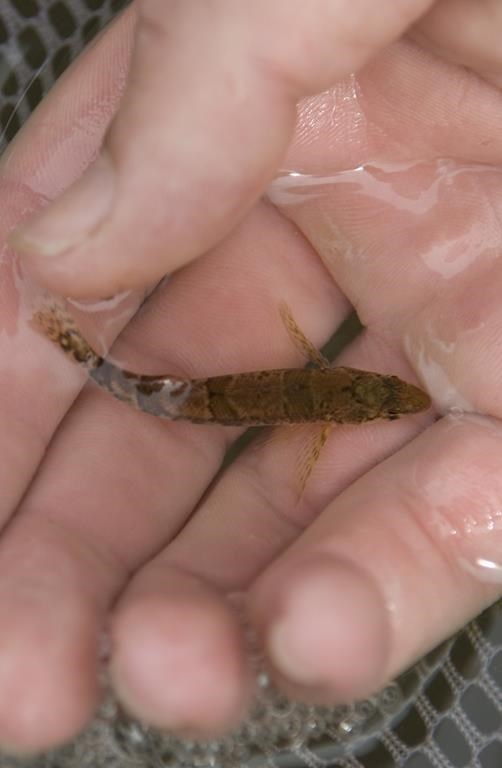
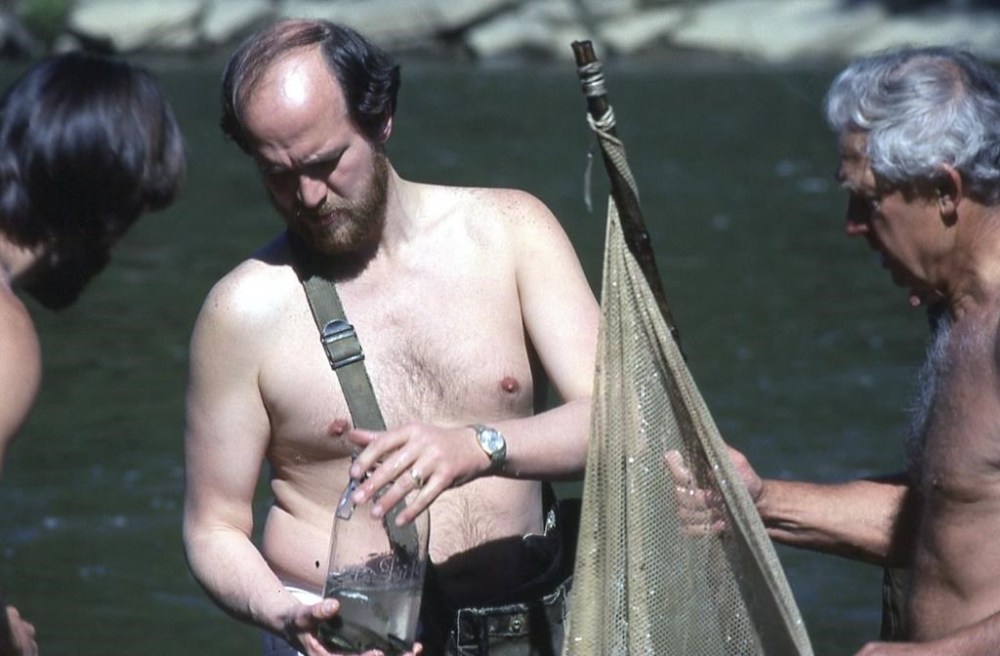
Ichthyologist Jim Williams, the office’s first “fish guy,” was hired in 1974. He describes his cohort as “a bunch of conservation-minded biologists that were all on a mission to save every last one of our chosen group of organisms come hell or high water, and, by the way, to hell with the bureaucrats and politicians.”
His unconventional attitude and methods soon became apparent with the listing of the snail darter, a little fish now so notorious it has become synonymous with government overreach. At the time, it was only known to exist in the Little Tennessee River — which the Tennessee Valley Authority was planning to dam.
“I started talking about listing it, and boy, oh boy, did the crap hit the fan,” Williams says.
His boss told him the listing was so controversial it might spell the end of the Endangered Species Act. It didn’t. But the law would never again enjoy the support of its earliest days. Whether the government should try to save all species from extinction, or if not, where to draw the line, became a point of conflict that has never been fully resolved.
‘SAVE KEN DODD AND RATTLESNAKES’
Herpetologist Ken Dodd was recruited to the office in 1976.
“There was not a whole lot of conservation theory at the time to draw on,” he says. “So we were really at the cutting edge of determining what is necessary for conservation.”
Like Williams, Dodd regularly butted heads with administrators. He also followed the science where it led without thought for whom it might inconvenience. But the thing that actually got him fired — in 1979 — was not a listing but a letter.
A man named Dominique D’Ermo owned a Washington restaurant that was serving rattlesnake meat he said came from Pennsylvania. That would have violated a law called the Lacey Act. “So I wrote to the restaurant and said, ‘Hey, Dominique, I think you need to get a better source,’” Dodd says.
It turned out Interior Secretary Cecil Andrus was a patron. When he learned what Dodd had done, “He fired me.”
Dodd obtained an attorney. Meanwhile, according to Williams, “We all went down to a T-shirt shop, got shirts that said ‘Save Ken Dodd and Rattlesnakes’.”
The ensuing publicity made an impact. Soon, Dodd was back at work.
GRAY WOLF SEASON
Mammologist Ron Nowak joined the office in 1973. The animals he was responsible for were often furry and charismatic, but he still had problems with his listings.
In the 1980s the gray wolf was coming back in Minnesota from “just a tiny remnant of a couple hundred animals to maybe several hundred or a thousand” thanks to the Endangered Species Act. Wildlife officials wanted to open a hunting season. That would require a regulation showing it would benefit the wolves and was the only way to control their population.
“They told me, ‘You have to write the regulation,’” Nowak says. “And I said, ‘It would be illegal.’”
Someone else wrote the regulation. Conservation groups sued, calling Nowak as a witness. The conservation groups won.
Nowak’s success may have made him overconfident, he said, because he then sought outside help that forced the agency to move on a stalled listing for the Louisiana black bear, the inspiration for the original teddy bear. By late 1987, his unit had been “dismembered” and he was reassigned.
Today, Nowak has nothing but praise for his colleagues.
“They wanted to show a true reflection of that part of the natural world that was in danger of disappearing,” he says. “You could go there at night or on weekends, and they’d be there, not for any extra pay, but just because they believed in it.
“And you could find them out in the field, sometimes, actually going to just try to look for these animals and plants. Really, I think it was a unique place — one that we may never see again.”
CLIMATE CHANGE AND THE CALIFORNIA CONDOR
LaVerne Smith was hired in 1978 as a botanist, but her title and duties shifted over a long career.
When Smith started, “The agency was just getting hiring people, getting staffed up, trying to figure out what to do with this amazing new piece of legislation,” she says.
One of the early decisions was whether to bring the last of the critically endangered California condor s into captivity for breeding. It was controversial, but it worked.
“They’re out sailing around the Grand Canyon. And I think anyone who’s seen one — the day I saw one sail over the Grand Canyon, I was like, ‘Oh my God! That was all worth it.’”
Smith later transferred to Alaska, where she led the listing for the polar bear, the first animal to be listed as endangered because of climate change.
“That is a whole new era of challenge for the agency,” she says.
Smith calls it “terrifying” but tries to remain hopeful.

“People were very worried that we would never be able to do anything for the condor,” she says. “Certainly it still requires a lot of protection and a lot of help, but it’s still out there.”
THE BOSS
John Spinks, an early chief of the Office of Endangered Species, was aware that some of his staff would make end runs around the bureaucracy.
At one point there was a particular listing that was being blocked by Interior Department attorneys. He wrote a memorandum about the problems that got leaked to the Washington Post and “caused all hell to break loose,” he says.
“Of course, we were as clean as the driven snow. There was nothing that would ever come back to us. That was many years ago, but I still think about that with great satisfaction.”