Drought in Western Canada impacting hydropower production as reservoirs run low
Advertisement
Read this article for free:
or
Already have an account? Log in here »
To continue reading, please subscribe:

Digital Subscription
One year of digital access for only $205*
- Enjoy unlimited reading on winnipegfreepress.com
- Read the E-Edition, our digital replica newspaper
- Access News Break, our award-winning app
- Play interactive puzzles
*First annual payment billed as $205.00 + GST for one year. This annual subscription will automatically renew at $233.00 + GST every 52 weeks (10% off the regular annual price of $259.35). Offer available to new and qualified returning subscribers only. Cancel any time.
To continue reading, please subscribe:
Add Free Press access to your Brandon Sun subscription for only an additional
$1 for the first 4 weeks*
- Enjoy unlimited reading on winnipegfreepress.com
- Read the E-Edition, our digital replica newspaper
- Access News Break, our award-winning app
- Play interactive puzzles
*Your next Brandon Sun subscription payment will increase by $1.00 and you will be charged $17.95 plus GST for four weeks. After four weeks, your payment will increase to $24.95 plus GST every four weeks.
Read unlimited articles for free today:
or
Already have an account? Log in here »
Hey there, time traveller!
This article was published 29/01/2024 (982 days ago), so information in it may no longer be current.
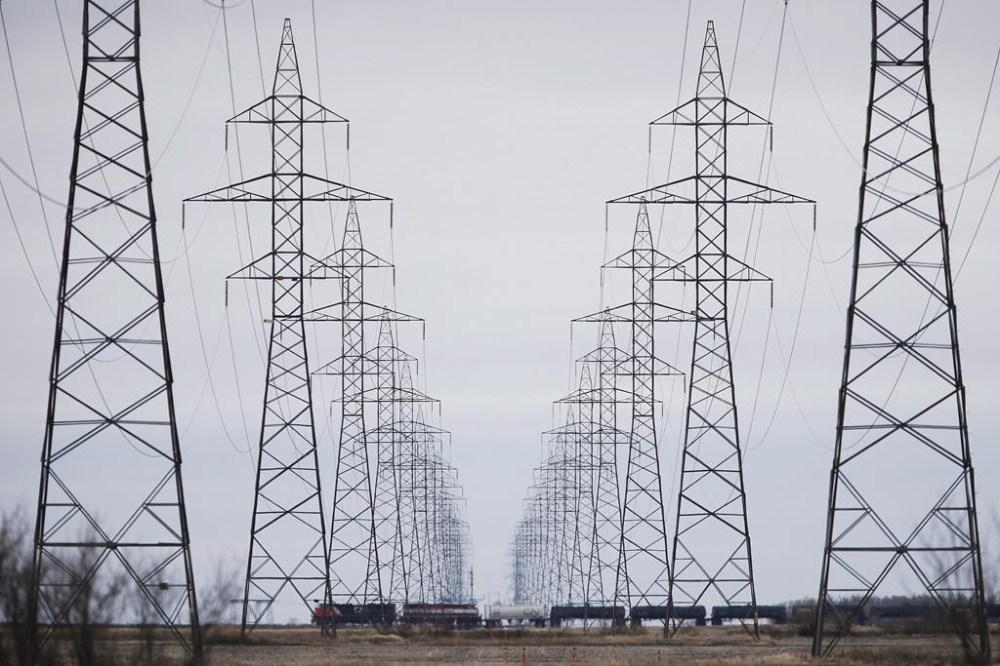
Two hydro-rich provinces are being forced to import power from other jurisdictions due to severe drought in Western Canada.
Both B.C. and Manitoba, where the vast majority of power is hydroelectric, are experiencing low reservoir levels that have negatively affected electricity production this fall and winter.
There’s no risk in either province of the lights going out anytime soon. But scientists say climate change is making drought both more common and more severe, which means more pressure on hydroelectric producers in the years to come.
In B.C., large chunks of the province are suffering through drought conditions the federal government has classified as “extreme.”
BC Hydro spokesman Kyle Donaldson used the word “historic” to describe the dry conditions, adding the Crown corporation’s large reservoirs in both the north and southeast parts of the province are lower than they have been in many years.
While BC Hydro has been working to conserve water by drawing on reservoirs in less affected regions of the province, it has also been importing more power fromAlberta and a number of western U.S. states.
“These are steps we will continue to take in the coming months,” Donaldson said.
In Manitoba, below-normal reservoirs and river levels mean that since October, Manitoba Hydro has been periodically supplementing hydro production by firing up its natural gas-fired turbines. Typically, it uses these only in the depths of winter to offset peak demand.
Spokesman Bruce Owen said there is no danger of a power shortage in Manitoba. The Crown corporation is able to import electricity from other jurisdictions, just as in high-water years it is able to export the excess power it produces.
But paying to import power — and losing the ability to export excess power on the spot market like generators do in high-water years — comes at a cost. Manitoba Hydro is already projecting a financial net loss for the current fiscal year — only its second in the past decade, with the other being in 2021.
That year, severe drought conditions also reduced Manitoba Hydro’s ability to produce power, and the company ended up posting a $248-million loss.
The 2021 drought also impacted hydropower production in the United States, where overall generation was 16 per cent lower than average, according to the U.S. Department of Energy. At Nevada’s Hoover Dam, one of the biggest hydro power generators in the U.S., production fell by 25 per cent.
Drought has always been one of the biggest business risks for hydroelectricity producers, and companies plan and operate their systems knowing it can occur.
Manitoba’s worst drought on record, for example, was in 1940-41, and one of Hydro Manitoba’s guiding principles is that it must be able to provide enough electricity to meet demand if water flows ever fall that low again.
But climate change is making once-rare events more common, creating the need for stronger back-up systems.
“If you know drought conditions are forecast to get worse over time with a changing climate, then that does require those hydroelectric systems to take that into account when they’re forecasting how much energy they are going to get from their hydro system,” said Blake Shaffer, an associate professor of economics at the University of Calgary who studies electricity markets.
Hydro generators are also grappling with increasing electricity demand due to the rise of electric vehicles and the push to decarbonize the economy.
Manitoba Hydro’s own modeling shows electrical demand in the province could more than double in the next 20 years, and new sources of electricity could be needed in the province within the next decade.
While drought can put long-term strain on hydro generation, it is much less volatile in the short-term than wind and solar. That gives hydro producers the ability to choose the individual times when they import power, taking advantage of low prices and market conditions.
But Shaffer says to ensure the long-term stability and efficiency of electricity production in Canada, this country must invest in additional inter-provincial transmission ties.
More transmission ties would make it easier for Alberta to send power to B.C. when there’s a drought, for example, and for B.C. to send power to Alberta when the wind isn’t blowing.
“If you’re better at doing something than me and I’m better at doing something than you, we benefit from doing the thing we’re better at and trading with one another,” Shaffer said.
“To the extent that (the provinces) don’t have exactly the same systems, which we don’t, there are benefits to linking up.”
This report by The Canadian Press was first published Jan. 29, 2024.
Related Articles
Alberta farmers face growing risk of soil erosion events as drought persists





Advertisement Advertise With Us
Advertisement Advertise With Us