NDP pulls plug on Hydro CEO’s vision to pursue more private power projects
Read this article for free:
or
Already have an account? Log in here »
To continue reading, please subscribe:
Digital Subscription
One year of digital access for only $1.44 a week*
- Enjoy unlimited reading on winnipegfreepress.com
- Read the E-Edition, our digital replica newspaper
- Access News Break, our award-winning app
- Play interactive puzzles
*Billed as $5.77 plus GST every four weeks. After 52 weeks, price increases to the regular rate of $19.95 plus GST every four weeks. Offer available to new and qualified returning subscribers only. Cancel any time.
To continue reading, please subscribe:
Add Free Press access to your Brandon Sun subscription for only an additional
$1 for the first 4 weeks*
- Enjoy unlimited reading on winnipegfreepress.com
- Read the E-Edition, our digital replica newspaper
- Access News Break, our award-winning app
- Play interactive puzzles
*Your next Brandon Sun subscription payment will increase by $1.00 and you will be charged $17.95 plus GST for four weeks. After four weeks, your payment will increase to $24.95 plus GST every four weeks.
Read unlimited articles for free today:
or
Already have an account? Log in here »
Hey there, time traveller!
This article was published 31/01/2024 (990 days ago), so information in it may no longer be current.
Manitoba Hydro’s plan to ask the private sector to build new and costly electricity generation projects is being met with resistance from the NDP government, which wants the new infrastructure bankrolled publicly.
On Wednesday, Finance Minister Adrien Sala appeared to pull the plug on the utility’s strategy to meet increasing energy demand through purchase agreements with “independent power producers,” who can take on the capital costs of developing new generation projects in Manitoba, such as wind farms.
“There’s no question that we need to find ways of building new capacity here in Manitoba, and we do have energy needs that need to be met, but our position is that that new generation should be publicly owned,” Sala, the minister responsible for Hydro, told the Free Press.
Sala’s comments are in stark contrast to those made by Manitoba Hydro chief executive officer Jay Grewal on Tuesday. She suggested the utility is not interested in building major power generation projects, owing to its massive debt.
Related Articles
Hydro boss fired as Crown utility seeks ‘fresh perspective’


About 33 cents of each dollar Hydro customers spend goes toward paying interest on the utility’s debt, Grewal told business leaders at an event hosted by the Manitoba Chambers of Commerce.
As a result, new hydro-electric generating stations are not being contemplated, she said.
Rather, wind farms will figure prominently in the plan to meet demand, which may require new generating capacity to be on line by the end of the decade.
“Which is why our strategy will be to go to market for new sources of generation,” Grewal said. “We will issue requests for proposals for independent power producers and for power purchase agreements.”
Manitoba Hydro already has power purchase agreements with two private wind farms in southwest Manitoba.
The Pattern Energy Group-owned, 138-megawatt St. Joseph Wind Farm in Montcalm was commissioned in 2011 at a cost of $345 million and has a 27-year purchase agreement with the utility.
Algonquin Power and Utilities Corp. owns the $241-million St. Leon Wind Farm, which has 120 megawatts installed in the Rural Municipalities of Lorne and Pembina and first began producing power in 2006, and has a 25-year purchase agreement with Hydro.
The corporation declined to comment on Wednesday.
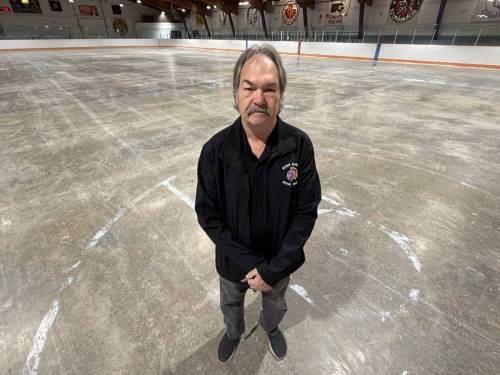
MIKE DEAL / FREE PRESS FILES Exactly how demand for new electricity generation will be met is still up for discussion, but Manitoba Hydro’s board of directors will ensure the infrastructure is public, Finance Minister Adrien Sala said.
Exactly how demand for new electricity generation will be met is still up for discussion, but Manitoba Hydro’s board of directors will ensure the infrastructure is public, Sala said.
The NDP government replaced the utility’s board in early December and appointed Manitoba Blue Cross chief executive officer Ben Graham as chairman.
“We have total confidence in our board to ensure that we’re meeting the province’s energy needs and that we’re able to service the needs of Manitobans and Manitoba business while ensuring that we do that in a fiscally responsible manner,” he said.
“Hydro is a crown jewel in our province, and we’re going to ensure that it remains financially healthy,” Sala said.
In its 20-year plan released in July, Manitoba Hydro estimated the cost to meet future energy needs could range from $12 billion to $27 billion, which doesn’t include the cost of maintaining existing infrastructure.
Sala insisted the Crown corporation can develop the needed generating capacity in a sustainable manner despite its debt, which is $24.6 billion, while keeping rates as low as possible.
The NDP has promised to temporarily freeze electricity rates.
“We’ve always been clear that we are a party that wants to ensure Manitoba Hydro remains publicly owned, that our energy generation resources are publicly owned, and that’s the direction we want to go”–Finance Minister Adrien Sala
Sala said the path to get there remains a work in progress.
“We’ve always been clear that we are a party that wants to ensure Manitoba Hydro remains publicly owned, that our energy generation resources are publicly owned, and that’s the direction we want to go,” Sala said.
“So we want to ensure that that’s the direction Hydro takes.”
The Crown corporation currently projects a $160-million loss for the current fiscal year, owing in part to drought conditions that have limited power exports to the spot market.
Hydro has been running its natural gas-powered generating station in Brandon periodically since October owing to the drought, while also importing power from the United States to meet local energy demand.
On Wednesday, the corporation declined to comment on how much power it has been forced to import from the U.S. this fiscal year, or what it has cost the utility. However, its energy imports are in line with 2021, when drought conditions also led to a loss for the utility.
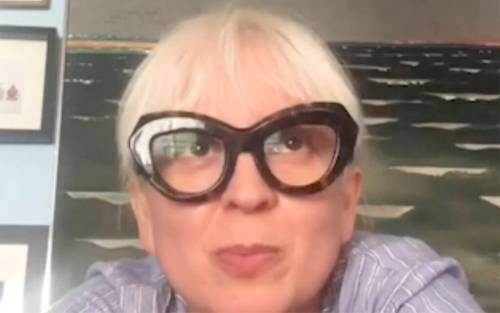
MIKE DEAL / WINNIPEG FREE PRESS On Tuesday, Manitoba Hydro chief executive officer Jay Grewal suggested the utility is not interested in building major power generation projects, owing to its massive debt.
According to Grewal, the utility’s cash flow has also shrunk by $900 million this year.
In mid-January, the government gave Manitoba Hydro the green light to borrow up to $750 million to cover urgent expenses to import energy from the U.S. as temperatures plummeted across the Prairies, Sala said.
“The borrowing authority that was given was at the high end, but was intended to ensure Hydro could meet those needs and could import that power we need to get us through that cold snap,” Sala said.
danielle.dasilva@freepress.mb.ca