In rural Utah, concern over efforts to use Colorado River water to extract lithium
Advertisement
Read this article for free:
or
Already have an account? Log in here »
To continue reading, please subscribe:

Digital Subscription
One year of digital access for only $205*
- Enjoy unlimited reading on winnipegfreepress.com
- Read the E-Edition, our digital replica newspaper
- Access News Break, our award-winning app
- Play interactive puzzles
*First annual payment billed as $205.00 + GST for one year. This annual subscription will automatically renew at $233.00 + GST every 52 weeks (10% off the regular annual price of $259.35). Offer available to new and qualified returning subscribers only. Cancel any time.
To continue reading, please subscribe:
Add Free Press access to your Brandon Sun subscription for only an additional
$1 for the first 4 weeks*
- Enjoy unlimited reading on winnipegfreepress.com
- Read the E-Edition, our digital replica newspaper
- Access News Break, our award-winning app
- Play interactive puzzles
*Your next Brandon Sun subscription payment will increase by $1.00 and you will be charged $17.95 plus GST for four weeks. After four weeks, your payment will increase to $24.95 plus GST every four weeks.
Read unlimited articles for free today:
or
Already have an account? Log in here »
Hey there, time traveller!
This article was published 08/02/2024 (968 days ago), so information in it may no longer be current.
GREEN RIVER, Utah (AP) — A plan to extract lithium — the lustrous, white metal used in electric vehicle batteries — in southeast Utah is adding to an anxiety familiar in the arid American West: how the project could affect water from the Colorado River.
An Australian company and its U.S. subsidiaries are analyzing the saline waters in a geologic formation shared by Utah, Colorado, New Mexico and Arizona, an area called the Paradox Basin. The area’s groundwater is rich in lithium salts and other minerals from when it was a marine basin millions of years ago that repeatedly flooded and drained.
The company has also acquired rights to freshwater from the Green River nearby, leading to questions about how groundwater and river water are connected, and how its plans to produce lithium could affect the environment. The Green River is a tributary of the Colorado River, the over-tapped powerhouse of the West upon which 40 million people rely.
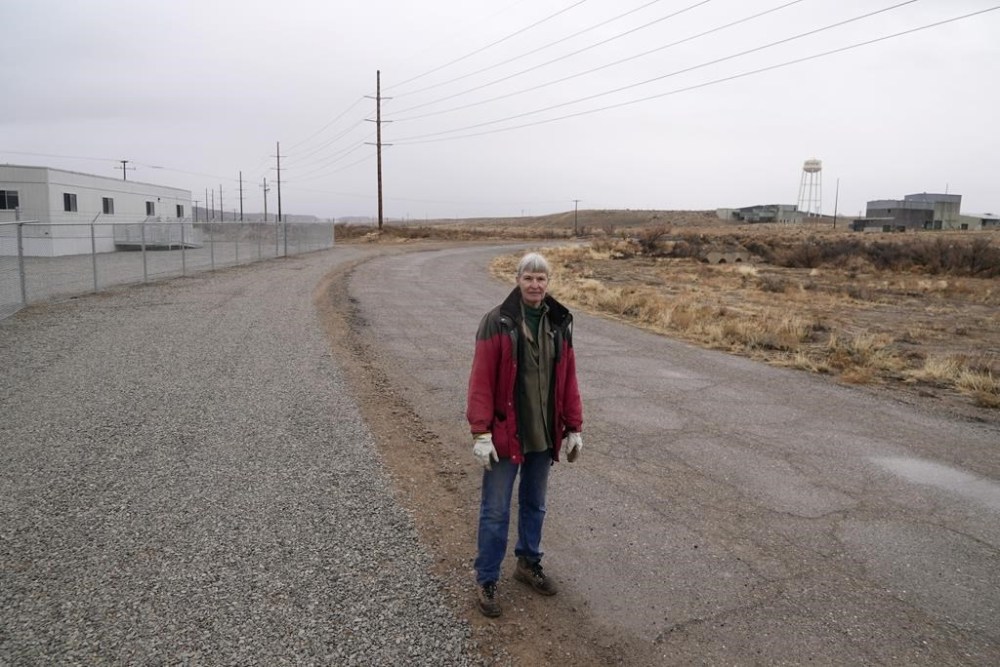
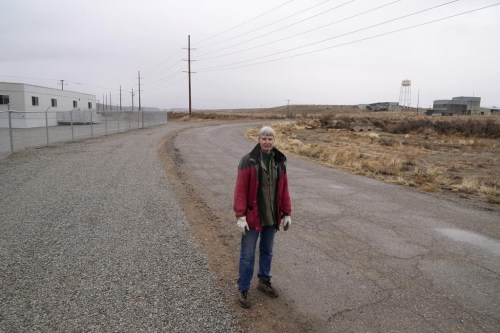
“We need to have a renewable energy transition, but maybe we shouldn’t be looking for these kinds of quick-fix energy solutions on a drought-stricken river,” said Lauren Wood, a third-generation resident of Green River, Utah, a town of 900 near a site Anson Resources is considering.
Many minerals are mined in open pits. But here lithium would be separated from saline water using chemicals, which could be faster and less disruptive to the environment than the traditional drilling, blasting and excavating of mining.
The project is one small piece in a global ramp-up of lithium production to make batteries for storing clean wind and solar energy and powering electric cars. Alternative batteries that don’t rely on lithium are being tested, but for now, lithium is still used in most electric vehicle and electrical grid batteries.
Anson says its extraction process — for which there is no example at scale in the U.S. — would be low-carbon and “environmentally responsible,” an assertion that has not mollified concern from some environmentalists and residents.
Anson has been using old oil wells to to explore the amount of lithium in brine, a salty liquid, deep beneath the ground.
The company says there’s enough metal in the brine to initially produce 10,000 tons (roughly 9,072 metric tons) of lithium carbonate per year. That’s enough to supply about 200,000 average U.S. electric vehicle battery packs.
It says natural pressure will push the liquid up from more than a mile (close to 2 kilometers) deep. An absorbent would then separate out the lithium before the lithium-free water would be pumped back underground. Freshwater from the Colorado River would be used to wash the mineral. Anson said almost all of this freshwater would be recycled, and used again.
“We realize how precious water is in our arid environment,” Anson CEO Bruce Richardson said in a statement. “The lithium we are extracting will go into electric vehicles, and the whole point of them is to have a lower impact on the environment.”
But geologists and Earth scientists including Michael McKibben, a professor at the University of California, Riverside, said it’s unclear how water-intensive direct lithium extraction really is.
“The technology is too new for much of a commercial track record to have been established,” he said.
It has been deployed in Argentina and in a handful of projects in Qinghai, China.
So far, Anson has acquired rights for 2,500 acre-feet of water from the Green River. An acre-foot is enough water to serve two to three U.S. households for a year. The company said it will not actually use that much but did not explain further.
In a statement, the company said brine and freshwater are not the same because brine isn’t drinkable or usable for any other purpose. It also said the brine it has identified in the Paradox Basin is separated from freshwater aquifers by more than a mile of “thick layers of impermeable salt layers and sandstone units.”
But last year, the Interior Department and the Bureau of Land Management raised concerns about Anson’s plans to pump 13,755 acre-feet per year of groundwater near the Green River. Department officials said the aquifer and the river were connected and Anson and its U.S. subsidiaries had not sufficiently explained how the groundwater withdrawals might affect the Green River.
Utah’s water rights division will make the final decision on the water permits, which could take months or even years.
Several other companies are exploring direct lithium extraction projects in the U.S. Last year, ExxonMobil acquired rights in the Smackover formation in southern Arkansas, seen as one of North America’s most promising lithium resources. In Nevada, Century Lithium is piloting a project in the Amargosa Valley, about 90 miles (145 kilometers) northwest of Las Vegas.
Despite increasing government and industry interest in obtaining more lithium within the U.S., Nevada currently has the country’s only lithium mine. Australia, Chile, China and Argentina produce almost all of it.
Ren Hatt, the mayor of Green River, said the town’s limited economic base puts pressure to accept Anson’s project even if some residents, like Gayna Salinas, are skeptical and worry about its proximity to town.

“There’s a difficulty turning anything down in a community like Green River,” he said.
Salinas, whose family farms in the rural community, said she was skeptical about the boom-bust economic benefits of a project like Anson’s. She referenced the area’s uranium mines and oil and gas drilling of decades past that are no longer functioning.
“It seems like everybody wants to use rural America as their dumping grounds and figures rural America could care less because it needs the money or the jobs.”
___
The Associated Press receives support from the Walton Family Foundation for coverage of water and environmental policy. The AP is solely responsible for all content. For all of AP’s environmental coverage, visit https://apnews.com/hub/climate-and-environment