Indigenous leaders say B.C. opposition members derailed changes to Land Act

Advertisement

Advertise with us

Indigenous leaders say political opposition in British Columbia derailed a plan that would have cleared the way for shared decision-making between the province and First Nations over the use of public land in their territories.

Read this article for free:


or

Already have an account? Log in here »

To continue reading, please subscribe:

Subscribe and receive a limited-edition Free Press branded hat or tote.

Digital Subscription

One year of digital access for only $205*

  • Enjoy unlimited reading on winnipegfreepress.com
  • Read the E-Edition, our digital replica newspaper
  • Access News Break, our award-winning app
  • Play interactive puzzles

*First annual payment billed as $205.00 + GST for one year. This annual subscription will automatically renew at $233.00 + GST every 52 weeks (10% off the regular annual price of $259.35). Offer available to new and qualified returning subscribers only. Cancel any time.

To continue reading, please subscribe:

Add Free Press access to your Brandon Sun subscription for only an additional

$1 for the first 4 weeks*

  • Enjoy unlimited reading on winnipegfreepress.com
  • Read the E-Edition, our digital replica newspaper
  • Access News Break, our award-winning app
  • Play interactive puzzles
Start now

*Your next Brandon Sun subscription payment will increase by $1.00 and you will be charged $17.95 plus GST for four weeks. After four weeks, your payment will increase to $24.95 plus GST every four weeks.

Hey there, time traveller!
This article was published 22/02/2024 (954 days ago), so information in it may no longer be current.

Indigenous leaders say political opposition in British Columbia derailed a plan that would have cleared the way for shared decision-making between the province and First Nations over the use of public land in their territories.

The NDP government announced Wednesday that it would not proceed with proposed amendments to the Land Act after holding a series of meetings with stakeholders, saying officials heard that they need to take time for further engagement and to demonstrate the “benefits of shared decision-making in action.”

The First Nations Leadership Council says its members are “extremely disappointed” with the decision to scrap the changes, which were part of the B.C. government’s work to align its laws with the United Nations Declaration on the Rights of Indigenous Peoples.
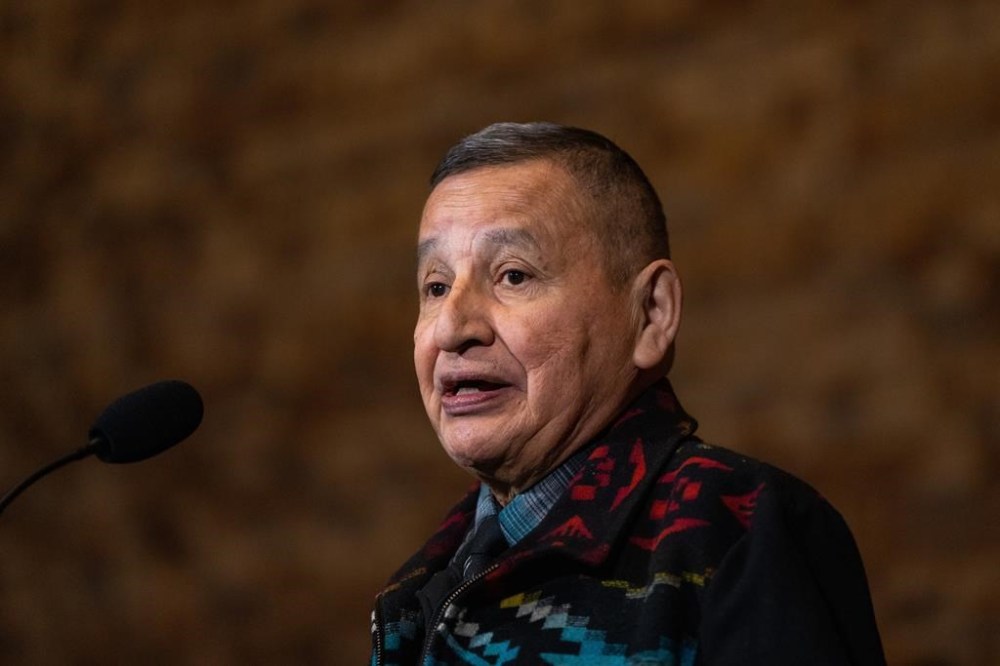
Indigenous leaders in British Columbia say opposition political leaders derailed a plan that would have cleared the way for shared decision-making between the province and First Nations about the use of public land in their territories. Grand Chief Stewart Phillip, president of the Union of B.C. Indian Chiefs, says they are
Indigenous leaders in British Columbia say opposition political leaders derailed a plan that would have cleared the way for shared decision-making between the province and First Nations about the use of public land in their territories. Grand Chief Stewart Phillip, president of the Union of B.C. Indian Chiefs, says they are "disgusted" that the leaders of BC United and the B.C. Conservatives "leveraged" the province's plan "as a shameless opportunity for partisan political gain." Phillip speaks during a news conference in Vancouver, on Thursday, Nov. 2, 2023. THE CANADIAN PRESS/Ethan Cairns

Grand Chief Stewart Phillip, president of the Union of B.C. Indian Chiefs, says they are “disgusted” that the leaders of BC United and the B.C. Conservatives “leveraged” the province’s plan “as a shameless opportunity for partisan political gain.”

Earlier this month, BC United Leader Kevin Falcon issued a statement saying his party could not “support giving veto power to five per cent of the population with impacts to over 95 per cent of public land,” referring to First Nations people.

That followed a statement from B.C. Conservative Leader John Rustad calling the government’s plan “an assault on … private property rights.”

Phillip says the leaders created a “wedge issue,” making factually incorrect statements and sparking “racist backlash” against Indigenous Peoples in B.C.

Cheryl Casimer with the First Nations Summit Political Executive says, “a small cohort of so-called leaders” used the amendments to “tap into racist fears and beliefs for their own benefits, and on the backs of First Nations people.”

In the province’s statement announcing the decision to reverse course, Nathan Cullen, B.C.’s minister of water, land and resource stewardship, said some people had “gone to extremes to knowingly mislead the public” about the changes.

The minister said many people who attended the stakeholder meetings were “surprised” to learn the claims were not true, adding there would have been “no impacts to tenures, renewals, private properties or access to Crown land.”

The provincial web page for the now-discarded proposal says the changes would not have provided First Nations with “veto” power. Rather, they aimed to provide “durability” in public land decisions to “help unlock B.C.’s economic potential,” it says.

Cullen said those misleading the public about the plan “wish to cling to an approach that leads only to the division, court battles and uncertainty that have held us back.”

The changes would have updated the Land Act to “legally recognize” the ability to create shared decision-making agreements with First Nations, something that has already been done with laws related to forestry and environmental assessment.

“We will continue to engage with people and businesses, and do the work to show how working together, First Nations and non-First Nations, can help bring stability and predictability, and move us all forward,” Cullen said in the statement.

The B.C. government passed legislation in 2019 requiring the province to align its laws with the UN Declaration on the Rights of Indigenous Peoples.

The declaration requires governments to obtain free, prior and informed consent before taking actions that affect Indigenous Peoples and their lands, and B.C.’s law set provisions for the province to negotiate agreements with First Nations to establish shared, consent-based decision-making in their territories.

This report by The Canadian Press was first published Feb. 22, 2024.
Report Error Submit a Tip

More Stories

May be whiff of truth to ex’s odour ardour

Maureen Scurfield 5 minute read 2:01 AM CDT

DEAR MISS LONELYHEARTS: I ran into an old boyfriend I used to curl on a team with, and we went for drinks. We’ve been almost eight years apart, and I couldn’t remember why we broke up, as we always had such a great time together.

It wasn’t until the second date — this time on a weekend — that it came back to me, with a jolt. Pee-yew! I remembered he doesn’t use deodorant on weekends. Why? He enjoys his own body odour. I recalled that a bit too late, and it was just as awful as ever! I went home early.

Tonight, he called and I refused him another date. I said, “Think back. You remember why we broke up?” Then he said, “Oh yeah, you hated my no-deodorant weekend policy. Well, guess what? Some women don’t mind!” I said I really doubted that, and that ended the conversation. Miss L., wouldn’t any women find stinky underarms offensive?

— Sensitive Nose, Fort Richmond

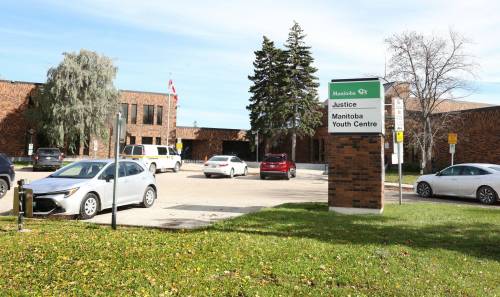
Volunteer pop-up library axed from Manitoba Youth Centre

Matthew Frank 4 minute read Preview

Volunteer pop-up library axed from Manitoba Youth Centre

Matthew Frank 4 minute read 2:01 AM CDT

Manitoba Corrections has cancelled a pop-up library program at the Manitoba Youth Centre, leaving inmates without librarian services and fewer options to borrow certain books.

The Prison Libraries Committee, part of the non-profit Manitoba Library Association, operated and funded the volunteer program since 2024 before it was shut down by the province last month. The group previously partnered with the province to offer the service because the facility has no dedicated library of its own.

“It is concerning that community members who are incarcerated, especially youth, are losing out on meaningful programming, access to information and rehabilitation efforts, which are offered at no cost to (Manitoba) Corrections. We urge Manitoba Justice to promote more library services and programming, not less,” said a Sept. 24 letter from the non-profit addressed to the justice minister.

Ashley Huot, chair of the Prison Libraries Committee, said she was puzzled when she received an email last month from Manitoba Corrections stating that the pop-up library was no longer needed.

Read
2:01 AM CDT

International flavour: Canadian investors may want to make like Ottawa, diversify beyond U.S.

Joel Schlesinger 6 minute read Preview

International flavour: Canadian investors may want to make like Ottawa, diversify beyond U.S.

Joel Schlesinger 6 minute read 2:01 AM CDT

Canada is learning the hard way about the dangers of putting too many eggs in its U.S. economic basket.

Much has been made about the need to diversify our economy away from the United States.

Diversification is understandably beneficial. The more varied streams of revenue a nation has, the less affected the economy will be when one of those sources is interrupted.

The same can be said about investment portfolios.

Read
2:01 AM CDT

A spiritual vision will help anchor a health civic outlook

John Longhurst 5 minute read 2:01 AM CDT

We have an election coming up. With that in mind, the Free Press asked some of their columnists to write about the challenges ahead and how the city can become better.

For Tom Brodbeck, the main challenge is finances — and how candidates will pay for their many promises for fixing roads, improving public safety and making transit better.

Rebecca Chambers said that the concerns of inner-city residents need to be taken seriously by those who aspire to work at city hall.

Niigaan Sinclair said the most pressing issue in Winnipeg isn’t construction projects, light-rail transit, public safety, taxes or social services. For him, it’s the city’s relationship with Indigenous people.

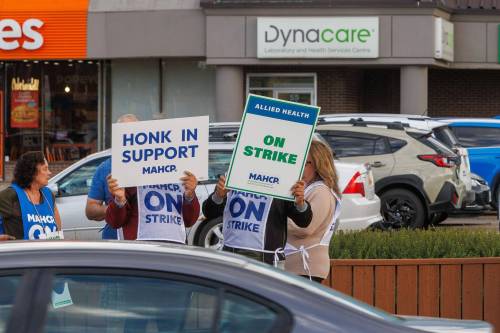
Dynacare workers provide essential services that must be maintained during strike, labour board rules

Nicole Buffie 5 minute read Preview

Dynacare workers provide essential services that must be maintained during strike, labour board rules

Nicole Buffie 5 minute read Thursday, Oct. 1, 2026

The Manitoba Labour Board has ruled Dynacare workers are essential employees and their services must be maintained during a labour dispute.

Read
Thursday, Oct. 1, 2026

Indigenous leaders say B.C. opposition members derailed changes to Land Act

The Canadian Press 4 minute read Preview

Indigenous leaders say B.C. opposition members derailed changes to Land Act

The Canadian Press 4 minute read Thursday, Feb. 22, 2024

Indigenous leaders say political opposition in British Columbia derailed a plan that would have cleared the way for shared decision-making between the province and First Nations over the use of public land in their territories.

The NDP government announced Wednesday that it would not proceed with proposed amendments to the Land Act after holding a series of meetings with stakeholders, saying officials heard that they need to take time for further engagement and to demonstrate the "benefits of shared decision-making in action."

The First Nations Leadership Council says its members are "extremely disappointed" with the decision to scrap the changes, which were part of the B.C. government's work to align its laws with the United Nations Declaration on the Rights of Indigenous Peoples.

Grand Chief Stewart Phillip, president of the Union of B.C. Indian Chiefs, says they are "disgusted" that the leaders of BC United and the B.C. Conservatives "leveraged" the province's plan "as a shameless opportunity for partisan political gain."

Read
Thursday, Feb. 22, 2024