E-waste from trashed electric devices is piling up and recycling isn’t keeping pace, UN says

Advertisement

Advertise with us

NAIROBI, Kenya (AP) — U.N. agencies have warned that waste from electronics is piling up worldwide while recycling rates remain low and are likely to fall even further.

Read this article for free:


or

Already have an account? Log in here »

To continue reading, please subscribe:

Subscribe and receive a limited-edition Free Press branded hat or tote.

Digital Subscription

One year of digital access for only $205*

  • Enjoy unlimited reading on winnipegfreepress.com
  • Read the E-Edition, our digital replica newspaper
  • Access News Break, our award-winning app
  • Play interactive puzzles

*First annual payment billed as $205.00 + GST for one year. This annual subscription will automatically renew at $233.00 + GST every 52 weeks (10% off the regular annual price of $259.35). Offer available to new and qualified returning subscribers only. Cancel any time.

To continue reading, please subscribe:

Add Free Press access to your Brandon Sun subscription for only an additional

$1 for the first 4 weeks*

  • Enjoy unlimited reading on winnipegfreepress.com
  • Read the E-Edition, our digital replica newspaper
  • Access News Break, our award-winning app
  • Play interactive puzzles
Start now

*Your next Brandon Sun subscription payment will increase by $1.00 and you will be charged $17.95 plus GST for four weeks. After four weeks, your payment will increase to $24.95 plus GST every four weeks.

Hey there, time traveller!
This article was published 20/03/2024 (892 days ago), so information in it may no longer be current.

NAIROBI, Kenya (AP) — U.N. agencies have warned that waste from electronics is piling up worldwide while recycling rates remain low and are likely to fall even further.

The agencies were referring to “e-waste,” which is defined as discarded devices with a plug or battery, including cellphones, electronic toys, TVs, microwave ovens, e-cigarettes, laptop computers and solar panels. It does not include waste from electronic vehicles, which fall into a separate category.

In a report released Wednesday, the U.N.’s International Telecommunications Union and research arm UNITAR said some 62 million tons of “e-waste” was generated in 2022, enough to fill tractor-trailers that could be lined up bumper to bumper around the globe. It’s on track to reach 82 million tons by 2030.
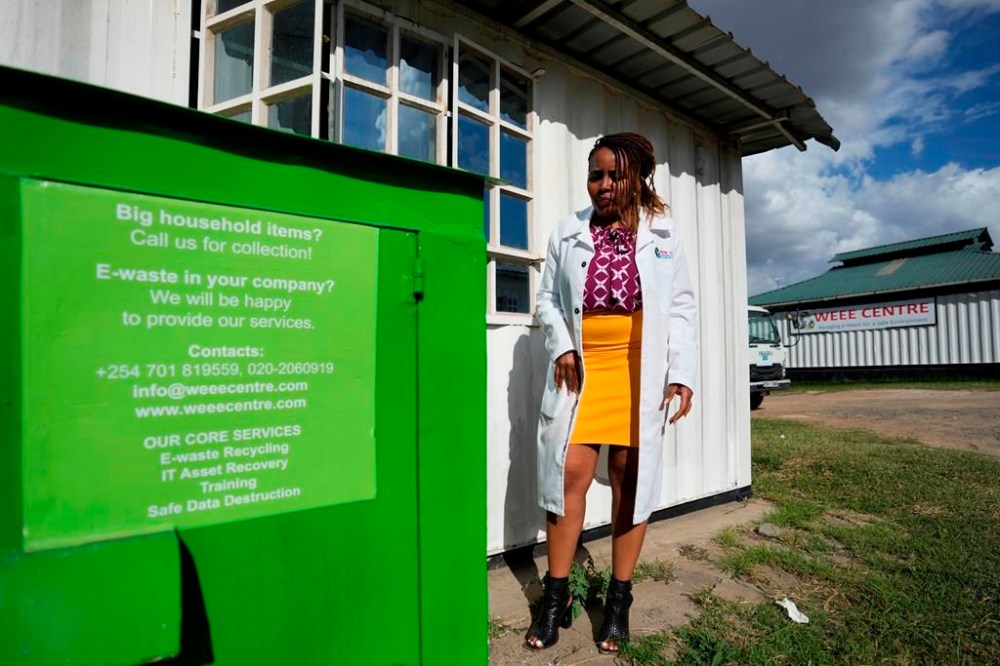
Catherine Masolia, Chief operation officer at WEEE center recycling plant, a collection point where people can deposit old electric equipment in Nairobi, Kenya Wednesday, March. 20, 2024. U.N. agencies have warned that electrical and electronic waste is piling up worldwide while recycling rates continue to remain low and are likely to fall even further. (AP Photo/Brian Inganga)

Metals — including copper, gold and iron — made up half of the 62 million tons, worth a total of some $91 billion, the report said. Plastics accounted for 17 million tons and the remaining 14 million tons include substances like composite materials and glass.

The U.N. says 22% of the e-waste mass was properly collected and recycled in 2022. It is expected to fall to 20% by the end of the decade because of “staggering growth” of such waste due to higher consumption, limited repair options, shorter product life cycles, growing “electronification” of society, and inadequate e-waste management infrastructure, the agencies said.

They said some of the discarded electronic devices contained hazardous elements like mercury, as well as rare Earth metals coveted by tech industry manufacturers. Currently, only 1% of the demand for the 17 minerals that make up the rare metals is met through recycling.

About half of all e-waste is generated in Asia, where few countries have laws on e-waste or collection targets, according to the report. Recycling and collection rates top 40% in Europe, where per-capita waste generation is highest: nearly 18 kilograms (39 pounds).

In Africa, which generates the least of any of the five big global regions, recycling and collection rates hover at about 1%, it said.

“The latest research shows that the global challenge posed by e-waste is only going to grow,” said Cosmas Luckyson Zavazava, head of the ITU telecommunication development bureau. “With less than half of the world implementing and enforcing approaches to manage the problem, this raises the alarm for sound regulations to boost collection and recycling.”

For some, e-waste represents a way to earn cash by rummaging through trash in the developing world to find coveted commodities, despite the health risks.

At the Dandora dumpsite where garbage collected from the Kenyan capital of Nairobi ends up — even though a court declared it full over a generation ago — scavengers try to earn a living by picking through rubbish for e-waste that can be sold to businesses as recycled material.
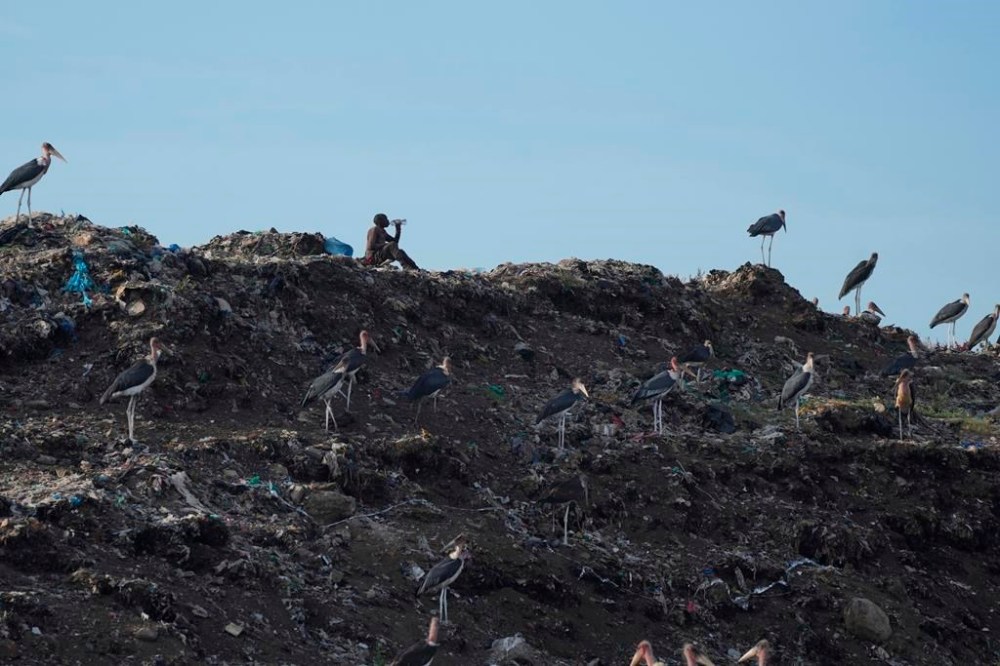
A man who scavenges recyclable materials for a living, centre, drinks water past Marabou storks feeding on a mountain of garage at Dandora, the largest garbage dump in the capital Nairobi, Kenya Wednesday, March 20, 2024. U.N. agencies have warned that electrical and electronic waste is piling up worldwide while recycling rates continue to remain low and are likely to fall even further. (AP Photo/Brian Inganga)

Steve Okoth hopes the flow continues so he can eke out an income, but he knows the risks.

“When the e-waste comes here, it contains some powder which affects my health,” he said, adding that when electronic devices heat up, they release gases and he “can’t come to work because of chest problems.”

However, Okoth said they don’t have any other options: “We are now used to the smoke because if you don’t go to work you will not eat.”

Recycling plants, like Nairobi’s WEEE center, have collection points across Kenya, where people can safely get rid of old electric equipment.

“We take inventory of the items,” said Catherine Wasolia, WEEE’s chief operating officer, to check for data on submitted devices and wipe them clean. Then they test each to assess if “it can be reused or repurposed.”

E-waste expert George Masila worries about the impact of electronic waste on soil.

“When you have all this e-waste — either in the dumpsites or mercilessly deposited anywhere else — it could have major effects on the soil,” Masila said. “Every year it rains and water flows and attracts all these elements that are deposited into the environment. You have water getting contaminated.”

He said greater recycling and re-use of such materials, “are some of the things we should be considering.”
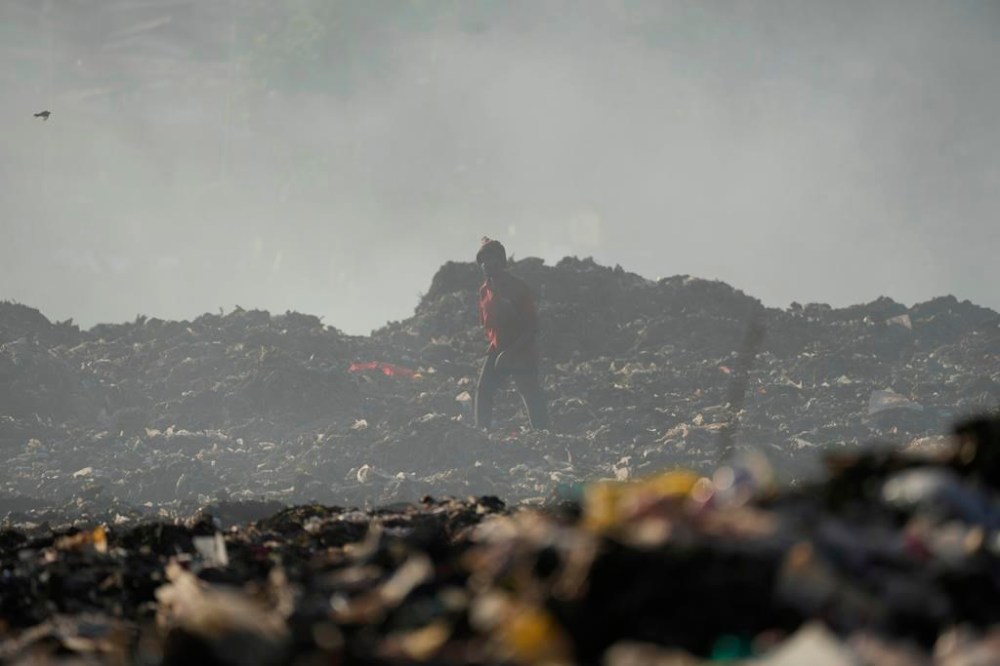
A man who scavenges recyclable materials for a living, walks past a mountain of garage amidst smoke from burning trash at Dandora, the largest garbage dump in the capital Nairobi, Kenya Wednesday, March 20, 2024. U.N. agencies have warned that electrical and electronic waste is piling up worldwide while recycling rates continue to remain low and are likely to fall even further. (AP Photo/Brian Inganga)

Report authors acknowledged that many people in the developing world pay their bills through harvesting such e-waste, and called for them to be trained and equipped to make such work safer.

“We must try to support these people trying to find their niche,” said Ruediger Kuehr, senior manager of the sustainable cycles program at UNITAR.

__

Keaten reported from Geneva.

Report Error Submit a Tip

More Stories

Doctor pays $500K to revamp courtyard at care home where he works

By Zoe Pierce 4 minute read Preview

Doctor pays $500K to revamp courtyard at care home where he works

By Zoe Pierce 4 minute read Thursday, Aug. 27, 2026

Fifty years after Dr. Pravinsagar Mehta began caring for residents at Actionmarguerite, a courtyard he had long watched deteriorate is getting a new life after he and his wife committed $500,000 to its redevelopment and long-term maintenance.

Read
Thursday, Aug. 27, 2026

Catch the Devil follows serial con man preying on victims along the Gulf Coast — then repatedly duping law enforcement

Reviewed by Jordan Ross 4 minute read Preview

Catch the Devil follows serial con man preying on victims along the Gulf Coast — then repatedly duping law enforcement

Reviewed by Jordan Ross 4 minute read 2:00 AM CDT

The debut book from Pamela Colloff, a Texas-based investigative reporter for ProPublica and staff writer for the New York Times Magazine, complicates romantic notions of the scam artist and invites readers to reflect on the systems that enable them.

Read
2:00 AM CDT

Motion seeks to remove longtime head of Southern Chiefs’ Organization due to ‘behaviour’ concerns

Carol Sanders 4 minute read Preview

Motion seeks to remove longtime head of Southern Chiefs’ Organization due to ‘behaviour’ concerns

Carol Sanders 4 minute read Wednesday, Aug. 26, 2026

For the second time in a year, the leadership of Southern Chiefs’ Organization Grand Chief Jerry Daniels is being called into question.

A motion obtained by the Free Press calls “immediately” for a special summit of the 33 SCO chiefs to consider removing Daniels, who’s been at the helm since 2017.

The Aug. 17 motion, put forward by Lake Manitoba First Nation Chief Cornell McLean and Bloodvein First Nation Chief Lisa Young, cites concerns about “governance, leadership, accountability, transparency, organizational decision-making and confidence of member Nations in the current leadership of the organization.”

McLean would not provide specific examples Wednesday but said the “behaviour” of Daniels is a concern.

Read
Wednesday, Aug. 26, 2026

Impact of Winnipeg hoops giant Laping went well beyond coaching

Joshua Frey-Sam 7 minute read Preview

Impact of Winnipeg hoops giant Laping went well beyond coaching

Joshua Frey-Sam 7 minute read Yesterday at 5:37 PM CDT

In life, few connected with others like Jeff Laping.

A legendary high school basketball coach and influential educator for more than 30 years, he was a figurative giant in Winnipeg’s hoops community with an innate ability to resonate with anyone he met.

Laping was a best friend to many, a confidant to others, and a mentor to even more.

He died on Monday, one week after suffering from cardiac arrest.

Read
Yesterday at 5:37 PM CDT

Owners, agents reviewing bids to purchase Fort Garry Hotel

Chris Kitching 3 minute read Preview

Owners, agents reviewing bids to purchase Fort Garry Hotel

Chris Kitching 3 minute read Thursday, Aug. 27, 2026

Downtown Winnipeg’s Fort Garry Hotel is a step closer to a potential sale.

Read
Thursday, Aug. 27, 2026

Police chief pulls plug on security shifts at supermarkets, stores

Chris Kitching 8 minute read Preview

Police chief pulls plug on security shifts at supermarkets, stores

Chris Kitching 8 minute read Wednesday, Aug. 26, 2026

The Winnipeg Police Service is ending its years-long practice of allowing officers to pick up overtime shifts to provide additional security in supermarkets and other stores at retailers’ expense.

Read
Wednesday, Aug. 26, 2026