Early tax filers among first to receive 2024 Canada carbon rebates

Advertisement

Advertise with us

OTTAWA - Canadians who filed their taxes by the middle of March are among those who may have already received the first instalment of the Canada carbon rebate.

Read this article for free:


or

Already have an account? Log in here »

To continue reading, please subscribe:

Subscribe and receive a limited-edition Free Press branded hat or tote.

Digital Subscription

One year of digital access for only $205*

  • Enjoy unlimited reading on winnipegfreepress.com
  • Read the E-Edition, our digital replica newspaper
  • Access News Break, our award-winning app
  • Play interactive puzzles

*First annual payment billed as $205.00 + GST for one year. This annual subscription will automatically renew at $233.00 + GST every 52 weeks (10% off the regular annual price of $259.35). Offer available to new and qualified returning subscribers only. Cancel any time.

To continue reading, please subscribe:

Add Free Press access to your Brandon Sun subscription for only an additional

$1 for the first 4 weeks*

  • Enjoy unlimited reading on winnipegfreepress.com
  • Read the E-Edition, our digital replica newspaper
  • Access News Break, our award-winning app
  • Play interactive puzzles
Start now

*Your next Brandon Sun subscription payment will increase by $1.00 and you will be charged $17.95 plus GST for four weeks. After four weeks, your payment will increase to $24.95 plus GST every four weeks.

Hey there, time traveller!
This article was published 15/04/2024 (905 days ago), so information in it may no longer be current.

OTTAWA – Canadians who filed their taxes by the middle of March are among those who may have already received the first instalment of the Canada carbon rebate.

Qualified residents of Alberta, Saskatchewan, Manitoba, Ontario and all four Atlantic provinces started receiving the first of four instalments Monday.

Those who filed their taxes since March 15 will see their first instalment on May 15, while those filing after Monday will have to wait until June or July.
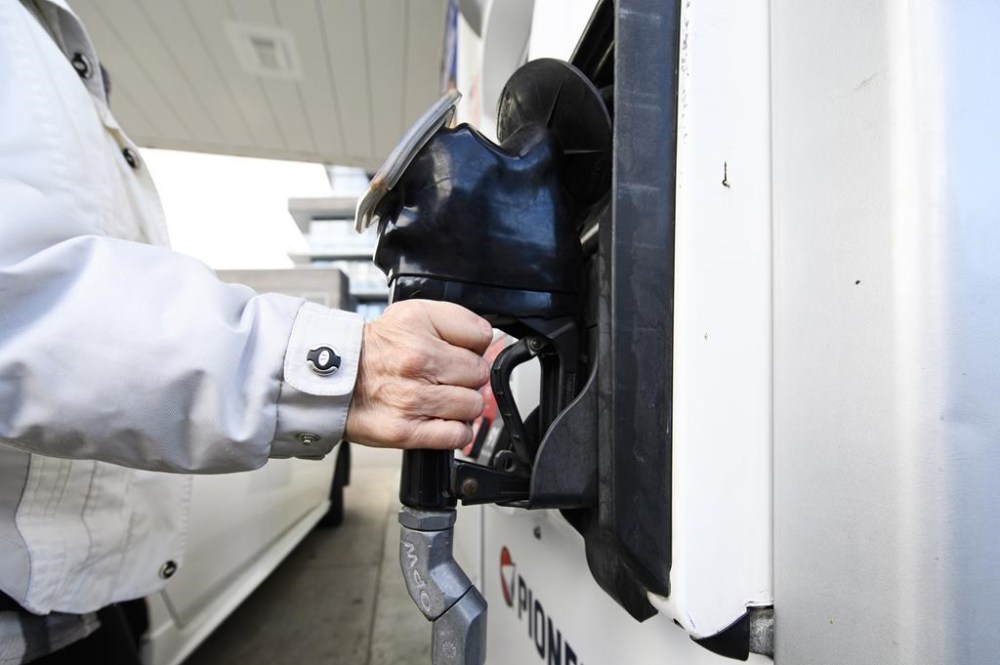
The first instalment of the 2024 Canada carbon rebate will be delivered to some Canadians today as long they filed their taxes by the middle of March. A woman gasses up at a gas station in Mississauga, Ont., Tuesday, Feb. 13, 2024. THE CANADIAN PRESS/Christopher Katsarov

The payments, based on household size, range from $190 in New Brunswick to $450 in Alberta for a typical family of four.

Ottawa has already launched a new online estimator that shows how much Canadians can expect to get from the rebates.

Hoping to make the rebates more familiar, Ottawa rechristened the “Canada Carbon Rebate” earlier this year, but is still negotiating with the big banks about changing how the deposits are labelled.

Ottawa has been battling with banks about how the deposits are labelled since they moved to quarterly payments for the rebates in 2022.

Many Canadians were confused — or didn’t even realize they were getting a rebate — when payments showed up with vague labels like “EFT deposit from Canada,” “EFT Credit Canada” or just “federal payment.”

Not all the banks co-operated. Some argued there was a 15-character limit on deposit descriptions, while others insisted making the change would be too complicated.

Banks have since been asked to use either the new full name — Canada Carbon Rebate — or a shortened version such as “CDACarbonRebate” in English or “Carbone RemiseCA” in French.

TD Bank said its clients will see the rebate listed as “CDACARBONREBATE CCR.”

RBC said their immediate deposits will be labelled “federal climate incentive,” but future deposits will be listed as “Canadian Carbon Rebate.”

The rebates are designed to offset what people pay in carbon pricing when they buy fuel so they’re not left worse off as a result.

People who take steps to lower their fuel use will do even better, since they still get the same rebate but pay less in carbon pricing.

The rebate amounts are set annually based on how much carbon price Ottawa expects to collect in each province.

British Columbia, Quebec and the Northwest Territories have their own carbon pricing system for consumers so residents there don’t receive the federal payment. Yukon and Nunavut use the federal system but have an agreement to distribute the proceeds themselves.

The parliamentary budget officer says about 80 per cent of Canadians get back more from the rebates than they pay.

But he also warns that the economic impact of carbon pricing could lower wages over time, erasing that benefit for some Canadians.

The government argues that climate change itself is likely to cause economic harm if left unchecked.

This report by The Canadian Press was first published April 15, 2024.

Report Error Submit a Tip

More Stories

Puzzles Palace

1 minute read Monday, Jul. 27, 2026

To solve our puzzles, please subscribe with this special offer: |

Klein claims he was offered PC party position to exit 2022 mayoral race to help Gillingham win

Carol Sanders 6 minute read Preview

Klein claims he was offered PC party position to exit 2022 mayoral race to help Gillingham win

Carol Sanders 6 minute read Updated: 12:32 PM CDT

Mayoral candidate Kevin Klein said he was offered a position with the provincial Tories if he pulled out of the 2022 mayoral race that saw then-city councillor Scott Gillingham defeat former mayor Glen Murray.

Read
Updated: 12:32 PM CDT

Police seize cocaine valued at $1.5M, about $750K in cash in raid on St. Vital house

Scott Billeck 5 minute read Preview

Police seize cocaine valued at $1.5M, about $750K in cash in raid on St. Vital house

Scott Billeck 5 minute read Yesterday at 3:30 PM CDT

A St. Vital homeowner and her husband were going about their business during an afternoon last month when police officers in tactical gear suddenly appeared, walking across their front lawn.

The target was a few doors down: a maroon bi-level home on a quiet stretch of Satinwood Place, within earshot of children playing outside at a nearby school.

The homeowner, who asked not to be named to protect their privacy, said the police presence caught the couple by surprise in the Southglen neighbourhood, where they weren’t accustomed to seeing that kind of activity.

“We never heard the (police) cars pull up, but there were cars blocking the entrance to the street from both sides,” said the neighbour. “They had a shield, a battering ram — everything. Just not used to seeing that.”

Read
Yesterday at 3:30 PM CDT

Jets trending in right direction after picking up points in first three games

Ken Wiebe 7 minute read Preview

Jets trending in right direction after picking up points in first three games

Ken Wiebe 7 minute read Yesterday at 5:06 PM CDT

Welcome to a small sample size season, when sweeping observations and hot takes can quickly become outdated and — occasionally — out of touch.

With that as a cautionary backdrop, the Winnipeg Jets are off to a 2-0-1 start that has them temporarily occupying top spot in the Central Division.

“We were optimistic that we’re a better team than we showed last year,” said Jets captain Adam Lowry. “We want to play fast. We want to compete hard, and we want to give ourselves a chance to win every night, so I think we’ve done that.”

As the Jets welcome the Colorado Avalanche on Wednesday to open a three-game homestand, they’ve gotten off to a fast start in a season that required one.

Read
Yesterday at 5:06 PM CDT

AI governance: Canada’s next structural test

Anne Thompson 4 minute read 2:00 AM CDT

Artificial intelligence is accelerating faster than the governance structures meant to contain it. Canada now faces a structural test — whether our institutions can protect autonomy, dignity, and continuity in an era when decision-making is increasingly mediated by systems we did not design, cannot fully audit, and do not yet constitutionally constrain.

This is not a technological problem. It is a governance problem.

AI systems influence how information flows, how institutions behave, and how decisions are made. They shape the conditions under which harm becomes predictable. They amplify both the strengths and weaknesses of the systems into which they are deployed. And they do all of this at a scale and speed that outpaces traditional regulatory tools.

Canada’s current approach to AI governance relies heavily on policy, guidelines, and sector-specific regulation. These are important, but they are not sufficient. What is missing is structural clarity — a constitutional-grade framework that defines authority, responsibility, accountability, and the minimum conditions under which AI systems may operate without undermining human dignity or institutional credibility.

Khan’s abrupt departure presents desperate Tories with a valuable opportunity

Tom Brodbeck 5 minute read Preview

Khan’s abrupt departure presents desperate Tories with a valuable opportunity

Tom Brodbeck 5 minute read Yesterday at 1:06 PM CDT

If the Manitoba Progressive Conservatives are serious about getting out of the political wilderness, they should start by electing a progressive conservative leader.

Read
Yesterday at 1:06 PM CDT