Study says El Nino, not climate change, was key driver of low rainfall that snarled Panama Canal

Advertisement

Advertise with us

WASHINGTON (AP) — The climate phenomenon known as El Nino — and not climate change — was a key driver in low rainfall that disrupted shipping at the Panama Canal last year, scientists said Wednesday.

Read this article for free:


or

Already have an account? Log in here »

To continue reading, please subscribe:

Subscribe and receive a limited-edition Free Press branded hat or tote.

Digital Subscription

One year of digital access for only $205*

  • Enjoy unlimited reading on winnipegfreepress.com
  • Read the E-Edition, our digital replica newspaper
  • Access News Break, our award-winning app
  • Play interactive puzzles

*First annual payment billed as $205.00 + GST for one year. This annual subscription will automatically renew at $233.00 + GST every 52 weeks (10% off the regular annual price of $259.35). Offer available to new and qualified returning subscribers only. Cancel any time.

To continue reading, please subscribe:

Add Free Press access to your Brandon Sun subscription for only an additional

$1 for the first 4 weeks*

  • Enjoy unlimited reading on winnipegfreepress.com
  • Read the E-Edition, our digital replica newspaper
  • Access News Break, our award-winning app
  • Play interactive puzzles
Start now

*Your next Brandon Sun subscription payment will increase by $1.00 and you will be charged $17.95 plus GST for four weeks. After four weeks, your payment will increase to $24.95 plus GST every four weeks.

Hey there, time traveller!
This article was published 01/05/2024 (884 days ago), so information in it may no longer be current.

WASHINGTON (AP) — The climate phenomenon known as El Nino — and not climate change — was a key driver in low rainfall that disrupted shipping at the Panama Canal last year, scientists said Wednesday.

A team of international scientists found that El Nino — a natural warming of the central Pacific that changes weather worldwide — doubled the likelihood of the low precipitation Panama received during last year’s rainy season. That dryness reduced water levels at the reservoir that feeds freshwater to the Panama Canal and provides drinking water for more than half of the Central American country.

Human-caused climate change was not a primary driver of the Central American country’s unusually dry monsoon season, the World Weather Attribution group concluded, after comparing the rainfall levels to climate models for a simulated world without current warming.
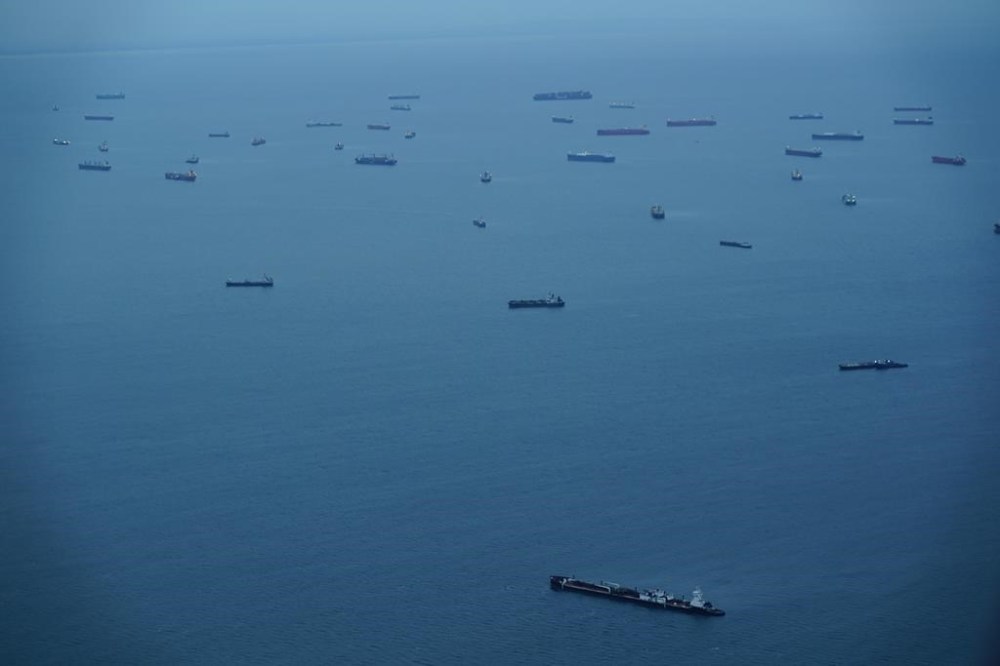
FILE - Cargo ships wait in Panama Bay before moving through the Panama Canal in Panama City, Sept. 23, 2023. The climate phenomenon known as El Niño — and not climate change — was a key factor driving low rainfall that disrupted shipping at the Panama Canal, scientists said Wednesday, May 1, 2024. (AP Photo/Arnulfo Franco, File)

The study has not been published in a peer-reviewed scientific journal yet but follows scientifically accepted techniques, and past such studies have frequently been published months later.

“Natural variability plays a critical role in driving many extremes,” said Kim Cobb, a climate scientist at Brown University, who was not involved in the study. “This is an important reminder that climate change isn’t always the answer.”

Panama experienced one of its driest years on record last year, receiving below-average rainfall for seven of the eight months of its May to December rainy season.

As a result, since last June, the Panama Canal Authority has restricted the number and size of ships passing through the Panama Canal due to low water levels in Lake Gatun, the canal’s main hydrological reserve. Global shipping is still being disrupted.

To test whether climate change had a role, the team of scientists analyzed weather data against computer simulations precise enough to capture precipitation in the region. Such models simulate a world without the current 1.2 degrees Celsius (2.2 degrees Fahrenheit) of warming since preindustrial times, and see how likely the lack of rainfall would be in a world without fossil fuel-charged warming.

The climate models did not show a trend similar to the drying that Panama experienced last year. In fact, many models show a wetter trend in the region due to climate change from carbon dioxide and methane emissions produced by the burning of coal, oil and natural gas.

Meanwhile, the analysis showed that El Nino reduced the 2023 rainfall by about 8%, and that it’s unlikely Panama would have experienced such a dry rainy season without the influence of the weather phenomenon. The researchers said increased demand for water in the region worsened the shortfall.

The group used more than 140 years of rainfall records collected from 65 weather stations — a “statistician’s dream,” said Clair Barnes, a researcher at Imperial College of London and one of the study’s authors.

“So we’re very confident that El Nino is driving the low precipitation,” said climate scientist Friederike Otto, also of Imperial College, who coordinates the attribution study team.

The World Weather Attribution group launched in 2015 largely due to frustration that it took so long to determine whether climate change was behind an extreme weather event. Studies like theirs, within attribution science, use real-world weather observations and computer modeling to determine the likelihood of a particular happening before and after climate change, and whether global warming affected its intensity.

___

The Associated Press’ climate and environmental coverage receives financial support from multiple private foundations. AP is solely responsible for all content. Find AP’s standards for working with philanthropies, a list of supporters and funded coverage areas at AP.org.


Report Error Submit a Tip

More Stories

Man who killed two Indigenous women, was accused of killing third, back in prison less than year after statutory release

Erik Pindera 5 minute read Preview

Man who killed two Indigenous women, was accused of killing third, back in prison less than year after statutory release

Erik Pindera 5 minute read Yesterday at 4:06 PM CDT

A Winnipeg man convicted of killing two First Nations women more than a decade ago — with charges stayed in a third slaying — has been sent back to prison less than a year after he left under conditions.

Parole Board of Canada officials revoked 67-year-old Shawn Lamb’s statutory release after a hearing last week.

“Your actions are not beyond your control, yet you continue to wilfully make poor decisions that place the public at risk,” board member Arun Kundu-Thomsen wrote in a decision released this week.

Lamb gained statutory release — a legislated conditional release most federal inmates automatically qualify for after serving two-thirds of their sentence — in November last year and lived in several Ontario facilities for federal offenders.

Read
Yesterday at 4:06 PM CDT

Netminder no stranger to heavy workload as Jets new No. 1 readies for regular-season start

Ken Wiebe 7 minute read Preview

Netminder no stranger to heavy workload as Jets new No. 1 readies for regular-season start

Ken Wiebe 7 minute read Wednesday, Sep. 30, 2026

Stuart Skinner is quick to admit that he wasn’t always wired this way.

As the Winnipeg Jets new starting goalie prepares for his fifth NHL season, Skinner conceded that the accountability aspect that is now synonymous with his character took some time to build up.

“As I grew up and got older, you go through certain things in life that either build character or make things worse for you. It depends on your choice and your decision,” Skinner said during a recent conversation with the Free Press. “I learned it through trial and error. I learned that, sometimes, it’s hard to get honest with yourself… For me, it’s definitely been a road for me to get to a place like this.

“It definitely is one of my pillars. Accountability is so important because that brings you into a spot of what you’re going to do next. It’s easy to let yourself off the hook. I’m more in the business of putting myself on the hook.”

Read
Wednesday, Sep. 30, 2026

J’accuse!: Kinew uses French to fry interim Tory leader over alleged caucus subterfuge

Chris Kitching and Maggie Macintosh 4 minute read Preview

J’accuse!: Kinew uses French to fry interim Tory leader over alleged caucus subterfuge

Chris Kitching and Maggie Macintosh 4 minute read Yesterday at 5:55 PM CDT

NDP Premier Wab Kinew took a dig at the Progressive Conservatives’ leadership change while facing off with Obby Khan’s short-term replacement for the first time in question period Thursday.

Read
Yesterday at 5:55 PM CDT

Confidence vote was gamble for MLA, Tories: political expert

Alex Lambert 5 minute read Preview

Confidence vote was gamble for MLA, Tories: political expert

Alex Lambert 5 minute read Yesterday at 7:30 PM CDT

BRANDON — A Progressive Conservative MLA’s decision to put forward a confidence motion against the party’s former leader carries a lot of risk for her and the Tories, a political science expert says.

Obby Khan resigned as leader of the PCs on Monday after Jodie Byram (Agassiz) initiated a confidence vote against him the previous week.

The majority of the PC caucus voted in favour of Khan, but he resigned a few days later, citing continued efforts to undermine him by a minority of MLAs.

Brandon University political science Prof. Kelly Saunders said while she doesn’t know what Byram’s motivations were for triggering the vote, such a move carries a lot of risk.

Read
Yesterday at 7:30 PM CDT

Gordon Bell rings in a century

Maggie Macintosh 13 minute read Preview

Gordon Bell rings in a century

Maggie Macintosh 13 minute read 12:48 PM CDT

Mischka Valencia had gotten used to the hum of heavy machinery at Gordon Bell High School.

“Ever since I’ve been here, it’s all been under construction,” the Grade 12 student said, standing on the sidelines of the brightly painted revamped outdoor basketball court. “I had no idea this was a court.”

The Filipina teenager landed in Winnipeg several months after the inner-city campus had transformed into a construction site.

It was the fall of 2023 and Mischka’s priorities were fitting in, befriending classmates and learning a third language via first-period French.

Read
12:48 PM CDT

Study says El Nino, not climate change, was key driver of low rainfall that snarled Panama Canal

Suman Naishadham, The Associated Press 4 minute read Preview

Study says El Nino, not climate change, was key driver of low rainfall that snarled Panama Canal

Suman Naishadham, The Associated Press 4 minute read Wednesday, May. 1, 2024

WASHINGTON (AP) — The climate phenomenon known as El Nino — and not climate change — was a key driver in low rainfall that disrupted shipping at the Panama Canal last year, scientists said Wednesday.

A team of international scientists found that El Nino — a natural warming of the central Pacific that changes weather worldwide — doubled the likelihood of the low precipitation Panama received during last year's rainy season. That dryness reduced water levels at the reservoir that feeds freshwater to the Panama Canal and provides drinking water for more than half of the Central American country.

Human-caused climate change was not a primary driver of the Central American country's unusually dry monsoon season, the World Weather Attribution group concluded, after comparing the rainfall levels to climate models for a simulated world without current warming.

The study has not been published in a peer-reviewed scientific journal yet but follows scientifically accepted techniques, and past such studies have frequently been published months later.

Read
Wednesday, May. 1, 2024