Alberta announces committee to help speed up oilsands tailings reclamation
Advertisement
Read this article for free:
or
Already have an account? Log in here »
To continue reading, please subscribe:
Digital Subscription
One year of digital access for only $1.44 a week*
- Enjoy unlimited reading on winnipegfreepress.com
- Read the E-Edition, our digital replica newspaper
- Access News Break, our award-winning app
- Play interactive puzzles
*Billed as $5.77 plus GST every four weeks. After 52 weeks, price increases to the regular rate of $19.95 plus GST every four weeks. Offer available to new and qualified returning subscribers only. Cancel any time.
To continue reading, please subscribe:
Add Free Press access to your Brandon Sun subscription for only an additional
$1 for the first 4 weeks*
- Enjoy unlimited reading on winnipegfreepress.com
- Read the E-Edition, our digital replica newspaper
- Access News Break, our award-winning app
- Play interactive puzzles
*Your next Brandon Sun subscription payment will increase by $1.00 and you will be charged $17.95 plus GST for four weeks. After four weeks, your payment will increase to $24.95 plus GST every four weeks.
Read unlimited articles for free today:
or
Already have an account? Log in here »
Hey there, time traveller!
This article was published 07/05/2024 (895 days ago), so information in it may no longer be current.
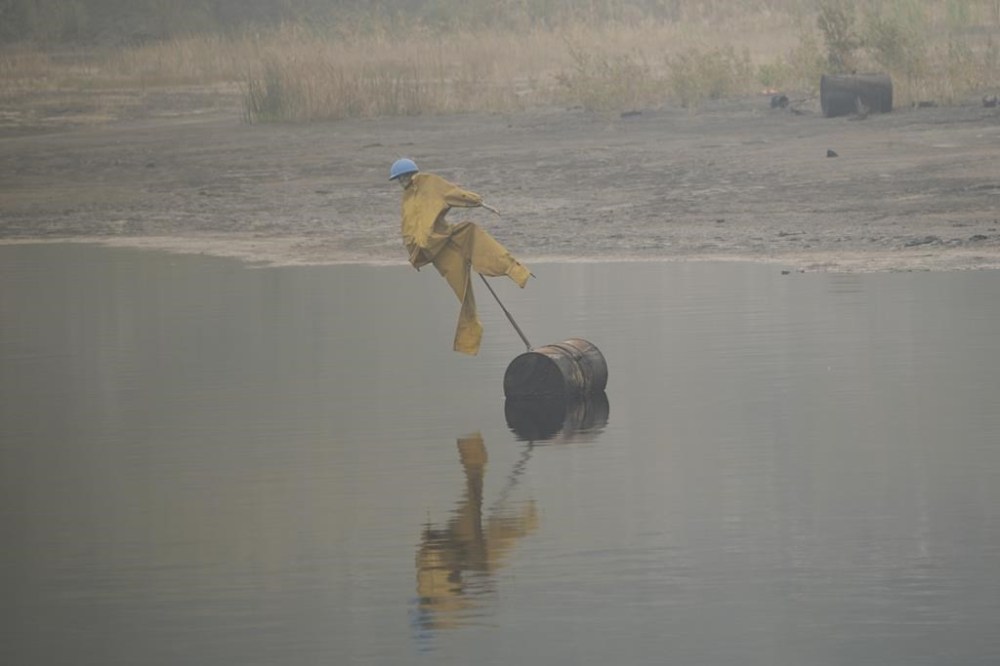
EDMONTON – The Alberta government has appointed a new committee to look into ways to speed up the reclamation of the large and growing tailings ponds in the province’s oilsands.
The oilsands mine water steering committee will examine potential policies and options that would allow reclamation to occur as quickly and safely as possible.
“Managing oilsands mine water and reclaiming tailings ponds is a complex issue that requires collaboration,” Environment Minister Rebecca Schulz said Tuesday in a statement.
“This committee will look at all the feasible options for addressing oilsands mine water and tailings ponds and suggest ways to safely reclaim the land and ensure our waterways remain clean for future generations.”
The six-member committee includes a United Conservative legislature member, a retired oilsands executive, an engineering professor, a former Progressive Conservative cabinet minister, a former regulator and the former chief of the Fort McKay First Nation.
The committee will be supported by a facilitator from outside the government. There is no date as to when it must report.
The committee follows in the footsteps of other bodies established over decades to look into the same issue.
Those bodies include Canada’s Oilsands Innovation Alliance, established by oilsands producers, as well as the government’s own Oilsands Tailings Research Facility. The universities of Alberta and Calgary both have oilsands research teams, as does the Northern Alberta Institute of Technology.
“This is a Groundhog Day response,” said Keith Stewart of Greenpeace.
“The libraries are full of research that’s already been done. The number of committees that have been struck to avoid actually solving (the problem) is stunning.”
All oilsands producers have already filed reclamation plans with the provincial regulator. The Alberta Energy Regulator has said those plans are based on unproven technology, but they remain on the books.
Some measures put the tailings ponds at more than 300 square kilometres in size. They continue to grow.
Last fall, the provincial regulator approved an expansion of Suncor’s Fort Hills mine on a rare type of wetland once considered for environmental protection.
The Canadian Parks and Wilderness Society used company data to estimate that mine alone will create 60 square kilometres of tailings ponds over the life of the mine.
A December report from the University of Calgary’s School for Public Policy concluded the provincial government’s Mine Financial Security Program is inadequate to ensure Albertans won’t be picking up the tab for oilsands cleanup, estimated from $45 billion to $130 billion, with $2 billion currently in reserve.
This report by The Canadian Press was first published May 7, 2024.