Another spring amid the smoke Despite somewhat positive wildfire forecast, accelerant of climate change still smoulders
Read this article for free:
or
Already have an account? Log in here »
To continue reading, please subscribe:

Digital Subscription
One year of digital access for only $205*
- Enjoy unlimited reading on winnipegfreepress.com
- Read the E-Edition, our digital replica newspaper
- Access News Break, our award-winning app
- Play interactive puzzles
*First annual payment billed as $205.00 + GST for one year. This annual subscription will automatically renew at $233.00 + GST every 52 weeks (10% off the regular annual price of $259.35). Offer available to new and qualified returning subscribers only. Cancel any time.
To continue reading, please subscribe:
Add Free Press access to your Brandon Sun subscription for only an additional
$1 for the first 4 weeks*
- Enjoy unlimited reading on winnipegfreepress.com
- Read the E-Edition, our digital replica newspaper
- Access News Break, our award-winning app
- Play interactive puzzles
*Your next Brandon Sun subscription payment will increase by $1.00 and you will be charged $17.95 plus GST for four weeks. After four weeks, your payment will increase to $24.95 plus GST every four weeks.
Read unlimited articles for free today:
or
Already have an account? Log in here »
Hey there, time traveller!
This article was published 17/05/2024 (856 days ago), so information in it may no longer be current.
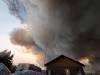
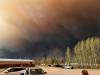
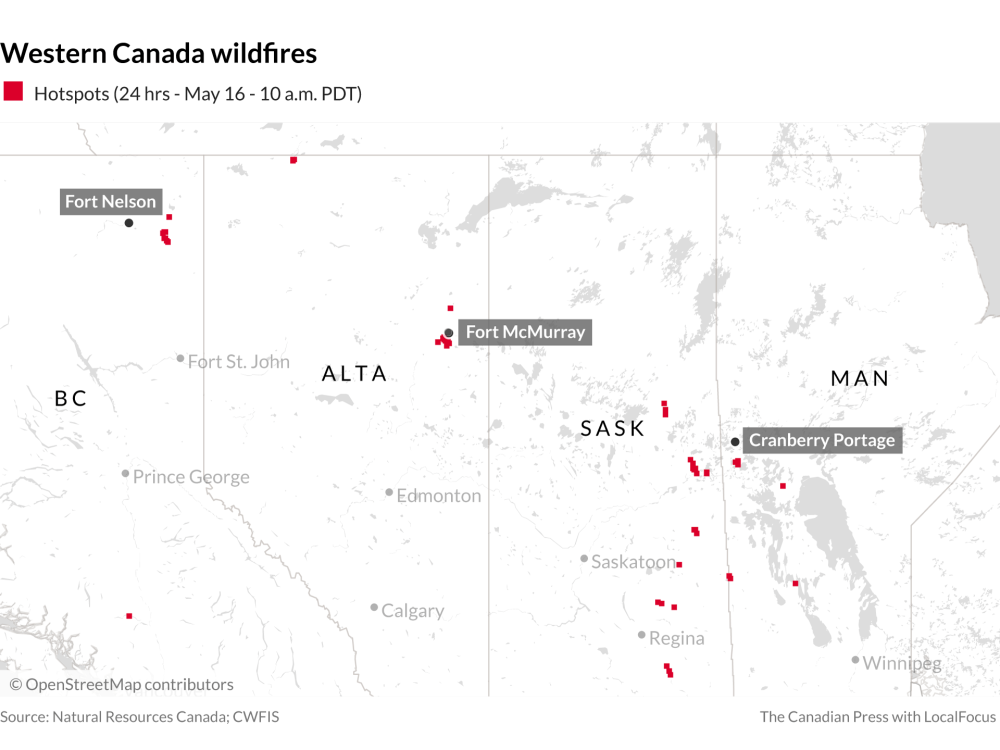
In Alberta, parts of Fort McMurray are evacuating again. In B.C., more than 4,000 residents of Fort Nelson and the Fort Nelson First Nation were ordered to flee this week. Thick smoke has already descended on large swaths of the West, from Edmonton to Winnipeg.
It’s a grim — and familiar — start to wildfire season in Western Canada as tinder-dry forests go up in flames.
In addition to the flames, smoke has enveloped Edmonton and other communities, including Winnipeg, leading to air-quality warnings.
The smoke from Western Canada wildfires descended around the same time during last year’s devastating fire season, according to Environment Canada. Wildfire smoke made headlines last year across the continent, cloaking major cities, including New York City, Toronto and Chicago.
Around the world, the size and intensity of wildfires are increasing as climate change impacts deepen.
Mike Flannigan, the B.C. Innovation Research Chair in predictive services, Emergency Management and Fire Science at Thompson Rivers University in Kamloops, says climate change is the driving force behind increasing Western Canada wildfires.
“Some people won’t like this, but it’s the role of climate change,” he says. “I think B.C. is a really stark example. From 2017 to 2023, we burned more areas than in the previous 58 years. So yeah, we’re going to see more fire in the future and more smoke.”
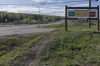
A wildfire danger sign is set to extreme, as evidence of the 2016 fire can be seen in the background, near Fort McMurray, Alta. earlier this week.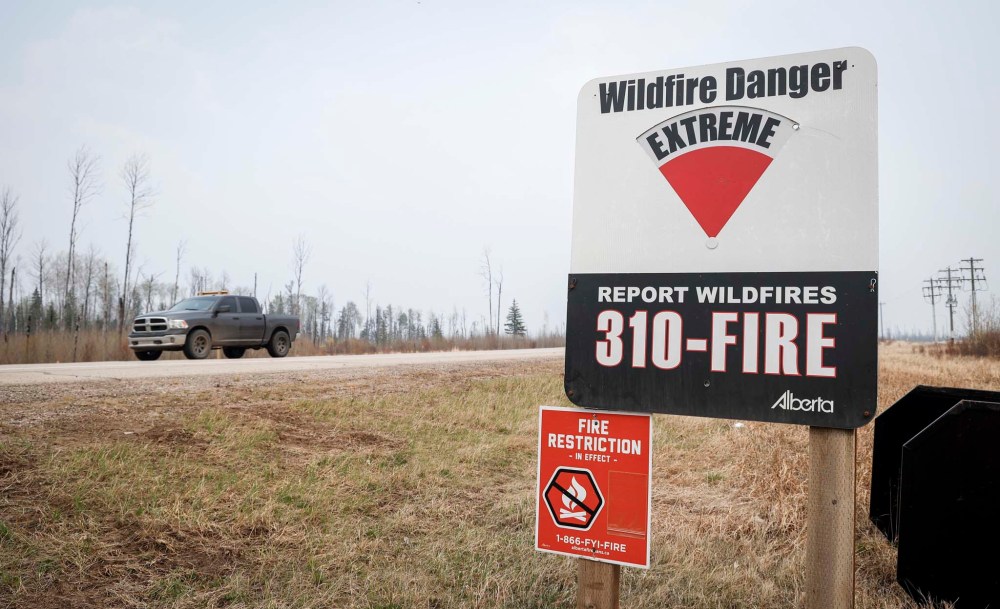
Warmer temperatures mean longer fire seasons and increase the likelihood of lightning — a major fire starter — and sucks more moisture out of the atmosphere, Flannigan says.
Last year shattered records for how much land burned across Canada, and it’s almost impossible to predict exactly what will happen this year, but there are glimmers of hope that it won’t be quite as bad. Fire weather forecasts look positive, according to Flannigan.
What’s notable this year, he says, are the fires that smouldered over the winter in both Alberta and B.C. In past years, those would have been dealt with by fire crews in the fall, but those crews were stretched thin late in the season and the hot spots were too vast.
“We’re off to a fast start,” he says.
“It’s more active than average, but it’s not close to 2023.”
Here’s a breakdown of what’s happening in Western Canada, where the vast majority of fires are burning.
British Columbia
Holdover fires and drought conditions across most of the province — particularly the northeast — have set the stage for B.C.’s 2024 wildfire season. Little rain and snow fell over the winter and most watersheds across B.C. never had a chance to replenish. This has led to an early and aggressive start to the season, with numerous new fires flaring up in April and May.
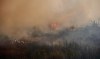
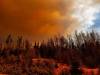
Over Mother’s Day weekend, the Parker Lake fire near Fort Nelson displaced more than 4,000 community members. At more than 8,000 hectares as of May 15, the wildfire continues to grow and is burning just a few kilometres from the town.
A view of the Parker Lake wildfire near Fort Nelson, B.C. on Monday. 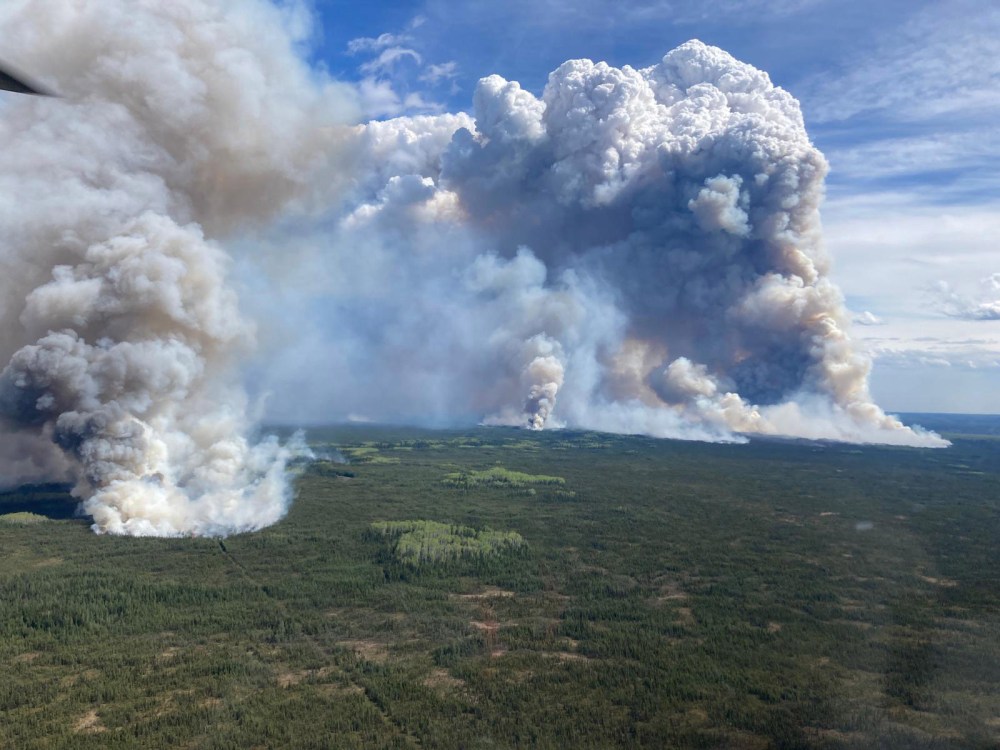
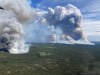
Holdover fires, the remnants of massive 2023 fires that smouldered in the ground throughout the winter, are also starting to flare up as they get exposed to warm, dry winds. One, called Patry Creek, is just north of Fort Nelson and BC Wildfire Service crews are carefully monitoring its growth.
“In the past, the winter conditions are what put out a lot of holdover fires,” B.C. Emergency Management Minister Bowinn Ma told reporters at a May 13 news conference. “In this case, what we’ve seen is that due to higher temperatures and persistent drought … from last year, many of these holdover fires were not put out the way that they normally are.”
According to the BC Wildfire Service, 126 wildfires were burning as of May 16 and conditions in the northeast, where most of the early-season activity is occurring, are creating “aggressive fire behaviour and increased rates of spread, which will challenge suppression efforts.”
Sherry Williams, a meteorologist who works on air quality for Environment and Climate Change Canada, said the weekend of May 10 was the first time this year where the air quality in B.C. degraded enough for a special statement from the agency. That’s a little behind last year’s first notice, released on May 5.
Alberta
Much like B.C., drought conditions in Alberta are stoking flames and fears for a bad wildfire season, with 23 fires still burning from 2023 after a dry winter.
As of May 15, there were 45 wildfires in the province, according to the Alberta government, with two fires near Fort McMurray and Grande Prairie burning out of control. All but one of those 45 fires is burning north of Edmonton.
Statistics from the Canadian Interagency Forest Fire Centre show more than 1.4 million hectares have burned so far this year — almost three times as much as this time last year. Flannigan, however, says those figures are misleading.
Alberta, he says, is counting fires from last year for area burned, and the real figure this year is likely closer to 30,000 to 40,000 hectares, compared to approximately 530,000 hectares at this time last year.
In Edmonton, advisories were issued for air quality over the weekend of May 10, which is comparable to conditions at this time last year, according to Williams. Last year, air quality started to degrade in the north in early May and moved south to the middle of the province, she said.
JASON FRANSON / THE CANADIAN PRESS Smoke from wildfires resulted in recent air-quality warnings for several Western Canadian cities including Edmonton.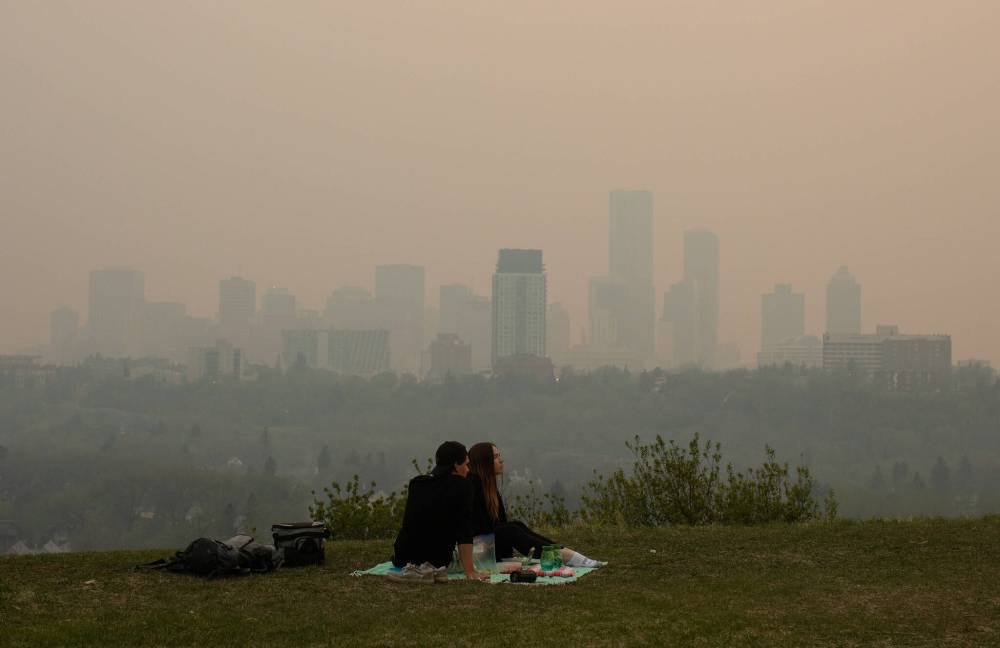
Fort McMurray, the site of a devastating fire that ripped through the town and destroyed approximately 2,400 homes in 2016, is once again on alert as residents from southern communities evacuate and those from northern neighbourhoods report traffic jams for those eager to escape before an evacuation order is issued.
Near Grande Prairie, some rural residents were ordered to evacuate, but that was downgraded to an evacuation alert on May 15 and residents were allowed to return home.
Saskatchewan
The situation is less dire in Saskatchewan, where nine fires are currently burning, according to the province. Two of those fires were out of control on May 15 and residents of Creighton, near the Manitoba border, were on alert as a fire rages near Flin Flon.
There have been more fires so far this year in Saskatchewan compared to last year, but 30 per cent less area burned to date, according to the Canadian Interagency Forest Fire Centre.
Manitoba
The situation is almost identical in Manitoba, where nine fires are currently burning, with two out of control, according to the province. Both of those fires are near the Saskatchewan border, one near Clearwater Lake and the other east of Flin Flon and eating into Grass River Provincial Park, which forced the evacuation of the community of Cranberry Portage.
Evacuees from that community were hopeful they could return home soon, as the fire moved away from the town.

Statistics from the Canadian Interagency Forest Fire Centre show the number of fires this year are more than double last year’s total at this time, and 35,000 hectares have already burned as of May 14 — compared to just over 2,000 hectares last year.
Northwest Territories
The Northwest Territories was ravaged by fire in 2023, with thousands forced to flee and the capital threatened by flames. More than two-thirds of the entire population of the territory were evacuated over the season last year.
The fires have started early again this year, with seven currently burning, according to the territorial government. So far this year, there have been 13 wildfires, compared to four at this time in 2023, but the area burned is down significantly, according to the Canadian Interagency Forest Fire Centre.
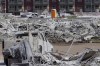
JASON FRANSON / THE CANADIAN PRESS A residential area in Enterprise, N.W.T. was destroyed by the wildfires last year. Persistent drought and months of above average temperatures have raised the risk of a repeat of last year's record-breaking wildfires.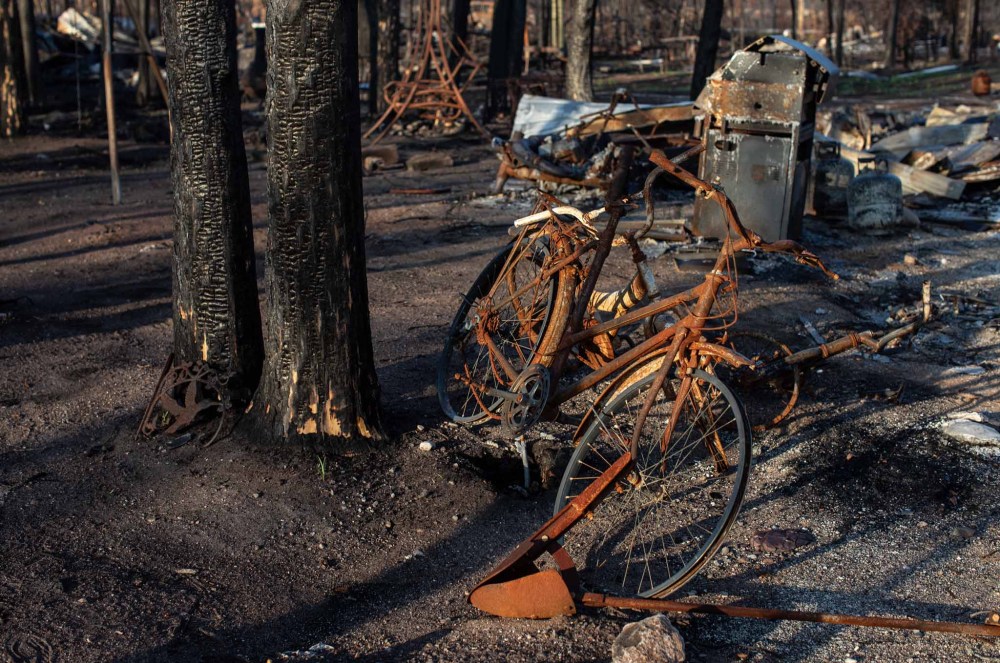
The community of Fort Liard, near the B.C. border, was notified to prepare for the possibility of an evacuation on May 10. As of May 15, the evacuation notice remains in effect.
Globally, the deepening impacts of climate change are being felt on the wildfire front.
As Juliette Biao Koudenoukpo, with the United Nations forum on forests, wrote last year, “climate change exacerbates wildfire risk through increased drought, high air temperatures, low relative humidity, dry lightning and strong winds.”
The conditions in northeast B.C. are consistent with research connecting climate change-related events like the 2021 heat dome that settled over the West to bigger, faster-moving and more destructive fires on the landscape. At higher latitudes, overall warming is more pronounced, stacking the odds against a mild fire season. When temperatures rise and less rain and snow falls, forests become drier year after year. In such conditions, all it takes is one spark.
— The Narwhal
Related Articles
The latest news on wildfires in Canada as thousands forced from homes in the West