Nigeria is emerging as a critical mineral hub. The government is cracking down on illegal operations
Advertisement
Read this article for free:
or
Already have an account? Log in here »
To continue reading, please subscribe:

Digital Subscription
One year of digital access for only $205*
- Enjoy unlimited reading on winnipegfreepress.com
- Read the E-Edition, our digital replica newspaper
- Access News Break, our award-winning app
- Play interactive puzzles
*First annual payment billed as $205.00 + GST for one year. This annual subscription will automatically renew at $233.00 + GST every 52 weeks (10% off the regular annual price of $259.35). Offer available to new and qualified returning subscribers only. Cancel any time.
To continue reading, please subscribe:
Add Free Press access to your Brandon Sun subscription for only an additional
$1 for the first 4 weeks*
- Enjoy unlimited reading on winnipegfreepress.com
- Read the E-Edition, our digital replica newspaper
- Access News Break, our award-winning app
- Play interactive puzzles
*Your next Brandon Sun subscription payment will increase by $1.00 and you will be charged $17.95 plus GST for four weeks. After four weeks, your payment will increase to $24.95 plus GST every four weeks.
Read unlimited articles for free today:
or
Already have an account? Log in here »
Hey there, time traveller!
This article was published 26/05/2024 (864 days ago), so information in it may no longer be current.
ABUJA, Nigeria (AP) — Nigeria’s government is cracking down on illegal mining, making dozens of arrests of unlicensed miners since April for allegedly stealing the country’s lithium, a critical mineral used in batteries for electric vehicles, smartphones and power systems.
The recent arrests come as Nigeria seeks to regulate its mining operations of critical minerals, curb illegal activity and better benefit from its mineral resources. The clean energy transition, a shift away from coal, oil and gas and toward renewable energy and batteries has spiked global demand for lithium, tin and other minerals. Illegal mines are rife in the country’s fledging industry as corruption among regulatory officials is common and the mineral deposits are located in remote areas with minimal government presence. Officials say profits from illicit mining practices has helped arm militia groups in the north of the county.
In the most recent arrests in mid-May, a joint team of soldiers and police conducted a raid on a remote market in Kishi, in the country’s southwestern Oyo State. Locals said the market, once known for selling farm produce, has become a center for illicit trade in lithium mined in hard-to-reach areas. The three-day operation resulted in the arrest of 32 individuals, including two Chinese nationals, local workers and mineral traders, according to the state government and locals. Loads of lithium were also seized.
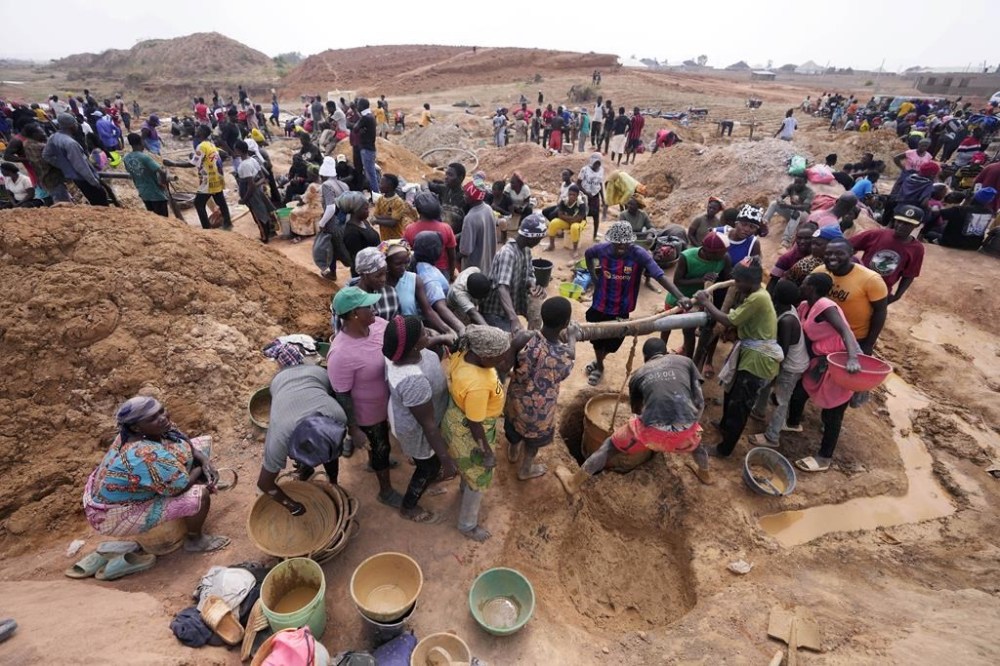
Jimoh Bioku, a Kishi community leader, said there had been “clandestine searches” for the mineral at remote sites tucked away in the bush in the past years by Chinese nationals before “they engaged people to dig for them and turned the market into a transit point.” The community was “particularly worried about the insecurity that usually follows illegal mining and that was why we reported to the state government,” he said.
China is the dominant player in the global EV supply chain, including in Nigeria where China-owned companies employ mostly vulnerable people leaving Nigeria’s far north — ravaged by conflicts and rapid desertification — to work in mining operations throughout the country. China’s nationals and companies are frequently in the spotlight for environmentally damaging practices, exploitative labor and illicit mining. There have been at least three cases of illegal mining arrests involving Chinese nationals in two months.
President Bola Tinubu has repeatedly blamed illegal mining for the worsening conflicts in the country’s north and asked the international community for help to stop the problem, which provides armed groups with the proceeds needed to sustain and arm themselves.
The Chinese embassy in Abuja did not respond to an Associated Press request for comment on the arrests and claims of illegal operations. But in a statement last year following a report by The Times of London alleging Chinese miners were bribing militants for access, the embassy said it “always encouraged and urged the Chinese companies and nationals in Nigeria to abide by the laws and regulations of Nigeria.”
Nigeria is emerging as a new source of lithium in Africa as the world’s largest producers, like Australia and Chile, are unable to fulfill the growing demand worldwide. But illegal activities thrive in Nigeria’s extractive sector, denying the government due revenues, said Emeka Okoro, whose Lagos-based SBM Intelligence firm has researched illicit mining and terrorism financing in northern Nigeria.
And the combination of conflict and climate change effects, such as once fertile land rapidly turning into useless arid sand in northern Nigeria, has produced a cheap workforce for mining sites.
The arrests of “both Chinese nationals and young Hausa boys from conflict-affected regions underscore a troubling pattern,” Okoro told the AP. “The socioeconomic strain stemming from conflict and the repercussions of climate change has given rise to a vulnerable demographic desperate for survival.”
To fight resource theft that causes losses of $9 billion to the government annually, according to the country’s extractive industry transparency watchdog, the West African nation has set up a 2,200-strong “corps of mining marshals” earlier in the year.
While existing law enforcement agencies are still combating the problem, the new corps is geared at curbing “the nefarious activities of illegal miners,” said Segun Tomori, spokesperson for the solid minerals ministry.
Before the Kishi raid, the mining corps arrested two trucks laden with lithium on the outskirts of the capital Abuja in April. Later that month, the corps raided a location in Karu, Nasarawa State, near Abuja, leading to the arrest of four Chinese nationals and the seizure of tons of lithium. Tomori said the cases are now in court.

On April 22, a federal court in Ilorin, in the north-central region, convicted two Chinese nationals for illegal mining and sentenced them to a one-year jail term, although with an option of a fine.
Nigeria has long neglected the solid minerals sector, which allows some communities like the northern-central town of Jos — which is tin-abundant — to depend on subsistence mining for their livelihood.
For those communities where livelihood is tied to mining, Tomori said the government is encouraging artisanal miners there to form cooperatives and operate legally.
___
The Associated Press’ climate and environmental coverage receives financial support from multiple private foundations. AP is solely responsible for all content. Find AP’s standards for working with philanthropies, a list of supporters and funded coverage areas at AP.org.