Climate-related extreme weather puts oil and gas assets, production at risk
Advertisement
Read this article for free:
or
Already have an account? Log in here »
To continue reading, please subscribe:

Digital Subscription
One year of digital access for only $205*
- Enjoy unlimited reading on winnipegfreepress.com
- Read the E-Edition, our digital replica newspaper
- Access News Break, our award-winning app
- Play interactive puzzles
*First annual payment billed as $205.00 + GST for one year. This annual subscription will automatically renew at $233.00 + GST every 52 weeks (10% off the regular annual price of $259.35). Offer available to new and qualified returning subscribers only. Cancel any time.
To continue reading, please subscribe:
Add Free Press access to your Brandon Sun subscription for only an additional
$1 for the first 4 weeks*
- Enjoy unlimited reading on winnipegfreepress.com
- Read the E-Edition, our digital replica newspaper
- Access News Break, our award-winning app
- Play interactive puzzles
*Your next Brandon Sun subscription payment will increase by $1.00 and you will be charged $17.95 plus GST for four weeks. After four weeks, your payment will increase to $24.95 plus GST every four weeks.
Read unlimited articles for free today:
or
Already have an account? Log in here »
Hey there, time traveller!
This article was published 21/07/2024 (807 days ago), so information in it may no longer be current.
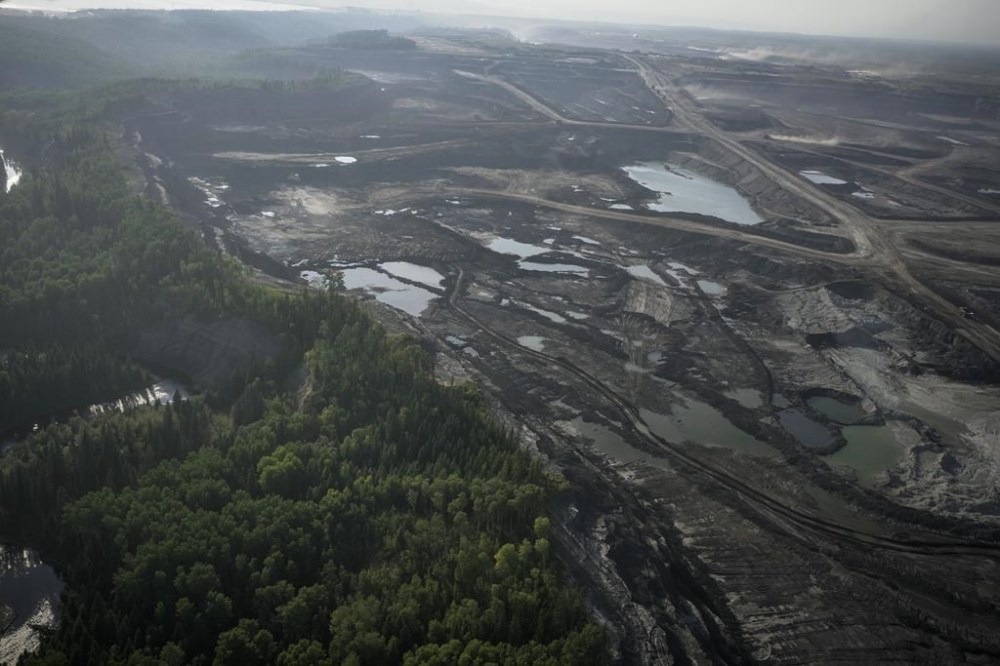
CALGARY – Suncor Energy Inc. filed a disclosure document last year laying out what would happen if extreme weather were to force a 10-day shutdown of its massive Base Plant oilsands mine in northern Alberta.
The document — which Suncor filed with CDP, a global non-profit that maintains a database on corporate environmental action and climate risk — details the financial risk to the company posed by such a scenario.
While the likelihood of extreme weather events remains “unknown,” Suncor said in the document that a 10-day Base Plant shutdown could cost the company $56 million per day (more than half a billion dollars in total) in the form of lost revenue due to production losses.
When analysts talk about the oil and gas sector’s exposure to climate change-related risk, they often come at it from a policy or demand forecast perspective. They look at the risk that climate change will prompt governments to impose more regulation on the fossil fuel sector, or that the energy transition will lead to a decline in demand for oil and gas.
But the oil and gas sector, like all industries, is also exposed to climate risk in a physical sense. That risk has been hammered home this month, as out-of-control wildfires in northern Alberta forced several Canadian oilsands companies to evacuate non-essential workers from their sites. Suncor itself, Canada’s second-largest oilsands producer by volume, has temporarily curtailed production at its Firebag complex due to the fire danger.
Also this month, Hurricane Beryl forced the temporary shutdown of offshore oil platforms along the U.S. Gulf Coast, one of North America’s most important regions for energy resources and infrastructure.
“Oil and gas infrastructure, like everything else, has been increasingly exposed to severe weather events fuelled increasingly by climate change,” said Craig Stewart, vice-president of climate change with the Insurance Bureau of Canada.
“We’ve seen it all the way back to Hurricane Katrina, which disrupted activity in the Gulf of Mexico back in 2005. We saw it in the Fort McMurray fire in 2016, where oil and gas sector or oilsands activity was disrupted for a month … and we’ve seen it elsewhere in the world as well.”
More than 40 per cent of the world’s commercially recoverable oil and gas reserves are highly exposed to the effects of climate change, according to a 2021 report by risk intelligence company Verisk Maplecroft. The report pointed to that year’s deep freeze in Texas that knocked U.S. oil and gas output to a three-year low, as well as the effects of Hurricane Ida, which caused a record 55 spills in the Gulf of Mexico and created historic disruptions to the supply of both crude oil and refined products.
Refineries, drilling rigs, export terminals and pipelines are also vulnerable to flooding, tornadoes and even drought, which has the potential to limit the amount of water the industry can draw on for processes like hydraulic fracturing. And all of these weather events are becoming more common, Verisk Maplecroft said.
“These types of events are going to become more frequent and more extreme, creating even greater shocks within the industry,” the report stated.
There’s big money in oil and gas, which means there are millions of dollars at play every time a tropical storm rears its head or a refinery trips off during a heat wave. If weather knocks out a significant amount of a jurisdiction’s oil output, it can cause temporary commodity price spikes that trickle all the way down to the consumer.
For example, nearly half of the total petroleum refinery capacity in the U.S. and 51 per cent of that country’s total natural gas processing plant capacity is located along the Gulf Coast.
Earlier this year, the U.S. Energy Information Administration warned of the potential for a “particularly intense” hurricane season in 2024, suggesting there is a heightened risk of weather-related production outages.
The EIA has also said a “high-impact” hurricane that significantly disrupts U.S. oil production could increase monthly average retail gasoline prices by up to 30 cents US per gallon.
In Canada, the largest oil-producing region is the oilsands, located in the boreal forest of northern Alberta — an area highly prone to wildfires. Thousands of oilsands workers were evacuated in the 2016 wildfire that destroyed part of the community of Fort McMurray, forcing companies to reduce their oil output by a million barrels per day.
The resulting economic impact was so severe that Canadian GDP contracted 0.4 per cent in the second quarter of 2016. Economists say GDP would have grown 0.1 per cent that quarter, excluding the impact of wildfire on Canadian oil production.
Thomas Liles, vice-president of upstream research for Rystad Energy, said while that event took place more than eight years ago, it remains fresh in the minds of many.
“From the industry’s perspective, there’s still a lot of scarring from the events in 2016,” he said.
Environmentalists say it’s ironic that the fossil fuel sector is being affected by climate change-related disasters, even as it makes plans to continue to grow oil and gas output in the future.
“They’re just throwing fuel on the fire,” said Keith Stewart, senior energy strategist for Greenpeace Canada.
“These companies have business plans that are going to make extreme weather even more extreme.”
But Liles said while the risk remains, the energy industry is better prepared for weather-related disasters than it was a decade ago. Companies have spent years developing detailed emergency response plans to protect their workers and their assets.
“I think the industry at large is pretty used to judging risks and dealing with those accordingly,” he said, adding that even if extreme weather intensifies in the years to come, it’s unlikely to dissuade companies from investing in lucrative areas like the oilsands or the Gulf of Mexico.

What fossil fuel companies are increasingly doing, said the IBC’s Stewart, is seeking insurance coverage to protect them against not just physical loss and damage, but against the impacts of business interruption in the event of extreme weather.
So far, they have had “varying” success, he said.
“Reinsurers have reduced their exposure to the commercial market in Canada over the last five years due to the growing threat of climate-driven disaster,” Stewart said, adding that getting insurance in wildfire-prone areas like the boreal forest is becoming increasingly difficult for businesses.
“Any operations, whether oil or gas or something else, that are located in those areas are going to have difficulty.”
This report by The Canadian Press was first published July 21, 2024.