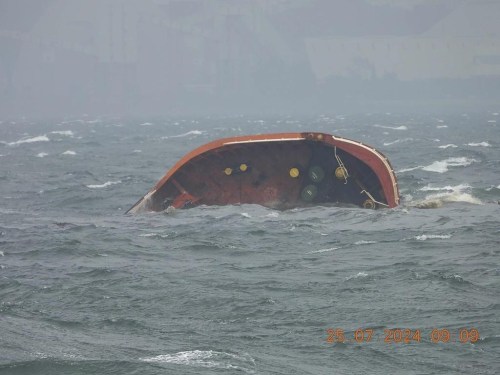
Philippine oil tanker sinks in Manila Bay, raising fears of a possible major spill near the capital
Advertisement
Read this article for free:
or
Already have an account? Log in here »
To continue reading, please subscribe:

Digital Subscription
One year of digital access for only $205*
- Enjoy unlimited reading on winnipegfreepress.com
- Read the E-Edition, our digital replica newspaper
- Access News Break, our award-winning app
- Play interactive puzzles
*First annual payment billed as $205.00 + GST for one year. This annual subscription will automatically renew at $233.00 + GST every 52 weeks (10% off the regular annual price of $259.35). Offer available to new and qualified returning subscribers only. Cancel any time.
To continue reading, please subscribe:
Add Free Press access to your Brandon Sun subscription for only an additional
$1 for the first 4 weeks*
- Enjoy unlimited reading on winnipegfreepress.com
- Read the E-Edition, our digital replica newspaper
- Access News Break, our award-winning app
- Play interactive puzzles
*Your next Brandon Sun subscription payment will increase by $1.00 and you will be charged $17.95 plus GST for four weeks. After four weeks, your payment will increase to $24.95 plus GST every four weeks.
Read unlimited articles for free today:
or
Already have an account? Log in here »
Hey there, time traveller!
This article was published 25/07/2024 (812 days ago), so information in it may no longer be current.
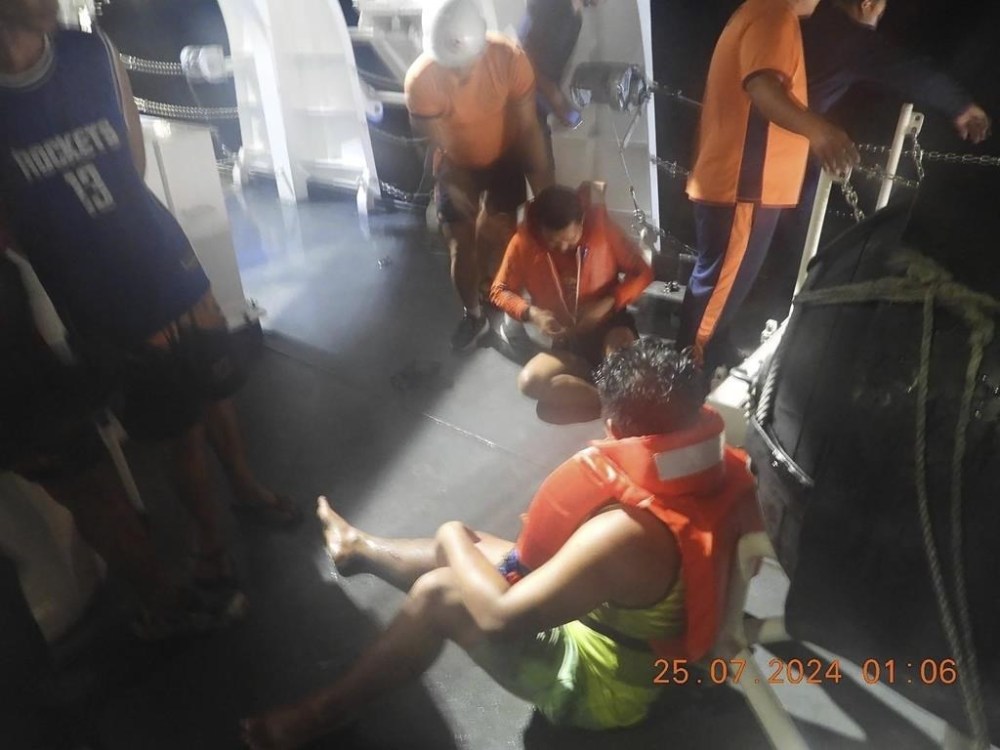
MANILA, Philippines (AP) — A Philippine oil tanker sank in Manila Bay early Thursday after encountering huge waves, leaving a crewman dead and 16 others rescued in a late-night operation by the coast guard. The force was also assessing whether the vessel was leaking oil — in what could be a major spill — that could reach the bustling capital.
The tanker Terra Nova left Bataan province en route to the central province of Iloilo with about 1.4 million liters (370,000 gallons) of industrial fuel oil stored in watertight tanks when it got lashed by huge waves and took on water. The crew struggled to steer the tanker back to port but it eventually sank shortly after midnight, coast guard spokesperson Rear Adm. Armando Balilo said, citing statements from surviving crew members.
The sinking followed days of monsoon rains, exacerbated by a passing offshore typhoon, that set off landslides and flooding across the archipelago, leaving at least 22 people dead and displacing more than half a million people.
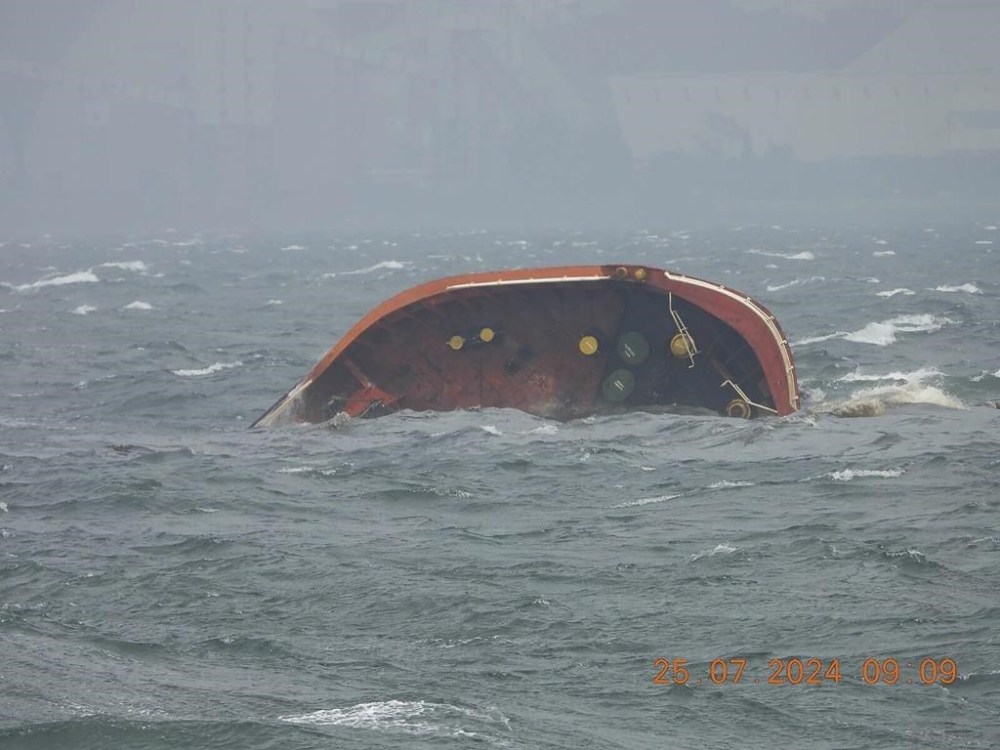
An aerial survey spotted an oil slick about 3.7 kilometers (2.3 miles) long near the rough seawaters where the tanker sank but that may have come from the fuel that powered the tanker’s engine, not the oil cargo the Terra Nova was carrying, Balilo said.
A coast guard ship, the BRP Melchora Aquino, was in the waters where the tanker sank, more than 6 kilometers (about 4 miles) from Bataan province’s coast, to search for the last missing crewman, whose body was later retrieved from the waters, and to carry out an initial assessment of the tanker’s fuel oil cargo, Balilo told an online news conference.
He added that the coast guard was bracing to contain a possible major oil spill.
“There’s a big danger that Manila would be affected, its shorelines, if the fuel leaks because this happened within Manila Bay. It’s part of the contingency we’re preparing for,” Balilo said. “We are racing against time and we will try to do our best to contain the fuel so it will no longer leak out.”
Balilo later said the oil tanker sank at a relatively shallow depth of 34 meters (111 feet), based on an initial assessment, and raised the possibility that its fuel oil cargo could be siphoned off by special ships in a delicate operation that could take about a week.
“Siphoning will not be very technical and can be done quickly to protect the vicinity waters of Bataan and Manila Bay against environmental, social, economic, financial and political impacts,” Balilo said.
He did not say if the 65-meter (213-foot) tanker has been located on the seafloor and did not specify the status of its fuel oil cargo.
Balilo compared the magnitude of the possible oil spill to one caused by the sinking of another Philippine oil tanker, which was carrying much less fuel oil cargo, in February last year off Oriental Mindoro province north of Manila. That spill took about three months to contain, caused massive damage to coral reefs and mangroves in a region known for its rich biodiversity, and affected tens of thousands of fishermen and beach resorts in at least six provinces.
Manila’s shoreline is a major tourism and business hub, where the main seaport, a historic public park, the U.S. Embassy, upscale hotels and restaurants and huge shopping malls are located. Land reclamation efforts are also underway in the bay to create space for entertainment and tourism complexes with casinos. The bay for years has been notorious for its pollution but famous for its picturesque sunsets.
The United States and Japan helped the Philippines with the last major oil spill’s massive cleanup and rehabilitation efforts.
___
Associated Press journalist Haruka Nuga in Bangkok contributed to this report.