Amazon rainforest stores carbon for the world, but this carbon sink is at risk, a study finds
Advertisement
Read this article for free:
or
Already have an account? Log in here »
To continue reading, please subscribe:

Digital Subscription
One year of digital access for only $205*
- Enjoy unlimited reading on winnipegfreepress.com
- Read the E-Edition, our digital replica newspaper
- Access News Break, our award-winning app
- Play interactive puzzles
*First annual payment billed as $205.00 + GST for one year. This annual subscription will automatically renew at $233.00 + GST every 52 weeks (10% off the regular annual price of $259.35). Offer available to new and qualified returning subscribers only. Cancel any time.
To continue reading, please subscribe:
Add Free Press access to your Brandon Sun subscription for only an additional
$1 for the first 4 weeks*
- Enjoy unlimited reading on winnipegfreepress.com
- Read the E-Edition, our digital replica newspaper
- Access News Break, our award-winning app
- Play interactive puzzles
*Your next Brandon Sun subscription payment will increase by $1.00 and you will be charged $17.95 plus GST for four weeks. After four weeks, your payment will increase to $24.95 plus GST every four weeks.
Read unlimited articles for free today:
or
Already have an account? Log in here »
Hey there, time traveller!
This article was published 12/08/2024 (787 days ago), so information in it may no longer be current.
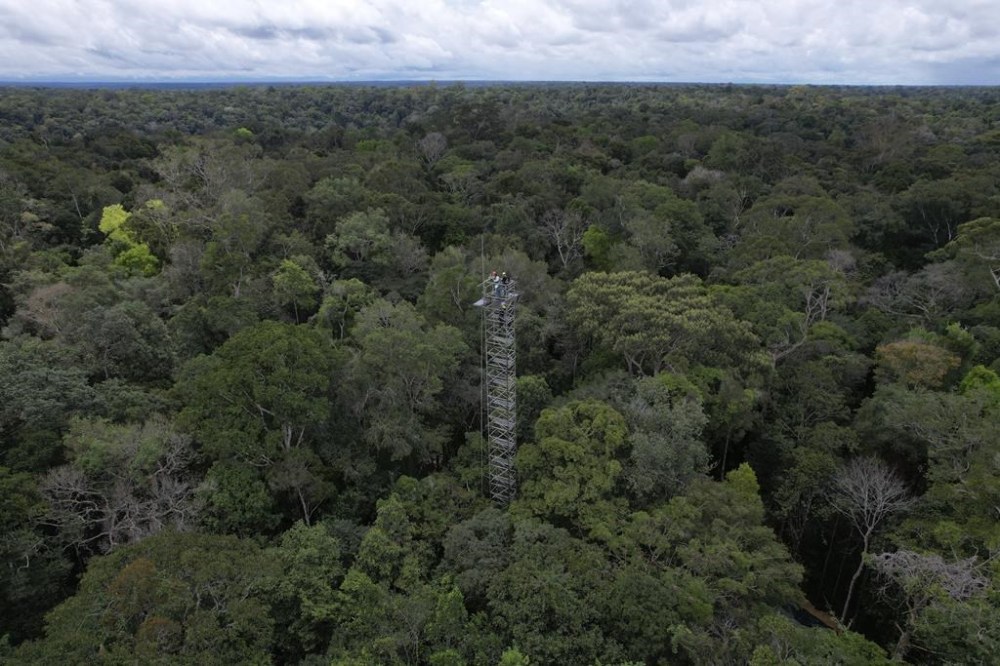
BRASILIA, Brazil (AP) — The Amazon rainforest stores the equivalent of almost two years of global carbon emissions, but its role as a carbon sink is under threat, according to a study released Monday.
The U.S. nonprofit Amazon Conservation used satellite data provided by the Planet company to calculate how much climate-changing carbon the Amazon forest stores. An analysis of the data concluded that with deforestation there’s a danger the Amazon could start contributing more carbon than it absorbs from the atmosphere.
Researchers found Amazon trees held 56.8 billion metric tons of carbon above ground in 2022. They said that’s 64.7 million metric tons more than in 2013, making the Amazon a carbon sink over the last decade.
But it´s now a “very small buffer,” according to an analysis by Planet. “There’s reason to worry that the biome could flip from sink to source with ongoing deforestation.”
Clearing vegetation eliminates trees that absorb carbon. Cutting and burning them puts more carbon into the atmosphere. And cleared land often is used for farming and livestock grazing that produce greenhouse gases.
David Lapola, a professor at the State University of Campinas who was not part of the study, told The Associated Press the findings are consistent with other studies.
While overall carbon absorption in the Amazon basin remains positive when considering only intact areas, the inclusion of forest degradation changes the picture, Lapola said.
However, he added that deforestation, which has destroyed roughly 20% of the Amazon, is an easier problem to solve than the impact of climate change on the rainforest, which is struggling with a severe drought for the second year in a row.
“It is crucial to turn our attention to how climate change and extreme weather events could alter the carbon sink in untouched forests,” Lapola said. “This is considerably more difficult to address as it involves a concerted effort to reduce greenhouse emission.”
___
The Associated Press’ climate and environmental coverage receives financial support from multiple private foundations. AP is solely responsible for all content. Find AP’s standards for working with philanthropies, a list of supporters and funded coverage areas at AP.org.