Complex supply chains and climate change make “clean beauty” near impossible, but some keep trying
Advertisement
Read this article for free:
or
Already have an account? Log in here »
To continue reading, please subscribe:

Digital Subscription
One year of digital access for only $205*
- Enjoy unlimited reading on winnipegfreepress.com
- Read the E-Edition, our digital replica newspaper
- Access News Break, our award-winning app
- Play interactive puzzles
*First annual payment billed as $205.00 + GST for one year. This annual subscription will automatically renew at $233.00 + GST every 52 weeks (10% off the regular annual price of $259.35). Offer available to new and qualified returning subscribers only. Cancel any time.
To continue reading, please subscribe:
Add Free Press access to your Brandon Sun subscription for only an additional
$1 for the first 4 weeks*
- Enjoy unlimited reading on winnipegfreepress.com
- Read the E-Edition, our digital replica newspaper
- Access News Break, our award-winning app
- Play interactive puzzles
*Your next Brandon Sun subscription payment will increase by $1.00 and you will be charged $17.95 plus GST for four weeks. After four weeks, your payment will increase to $24.95 plus GST every four weeks.
Read unlimited articles for free today:
or
Already have an account? Log in here »
Hey there, time traveller!
This article was published 27/08/2024 (743 days ago), so information in it may no longer be current.
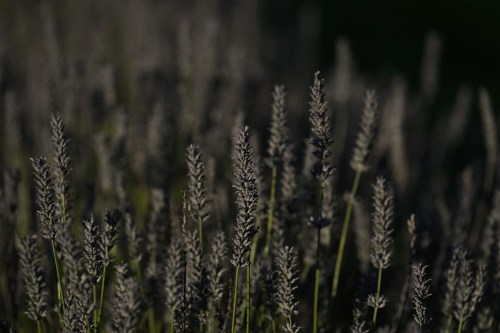
EAST GARAFRAXA, Ontario (AP) — Julie Thurgood-Burnett had no idea that her COVID-19 lockdown whim of starting a lavender patch on her husband’s family farm outside Toronto would turn into a small business. She had never been a farmer, but before long she had a bright purple field and a new hobby of creating lavender oil for her friends and family, who liked it so much she ran out.
And then she had a brand, Hereward Farms, which she wanted to be “authentically sustainable.” To her that meant avoiding plastic packaging, even though it would have been cheaper. It also meant sourcing as many raw ingredients from Canada as possible, which turned out to be much harder than she expected. She was able to get Canadian-made beeswax and sunflower oil, and work with a Canadian supplier, but not everything comes from Canada. Most of Hereward’s essential oils and all of its dried flowers (except lavender, of course) come from the United States.
“You go down this dark hole of trying to figure out where things are sourced from,” she said.

It’s a challenge for small brands with environmentally friendly values because the beauty industry, worth billions of dollars and dominated by a few major brands, has an uglier underbelly. It can be nearly impossible to trace some ingredients to their source, according to supply chain experts. The making and disposing of cosmetics contributes to planet-warming carbon emissions, deforestation, pollution and waste. Climate change in turn is exacerbating extreme weather events like heat, drought and flooding that disrupt production. And there’s little regulation governing beauty products in many countries. But despite the uphill battle, many business owners who care about being eco-friendly are trying their best to tackle these problems.
Consumers have begun demanding sustainability and transparency from their beloved multi-step skincare routines, seeking out what’s popularly known as “clean beauty”. But dubious claims about “green” and “pure” products abound.
Dale Rogers, a professor in the business school at Arizona State University who studies supply chains, gave the example of “sustainable” palm oil, an ingredient commonly featured in eco-friendly cosmetics brands. “There’s sustainability certification groups that will certify ingredients. So palm oil might be sustainably sourced, for example, but then it gets blended with other palm oil and you start to lose track,” he said.
“Very few” major beauty companies are doing the kind of research needed to actually know where their materials come from, said Bindiya Vakil, CEO and founder of Resilinc, a company that maps supply chains for businesses. And Vakil said that even when big companies are willing to support the effort to trace ingredients to their origins, suppliers aren’t always willing to answer those questions. Investigating entities can then turn to public domain information to try to fill in the gaps, but it’s imperfect.
And “brands are changing their suppliers all the time,” said Homer Swei, senior vice president of healthy living science and consumer safety science at the Environmental Working Group, which offers a third-party certification for beauty products focused on human health. “So even if you spend $1 billion, did you find the supply chain today? Tomorrow will be different and it’ll be obsolete.”
Legislation in some countries can crack down on companies, making it illegal for them to source from suppliers that, for example, use forced labor or harmful chemicals. But environmental regulations lag behind, and profit motives and the promise of sustainable branding claims “align against greater disclosure,” Vakil said.
Any third party can create their own certification or sustainability principles, including beauty companies themselves. The Estée Lauder Companies is a founding member of one such project called the Traceability Alliance for Sustainable Cosmetics, according to Meghan Ryan, their Executive Director of Responsible Sourcing. It asks suppliers to voluntarily input information about their production and “uses a variety of tools to conduct due diligence,” she said in a statement.
Major beauty retailers Sephora and Ulta Beauty both have labels on certain products calling them “Planet Aware” or “Conscious Beauty,” respectively, but neither company would answer questions from The Associated Press about why certain criteria for those designations were chosen, how many of their total product offerings get those labels and whether they have plans to expand the number of those types of products.
Swei said the best certifications on the market are fully transparent ones, but added that “climate change is moving supply chains all around the world,” making full transparency more difficult. Vakil agreed that extreme weather events fueled by climate change have been disrupting companies more and more, especially those who rely on farmed materials susceptible to heat, drought, flooding and damage from hurricanes and wildfires.
Many small brand owners have the motivation to be more transparent and selective about their ingredients, but some described spending hours tracing where things came from, having to switch manufacturers and accepting smaller profit margins. And entrepreneurs, just starting out, sometimes don’t know what questions to ask their suppliers, or don’t have enough leverage to demand answers.
Rina Clarke founded Buck Naked Soap Company when her infant son developed a skin reaction to traditional cosmetics. She said she’s been “constantly disappointed” to find that she can’t make soaps with certain highly desired scents, such as sandalwood and strawberry, because she’s determined it would be impossible to do so by her company’s set sustainability and health standards. Many species of sandalwood, for instance, have been overharvested and some are now facing extinction.
“As much as I want for us, as a business, to be competitive with other businesses, it’s hard,” she said. “We don’t want to be a hypocrite is basically what it comes down to.”

Charlie Razook, who founded men’s skincare line Jackfir, said it took an extra-long time to launch the brand because he spent multiple years getting third-party certifications, including from the Environmental Working Group, and rejiggering his products’ formulas to achieve his health and sustainability goals. But he still had to give up on his original intention to sell everything in glass containers instead of plastic, because beyond manufacturing constraints, quite simply, “men like tubes.”
Clarke also said it’s hard for eco-conscious brands not to price out some customers. “Sustainability oftentimes costs money,” she said.
The odds are against their goals in many ways, but small business owners like Razook, Clarke and Thurgood-Burnett keep trying. They say the extra effort is worth the frustration. All described customers who have demanded transparency and sustainability and been happy to find brands that are willing to try to meet that demand.
And Thurgood-Burnett has gotten personal satisfaction from the quest, too.

“It’s such an intimate relationship because you’ve put it in the ground and you’ve cared for it,” she said of her lavender crop. “I go out and sometimes just sit there with the plants, and I love that the bees are there, and we’re doing this really neat ecosystem. That wasn’t the reason why we started it, but it’s become that.”
___
Follow Melina Walling on X at @MelinaWalling. Follow Joshua A. Bickel on X and Instagram.
___
The Associated Press’ climate and environmental coverage receives financial support from multiple private foundations. AP is solely responsible for all content. Find AP’s standards for working with philanthropies, a list of supporters and funded coverage areas at AP.org.