Home insurers argue for a 42% average rate hike in North Carolina
Advertisement
Read this article for free:
or
Already have an account? Log in here »
To continue reading, please subscribe:

Digital Subscription
One year of digital access for only $205*
- Enjoy unlimited reading on winnipegfreepress.com
- Read the E-Edition, our digital replica newspaper
- Access News Break, our award-winning app
- Play interactive puzzles
*First annual payment billed as $205.00 + GST for one year. This annual subscription will automatically renew at $233.00 + GST every 52 weeks (10% off the regular annual price of $259.35). Offer available to new and qualified returning subscribers only. Cancel any time.
To continue reading, please subscribe:
Add Free Press access to your Brandon Sun subscription for only an additional
$1 for the first 4 weeks*
- Enjoy unlimited reading on winnipegfreepress.com
- Read the E-Edition, our digital replica newspaper
- Access News Break, our award-winning app
- Play interactive puzzles
*Your next Brandon Sun subscription payment will increase by $1.00 and you will be charged $17.95 plus GST for four weeks. After four weeks, your payment will increase to $24.95 plus GST every four weeks.
Read unlimited articles for free today:
or
Already have an account? Log in here »
Hey there, time traveller!
This article was published 07/10/2024 (738 days ago), so information in it may no longer be current.
RALEIGH, N.C. (AP) — With many western North Carolina residents still lacking power and running water from Hurricane Helene, a hearing began Monday on the insurance industry’s request to raise homeowner premium rates statewide by more than 42% on average.
A top lieutenant for Insurance Commissioner Mike Causey opened what’s expected to be multiple weeks of witnesses, evidence and arguments by attorneys for the state Insurance Department and the North Carolina Rate Bureau, which represents insurance companies seeking the increase.
In over 2,000 pages of data filed last January, the Rate Bureau sought proposed increases varying widely from just over 4% in parts of the mountains to 99% in some beach areas. Proposed increases in and around big cities like Raleigh, Charlotte and Greensboro are roughly 40%.
Across 11 western counties that were hit hard by Helene, including Asheville’s Buncombe County, the requested increase is 20.5%. The percentages are based on insurance payouts of years past and future claims projections.
After taking public comment, Causey rejected the request in February, prompting the hearing. In previous rounds of premium rate requests, the industry and the commissioner have negotiated settlements before a hearing. Before the last such hearing set for early 2022, they settled weeks earlier on a 7.9% average premium rate increase after the bureau had sought 24.5%.
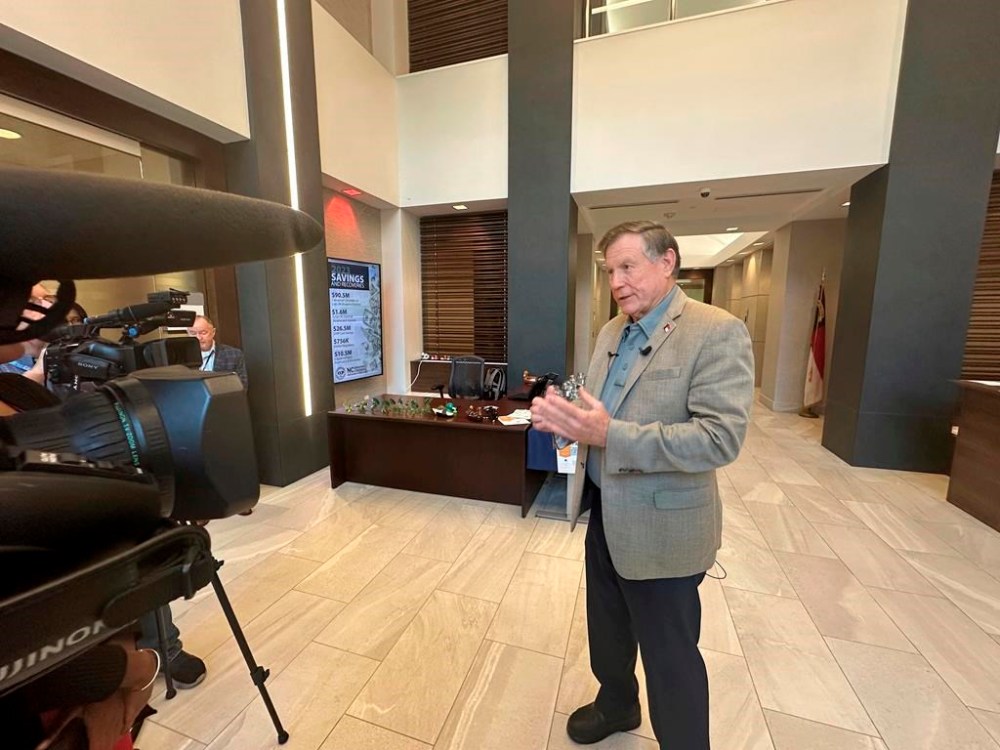
This time, Causey told reporters Monday, “we were not able to come anywhere close, so that’s why we’re here today.”
When the hearing ends, the hearing officer, in consultation with Causey, will decide within 45 days whether the proposed rates are excessive, and if so, issue an order that sets new rates. That order could be challenged at the state Court of Appeals.
Rate Bureau attorney Mickey Spivey told hearing officer Amy Funderburk that the highest inflation in 40 years — particularly on building materials — combined with calamitous storms that are “getting worse and worse” show that current premium rates are “severely inadequate.”
Spivey cited Helene, which inflicted unprecedented destruction in the state’s western mountain communities, as well as Hurricane Florence in 2018, which caused billions of dollars of in damage in eastern North Carolina, much of it paid for by insurance companies.
Not mentioned Monday: Hurricane Milton, which grew explosively to a Category 5 hurricane while closing in on Florida on a path expected to mostly miss North Carolina.
“Whether you want to call it climate change or not, there is no denying that we are having bigger, stronger and more costly catastrophic storms than we’ve seen in any of our lifetimes,” Spivey said.
The Insurance Department’s attorney, Terence Friedman, argued that the industry continues to use actuarial methods that ignore what state law requires in calculating rates increases.
Friedman said the bureau’s requested rates are inflated and that the department’s actuaries will demonstrate there are ”alternative recommended rates that will allow the bureau’s members to earn what they’re constitutionally entitled to.”
But Spivey said the Insurance Department’s witnesses would seek to actually lower premium rates, or limit increases by less than 3%.
Not every owner’s premiums will go up or down by the final approved rates; there are other factors insurers consider in setting a bill.

Without a fair profit and the ability to cover claims, Spivey said, industry companies will have to invoke a legal exception more frequently insuring high-risk homeowners only if they agree to pay premiums at rates that are up to 250% of the bureau’s rate. Otherwise, he said, more insurers will stop issuing policies altogether.
The “consent to rate” exception in North Carolina’s law has helped prevent a mass exodus of home insurers, as some states have experienced, said David Marlett, an insurance professor at Appalachian State University.
While each state has different models to regulate rates, those affected by more hurricanes and storms are essentially faced with two options, Marlett said: Allow rates to keep rising to cover claims, or “somehow we build structures that are able to withstand climate change.”
Friedman criticized the bureau for citing Helene in its opening statement, saying it shouldn’t be used as grounds to raise rates on the storm’s survivors. He also noted that most of Helene’s damage was caused by flooding, which is covered separately from the homeowners’ policies now being considered.

The proceedings are likely to continue after early voting begins on Oct. 17. Causey, a two-term Republican commissioner, is being challenged by Democrat Natasha Marcus, a state senator.
Marcus held a news conference outside the Insurance Department headquarters criticizing Causey for declining to preside over the hearing, calling it a “ridiculous dereliction of one of his major duties in this job.” She also lamented that any decision will be made after Election Day.
Causey said he’s not hearing the case in part because he’s not an attorney. State law allows him to pick someone else to preside over the hearing, which is a quasi-judicial proceeding.
__
The story corrects the insurance professor’s name to David Marlett, not David Martlett.