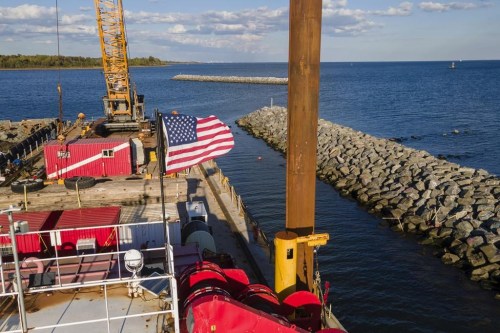
These artificial reefs off a New York City beach help sea creatures. They might also save lives
Advertisement
Read this article for free:
or
Already have an account? Log in here »
To continue reading, please subscribe:

Digital Subscription
One year of digital access for only $205*
- Enjoy unlimited reading on winnipegfreepress.com
- Read the E-Edition, our digital replica newspaper
- Access News Break, our award-winning app
- Play interactive puzzles
*First annual payment billed as $205.00 + GST for one year. This annual subscription will automatically renew at $233.00 + GST every 52 weeks (10% off the regular annual price of $259.35). Offer available to new and qualified returning subscribers only. Cancel any time.
To continue reading, please subscribe:
Add Free Press access to your Brandon Sun subscription for only an additional
$1 for the first 4 weeks*
- Enjoy unlimited reading on winnipegfreepress.com
- Read the E-Edition, our digital replica newspaper
- Access News Break, our award-winning app
- Play interactive puzzles
*Your next Brandon Sun subscription payment will increase by $1.00 and you will be charged $17.95 plus GST for four weeks. After four weeks, your payment will increase to $24.95 plus GST every four weeks.
Read unlimited articles for free today:
or
Already have an account? Log in here »
Hey there, time traveller!
This article was published 28/10/2024 (715 days ago), so information in it may no longer be current.
NEW YORK (AP) — Almost nothing stood in the way of the pounding waves that crashed into seaside homes in Staten Island’s Tottenville neighborhood when Superstorm Sandy struck the city 12 years ago. A narrow strip of sand, some beach scrub and a few lonely trees did almost nothing to slow the ocean swells as they collapsed houses and ripped others from their foundations, killing a 13-year-old girl and her father.
But after years of work, a system of artificial reefs largely completed this summer could help soften the blow of future hurricanes.
Funded with $111 million in Sandy recovery money, the “Living Breakwaters” constructed about 1,000 feet (300 meters) off the Tottenville beach were conceived to protect residents from future storms. While the concrete and rock barriers can’t stop flooding, project designers say they will sap the force of ocean waves, reducing daily erosion and damage from future storms.
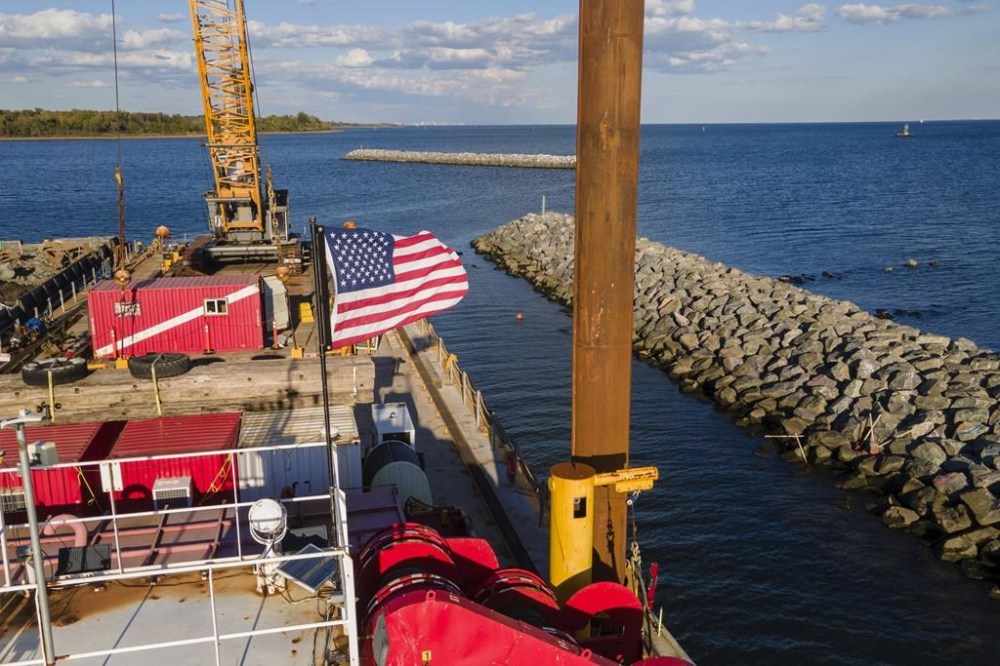
The artificial islands have the added benefit of reviving a bay ecosystem damaged by years of fishing, pollution and dredging. That’s because they integrate “living” features such as tidepools and textured surfaces in a traditional breakwater to better shelter oysters, crabs and fish.
The concept is attracting the attention of other coastal cities, including Florida’s Cedar Key, which was battered last month by Hurricane Helene.
Living Breakwaters architect Pippa Brashear said other shoreline communities exposed to waves, damage and erosion could use a similar strategy. Projects in California, Washington state and Florida are already doing so, though at a smaller scale.
Staten Island’s new reefs offer some of the same basic storm protections as the breakwaters common in harbors worldwide. But many of those barriers and seawalls skirting coastal cities have a drawback, in that they often repel sea creatures. Slick concrete attracts fewer mussels, barnacles and oysters looking for surfaces to grab, and doesn’t provide areas where fish can hide.
Brashear, of Scape Landscape Architecture, said New York’s reefs were designed to create a habitat for marine life.
“It’s not just risk reduction, but niches and crevices, complex surfaces for fowling organisms to form and for juvenile fish to kind of hide and get refuge — refuge from predation,” she said.
Birds are already using the islands as a nesting ground. They have become a winter refuge for migrating seals since construction began in 2022. Algae clings to the textured concrete surfaces, covering the gray rocks and concrete with green algae that dances with the current at high tide. Snails, barnacles, shrimp and crabs are settling into tidepools molded from concrete and placed by a crane amid large stones.
Eventually, oysters will be added by The Billion Oyster Project. Before being harvested to near extinction in the 1800s, oyster beds in the Raritan Bay, which separates Staten Island and New Jersey, measurably reduced the force of storms. Oysters have also been shown to clean water of pollutants.
Brashear and her colleagues proposed the design as part of a competition for Hurricane Sandy relief funding in consultation with Tottenville residents.
Some areas along San Diego’s coastline have been retrofitted with habitat-friendly tidepools similar to the ones used in New York.
“When the tide is out, you find all sorts of different algae and all sorts of different animals living, especially in those tide pools, but then also around the edges of those tide pools,” said Luke Miller, a marine biologist at San Diego State University.
An elaborate $400 million sea wall structure with living elements has lined a narrow slice of the Seattle coastline since 2017, successfully improving the habitat for baby salmon.
New York’s success at attracting government funding for the Living Breakwaters encouraged others to look at the idea, according to Joshua Norman, a disaster resilience lead at Trilon Group’s DMRP engineering arm, which is proposing a similar concept in Cedar Key, on Florida’s Gulf Coast. He said it would have reduced erosion around a local bridge and roadway from Helene.
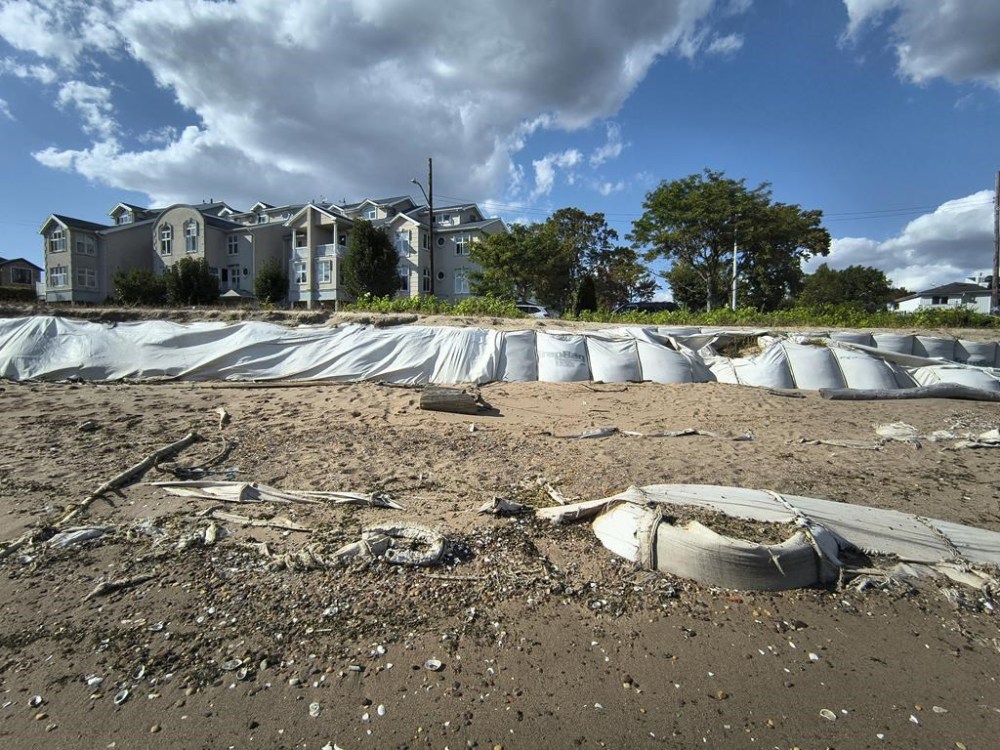
Sandy’s floodwaters killed 23 people in Staten Island after the storm made landfall on Oct. 29, 2012. Many of them died in their homes after water inundated their coastal neighborhoods. Thousands of homes on the island experienced flooding, and hundreds were destroyed.
Since then, the island has served as a laboratory for strategies to deal with destructive storms. In some neighborhoods, residents took buyouts, retreating from flood-prone areas permanently. Despite that retreat, construction is expected to begin soon on a 5-mile (8-kilometer), $600 million seawall rising 21 feet (more than 6 meters) near those and other neighborhoods.
Other parts of the city have also been developing coastal defenses.
In Manhattan, a stretch of parkland along the East River is being elevated to serve as a barrier against future storm surges. Floodwalls are planned as part of a line of protections that will eventually form a “U” around Manhattan’s southern tip. On the Rockaway Peninsula in Queens, boardwalks destroyed in the storm have been rebuilt as fortified flood barriers.
Climate experts warn that although breakwaters are a useful tool to deal with intensifying storms, they’ll only help for so long as seas continue to rise.

“They’re buying some time,” said Larissa Naylor, professor of geomorphology and environmental geography at the University of Glasgow in Scotland.
Back in Tottenville, the breakwaters don’t bring the same psychological sense of safety as a large seawall or levee. Brashear said Tottenville residents who participated in the design process didn’t want a wall that would hinder access to their beach. But some residents are skeptical that the breakwaters will help much if another storm like Sandy comes ashore.
“If another storm comes, it’s not doing nothing,” neighborhood resident Michele Heerlein, 61, said, referring to the barrier system.
But Heerlein, who grew up a few blocks from the beach, said she has seen more stingrays, sharks, and fish since the breakwaters started being installed.
“They might bring the clams and the muscles back,” she said, pointing at the breakwaters.