Ottawa dragging its feet on protecting endangered caribou: B.C. conservation groups

Advertisement

Advertise with us

Southern mountain caribou are disappearing in British Columbia and the federal government has been dragging its feet for more than a decade on protecting the endangered herds, conservation groups say in a letter to the environment minister.

Read this article for free:


or

Already have an account? Log in here »

To continue reading, please subscribe:

Subscribe and receive a limited-edition Free Press branded hat or tote.

Digital Subscription

One year of digital access for only $205*

  • Enjoy unlimited reading on winnipegfreepress.com
  • Read the E-Edition, our digital replica newspaper
  • Access News Break, our award-winning app
  • Play interactive puzzles

*First annual payment billed as $205.00 + GST for one year. This annual subscription will automatically renew at $233.00 + GST every 52 weeks (10% off the regular annual price of $259.35). Offer available to new and qualified returning subscribers only. Cancel any time.

To continue reading, please subscribe:

Add Free Press access to your Brandon Sun subscription for only an additional

$1 for the first 4 weeks*

  • Enjoy unlimited reading on winnipegfreepress.com
  • Read the E-Edition, our digital replica newspaper
  • Access News Break, our award-winning app
  • Play interactive puzzles
Start now

*Your next Brandon Sun subscription payment will increase by $1.00 and you will be charged $17.95 plus GST for four weeks. After four weeks, your payment will increase to $24.95 plus GST every four weeks.

Hey there, time traveller!
This article was published 22/01/2025 (603 days ago), so information in it may no longer be current.

Southern mountain caribou are disappearing in British Columbia and the federal government has been dragging its feet for more than a decade on protecting the endangered herds, conservation groups say in a letter to the environment minister.

The letter sent to Steven Guilbeault on behalf of the Wilderness Committee, Wildsight and Stand.earth on Wednesday said three populations of the caribou are in particularly steep decline as logging and other industrial development cuts through their habitat in the mountains of eastern B.C., near the Alberta boundary.

Eddie Petryshen, a conservation specialist with Wildsight based in B.C.’s East Kootenay, said successive federal governments and environment ministers have “kicked the can further down the road,” and that trend continues today.
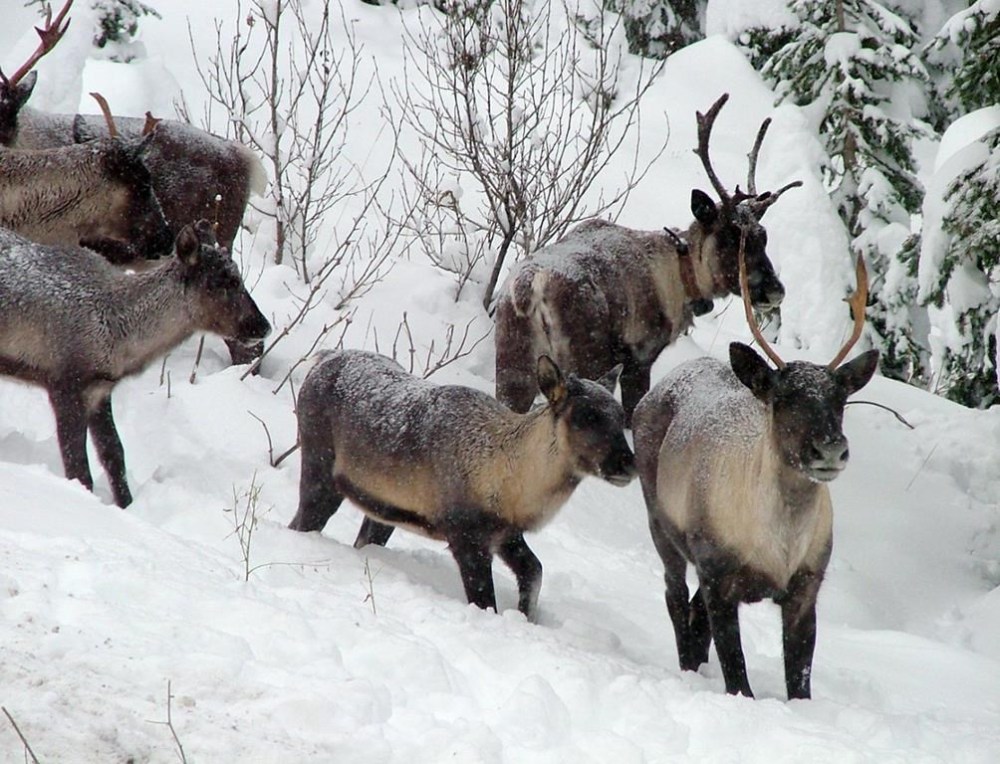
This photo provided by the British Columbia Forest Service shows part of the Southern Selkirk caribou herd moving north through the Selkirk Mountains near the Canada-U.S. border in November 2005. THE CANADIAN PRESS/HO, AP, British Columbia Forest Service, Garry Beaudry

“It’s just been this constant, decade-long plan to make a plan, while caribou are disappearing and their habitat is being decimated and logged.”

A representative for Environment and Climate Change Canada did not immediately respond to a request for comment on the letter and its assertions.

Southern mountain caribou are currently classified as threatened under Canada’s Species at Risk Act, and a statement issued by the federal government in 2020 said they numbered roughly 3,100, a reduction of 53 per cent over about six years.

Ottawa released a recovery strategy and partial habitat mapping for the caribou in 2014, but the B.C. conservation groups say the mapping has not been finalized — a requirement under the legislation and a key step toward stopping the decline.

Among the southern mountain caribou, three populations collectively known as the southern group are at greatest risk of disappearing, said the letter sent on behalf of the conservation groups by Ecojustice lawyer Sean Nixon.

Petryshen said eight of 18 herds in the southern group have been extirpated, a term for local extinction, over the last two decades.

“We know what’s causing that extirpation,” he said.

Southern mountain caribou depend on old-growth forests to survive. In particular, they evolved over thousands of years in the inland temperate rainforest ecosystem.

But industrial development including roadbuilding, logging and mining have disrupted that cycle, Petryshen said.

The letter to Guilbeault includes an analysis by the Wilderness Committee that found more than 190,000 hectares of the southern group’s critical habitat were logged between 2007 and 2023.

That analysis used Ottawa’s partial habitat identification from 2014, while the group used mapping from the B.C. government in 2019 to find more than 310,000 hectares of critical habitat were logged during the same time period.

“We’ve gone from an old forest ecosystem to ecosystems where there’s a lot more young forest, which provides more forage for other ungulates like deer and elk,” Petryshen said.

As other ungulates move in, predators follow, and the pathways created by roads and logging cut blocks make it easier for them to prey on caribou, he said.

In 2015, the province began culling wolves in an effort to save threatened caribou herds, a controversial program that involves shooting wolves from helicopters.

The wolf cull relates to about a dozen caribou herds and typically costs between $100,000 and $275,000 per herd, according to a B.C. government website.

The province has also culled cougars known or suspected to have killed caribou from the Central Selkirks, Columbia North and Itcha-Ilgachuz herds.

Predator reduction may be part of a comprehensive recovery strategy for endangered caribou, Petryshen said, but it doesn’t address the destruction and fragmentation of their habitat, which is the driving force behind their decline.

“For every new cut block and road that we add, it makes those measures more and more likely,” he said. “It makes the success of those measures more debatable, too.”

Nixon’s letter to Guilbeault said Ottawa’s ongoing delays and inaction “amount to a tacit endorsement of the extermination of a species.”

It said the Environment Department indicated in 2014 that it would complete full, critical habitat mapping for southern mountain caribou within six months. It missed that target, and in 2020 the department said it intended to finish by summer 2021.

The last update indicated a proposed recovery strategy with critical habitat mapping would be released sometime in 2026, though the department suggested its timeline “may shift,” the letter said.

Environment and Climate Change Canada’s timelines for the habitat mapping have shifted “so regularly as to render them meaningless,” it said.

The Committee on the Status of Endangered Wildlife in Canada recommended in 2014 that the southern group be listed as endangered under the Species at Risk Act, while other southern mountain populations remain classified as threatened.

The federal government did not respond to the recommendation until February 2022, when it referred the population back to the committee for further consideration.

This report by The Canadian Press was first published Jan. 22, 2025.
Report Error Submit a Tip

More Stories

Teenage e-scooter driver in critical condition after crash

Chris Kitching 6 minute read Preview

Teenage e-scooter driver in critical condition after crash

Chris Kitching 6 minute read Updated: 5:50 PM CDT

A teenager riding an e-scooter suffered life-threatening injuries when he was struck by an SUV in southwest Winnipeg on Monday night.

Witnesses provided first aid to the injured rider, who police said is under 18, after the collision happened at Waverley Street and Arbour Meadow Gate/Lake Crest Road at about 9:30 p.m.

“It feels like it happened in slow motion,” said driver Audrey Vanderspek, who was waiting at a red light when she witnessed the incident. “Maybe it’s because you’re helpless, that it just feels like everything slows down in the moment.”

Police said the electric scooter rider was crossing Waverley and was hit by a southbound 2010 Honda CR-V. The posted speed limit on that stretch of Waverley is 70 kilometres per hour.

Read
Updated: 5:50 PM CDT

Powerful personal drama provides both bark and bite

Ben Waldman 4 minute read Preview

Powerful personal drama provides both bark and bite

Ben Waldman 4 minute read 4:22 PM CDT

Well before playwright Rafaella Marcus’ words have the chance to entangle us in the stickiness of Sap, the performance space initiates the task in director Elio Zarrillo’s staging of this discomfiting and affecting story of restraint and liberation.

Shortly after the audience takes its seats in four segments surrounding a central channel — a shimmering tunnel containing cellist Grace Morningstar — it becomes clear as actors Hera Nalam and Liz Whitbread make their way around the tight corners of David Oro and Hazel Venzon’s set that certain actions will go unseen unless viewers keeps their heads on a swivel: in a production meant to uproot understanding, a fixed perspective will never do.

In this vulnerable and powerful production from Theatre by the River (105 minutes) the actors meet the excellence of Marcus’s twisty script, which calls for emotionally draining and jolting depictions of a relationship headed down a rocky road.

Nalam plays a young communications pro for a women’s aid charity whose dating life is a work in progress. She’s bright and optimistic, taking notice of elements of nature that nobody else seems to recognize. On her daily commute, she looks out from the bus window in awe of a home overflowing with branches and leaves.

Read
4:22 PM CDT

Federal Court awards OCN $27M, 62 years after construction of hydro dam

Nicole Buffie 5 minute read Preview

Federal Court awards OCN $27M, 62 years after construction of hydro dam

Nicole Buffie 5 minute read Updated: 12:02 PM CDT

The Federal Court has ordered Ottawa pay Opaskwayak Cree Nation $27 million over damages suffered due to the construction of the Grand Rapids hydro dam in the 1960s.

In a decision dated Sept. 3, Federal Court Justice Sébastien Grammond says the federal government had a fiduciary duty to protect the community from the impacts of the dam.

“When the Crown exercises a discretionary power over an Indigenous interest, it has a fiduciary duty and it must exercise the discretion in the best interests of the Indigenous group,” the ruling said. “Canada breached its fiduciary duty to OCN because it approved the (project) without ensuring that the impacts of the Grand Rapids dam on OCN’s traditional way of life were mitigated or compensated.”

The First Nation took the federal government to court in February over impacts on the community after the dam, located about 145 kilometres southeast of Opaskwayak Cree Nation, was installed on the Saskatchewan River in 1964. The case was heard over 14 days in a judge-alone trial in Winnipeg.

Read
Updated: 12:02 PM CDT

Manitoba mineral production set to triple, premier says

Carol Sanders 5 minute read Preview

Manitoba mineral production set to triple, premier says

Carol Sanders 5 minute read Updated: Yesterday at 5:19 PM CDT

Premier Wab Kinew said Tuesday Manitoba plans to triple mineral production in the next five years “to unlock a new era of wealth creation and growth.”

“We’re going to make sure that opportunity is spread throughout the province,” he told a news conference at the Canada investment summit in Toronto.

The province is working with industry and Indigenous governments to send a message to investors that “we’re going to do mining right in Manitoba,” the premier said.

For too long, Manitoba has lagged behind neighbouring provinces, Kinew said.

Read
Updated: Yesterday at 5:19 PM CDT

Police cracking down on gangs, organized crime in bars and lounges

Nicole Buffie 4 minute read Preview

Police cracking down on gangs, organized crime in bars and lounges

Nicole Buffie 4 minute read Updated: Yesterday at 6:56 PM CDT

Patrons can expect to see more police officers in and around bars and lounges in the coming months as the Winnipeg Police Service plans to crack down on gangs and organized crime.

Read
Updated: Yesterday at 6:56 PM CDT

Bisons look to bounce back against Dinos at Murray Field

Joshua Frey-Sam 6 minute read Preview

Bisons look to bounce back against Dinos at Murray Field

Joshua Frey-Sam 6 minute read 3:57 PM CDT

Nathan Udoh has been around long enough to know how quickly things can change in the Canada West conference.

The fifth-year Manitoba Bisons receiver is one of the oldest players in a youthful locker room that is experiencing the ebbs and flows of a U Sports season for the first time, and to say his experience if being leaned on would be an understatement.

“I try to lean on that and help guys who haven’t been in these situations just to keep their heads and how hard you have to play,” Udoh said Wednesday. “I think that’s the biggest thing that there is no snap that you take off, and playing with that intensity is really where it starts.”

The Bisons have already endured a roller-coaster two games into the season. After shocking the country by steamrolling the reigning conference champion Saskatchewan Huskies 40-22 in their season-opener, the Bisons fell back to earth in a 22-8 road loss to the Regina Rams last weekend.

Read
3:57 PM CDT