North Dakota’s cloud seeding program draws interest from around the world. Opponents want to end it
Advertisement
Read this article for free:
or
Already have an account? Log in here »
To continue reading, please subscribe:

Digital Subscription
One year of digital access for only $205*
- Enjoy unlimited reading on winnipegfreepress.com
- Read the E-Edition, our digital replica newspaper
- Access News Break, our award-winning app
- Play interactive puzzles
*First annual payment billed as $205.00 + GST for one year. This annual subscription will automatically renew at $233.00 + GST every 52 weeks (10% off the regular annual price of $259.35). Offer available to new and qualified returning subscribers only. Cancel any time.
To continue reading, please subscribe:
Add Free Press access to your Brandon Sun subscription for only an additional
$1 for the first 4 weeks*
- Enjoy unlimited reading on winnipegfreepress.com
- Read the E-Edition, our digital replica newspaper
- Access News Break, our award-winning app
- Play interactive puzzles
*Your next Brandon Sun subscription payment will increase by $1.00 and you will be charged $17.95 plus GST for four weeks. After four weeks, your payment will increase to $24.95 plus GST every four weeks.
Read unlimited articles for free today:
or
Already have an account? Log in here »
Hey there, time traveller!
This article was published 31/01/2025 (613 days ago), so information in it may no longer be current.
BISMARCK, N.D. (AP) — North Dakota’s decades-long efforts to aid farmers by reshaping the weather through “cloud seeding” is facing fierce opposition in the state Capitol, where legislation could outlaw the practice, which is used across the West and has drawn global interest to one of the nation’s least populous states.
Cloud seeding is done by airplanes releasing tiny particles of silver iodide in clouds to reduce the size of hail and increase rainfall to help crops in the semi-arid climate. Opponents see cloud seeding as ineffective, harmful and deceitful, and point to a number of counties that have ended their participation in weather modification, as recently as last fall.
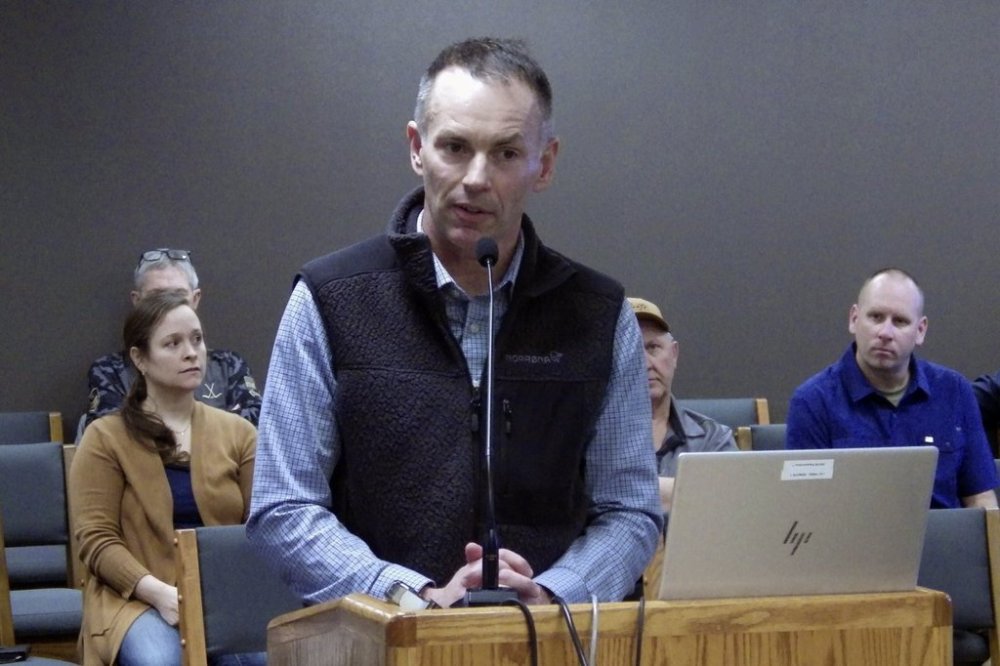
“We are tired of government controlling our weather,” Williams County farmer Doug Stangeland told a state Senate panel on Thursday. “It’s time that God does what he does. Let the creator of the weather do what he does.”
North Dakota’s hail suppression program is the longest-running aerial cloud seeding program in the world and has used airplanes since the early 1960s, said Darin Langerud, director of the Atmospheric Resource Division of the state Department of Water Resources.
The North Dakota bill introduced by Republican Sen. Todd Beard would do away with weather modification and penalize the practice as a misdemeanor offense punishable by up to 30 days in jail and/or a $1,500 fine.
Berthold-area farmer Roger Neshem, who sat on his county’s weather modification authority, said local concerns went unaddressed by officials, including flights he said were outside of permitted areas.
“I think it is a good thing to make this a misdemeanor and make it illegal,” Neshem said.
Counties sponsor the program, which is cost-shared with the state, which regulates the program. The cost is about 15 cents per acre, costing four participating counties last year a combined $800,000, Langerud said. The program usually runs June through August.
Cloud seeding is done in two counties and parts of a third, including Bowman County, where some locals touted to lawmakers its success in reducing hail losses for agriculture, homeowners and businesses. In 2016, the vast majority of voters in the county rejected abolishing their weather modification authority.
Studies show the benefits of cloud seeding compared to non-seeded or control areas, including increased rainfall, reduced crop hail losses and higher wheat yields, Langerud said.
But other scientists say exactly how effective it is remains unclear, since atmospheric forces are huge and chaotic.
Last year, Langerud’s agency signed a pact for training, research and development with the South Korean government. Argentine and Romanian delegations also have visited North Dakota in the last two years to go through the training program to learn more.

The state’s Atmospheric Resource agency also has an agreement with the University of North Dakota’s aviation program for intern pilot training on the project, which has put more than 400 intern pilots through the program over the years, Langerud said.
The bill “would ban the exact collaboration between the private industry, the local political subdivisions and the state entities that make and have pushed North Dakota to the forefront of this industry,” Weather Modification International Vice President of Flight Operations Jody Fischer said.
Langerud said misinformation is driving opposition to cloud seeding. Stangeland alleged possible environmental harms and toxicity from silver iodide.
Langerud said the materials used in cloud seeding are safe, and because silver iodide is so effective at what it does, only minuscule amounts need to be used. He noted that governance of the program is largely on the local level, and argued, “I think that’s where it should stay.”
States including California, Colorado, Idaho, Nevada, New Mexico, Texas, Utah and Wyoming, as well as Alberta in Canada, have weather modification programs, according to a handout from North Dakota’s Atmospheric Resource Board.