How climate change could force FIFA to rethink the World Cup calendar
Advertisement
Read this article for free:
or
Already have an account? Log in here »
To continue reading, please subscribe:

Digital Subscription
One year of digital access for only $205*
- Enjoy unlimited reading on winnipegfreepress.com
- Read the E-Edition, our digital replica newspaper
- Access News Break, our award-winning app
- Play interactive puzzles
*First annual payment billed as $205.00 + GST for one year. This annual subscription will automatically renew at $233.00 + GST every 52 weeks (10% off the regular annual price of $259.35). Offer available to new and qualified returning subscribers only. Cancel any time.
To continue reading, please subscribe:
Add Free Press access to your Brandon Sun subscription for only an additional
$1 for the first 4 weeks*
- Enjoy unlimited reading on winnipegfreepress.com
- Read the E-Edition, our digital replica newspaper
- Access News Break, our award-winning app
- Play interactive puzzles
*Your next Brandon Sun subscription payment will increase by $1.00 and you will be charged $17.95 plus GST for four weeks. After four weeks, your payment will increase to $24.95 plus GST every four weeks.
Read unlimited articles for free today:
or
Already have an account? Log in here »
Hey there, time traveller!
This article was published 16/07/2025 (450 days ago), so information in it may no longer be current.
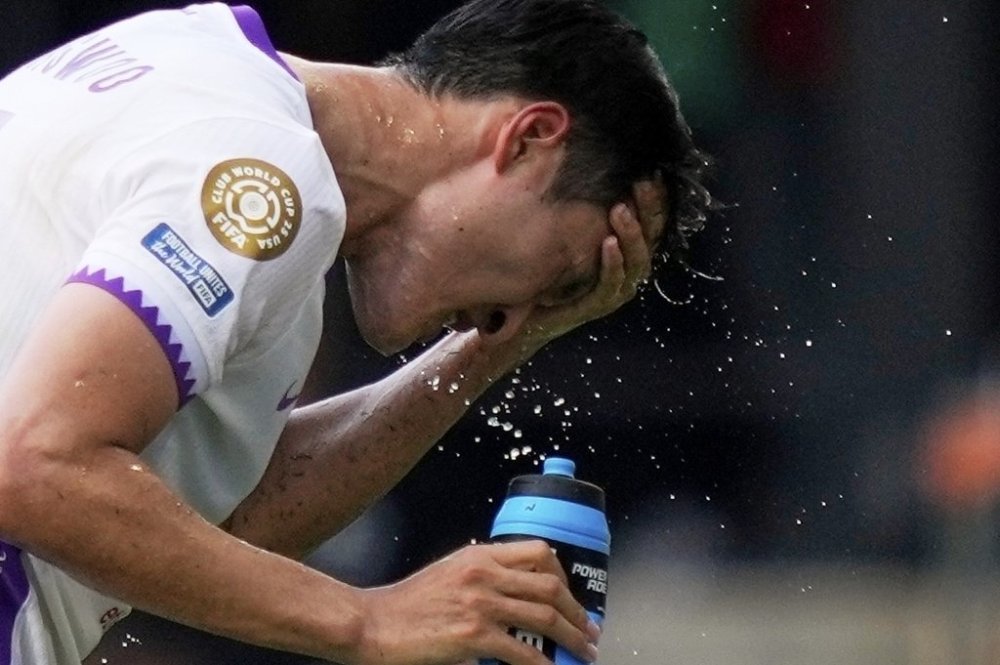
GENEVA (AP) — Soccer had a fierce reckoning with heat at the recently concluded FIFA Club World Cup in the United States — a sweltering preview of what players and fans may face when the U.S. co-hosts the World Cup with Mexico and Canada next summer.
With temperatures rising worldwide, scientists warn that staging the World Cup and other soccer tournaments in the Northern Hemisphere summer is getting increasingly dangerous for both players and spectators. Some suggest that FIFA may have to consider adjusting the soccer calendar to reduce the risk of heat-related illnesses.
“The deeper we go in the decade, the greater the risk without considering more dramatic measures, such as playing in the winter months and/or cooler latitudes,” said Prof. Piers Forster, director of the Priestley Centre for Climate Futures in Leeds, England. “I’m getting increasingly worried that we are only one heatwave away from a sporting tragedy and I would like to see governing bodies lean into the climate and health science.”
Tournament soccer in June and July is a tradition going back to the first World Cup in 1930.
Since then, the three-month period of June, July and August globally has warmed by 1.05 degrees Celsius (1.89 degrees Fahrenheit), according to the U.S. National Oceanic and Atmospheric Administration. Meanwhile, European summer temperatures have increased by 1.81 degrees C. The rate of warming has accelerated since the 1990’s.
Climate scientists say that’s a factor that needs to be considered when playing high-intensity outdoor sports like soccer.
“If you want to play football for 10 hours a day, they’ll have to be the hours of the early morning and late evening,” climatologist Friederike Otto from Imperial College, London, told The Associated Press in an email, “if you don’t want to have players and fans die from heatstroke or get severely ill with heat exhaustion.”
FIFA adapts
Extreme heat and thunderstorms made an impact on FIFA’s newly expanded tournament for club teams. The Club World Cup was held in 11 American cities from June 14 to July 13.
FIFA adapted by tweaking its extreme heat protocol to include extra breaks in play, more field-side water, and cooling the team benches with air fans and more shade.
Still, Chelsea midfielder Enzo Fernández said the heat made him dizzy and urged FIFA to avoid afternoon kickoffs at the World Cup next year.
The global soccer players union, FIFPRO, has warned that six of the 16 World Cup cities next year are at “extremely high risk” for heat stress.
FIFA President Gianni Infantino addressed the heat concerns on Saturday, saying the handful of World Cup stadiums that are covered would be used for day-time games next year.
Extreme heat could become an even bigger challenge at the following World Cup in 2030, which will be co-hosted by Spain, Portugal and Morocco. Games are scheduled to be played in afternoons and early evenings from mid-June to mid-July. All three countries have already seen temperatures rise above 40 degrees C (well above 100 Fahrenheit) this summer.
FIFA downplayed the heat risk in its in-house evaluation of the 2030 World Cup bid, saying “weather conditions are difficult to predict with the current development in global and local climate, but are unlikely to affect the health of players or other participants.”
Heat exhaustion
The physical effects of playing 90 minutes of soccer in direct sunshine during the hottest part of the day can be severe and potentially result in hyperthermia – abnormally high body temperatures.
“When players experience hyperthermia, they also experience an increase in cardiovascular strain,” said Julien Périard of the University of Canberra.
“If core temperature increases excessively, exertional heat illness can occur,” leading to muscle cramping, heat exhaustion, and even life-threatening heat stroke, he said.
Many sports events held in the summer adjust their start times to early morning or late night to minimize the risk heat-related illness, including marathons at the Olympics or track world championships. Morning kickoffs, however, are rare in soccer, where World Cup match schedules are often set with European TV audiences in mind.
It would be hard for FIFA to avoid day-time World Cup kickoffs given the packed match schedule as the number of participating teams increases from 32 to 48 in 2026.
Calendar rethink
Heat mainly becomes an issue when the World Cup is held in the Northern Hemisphere, because June and July are winter months in the Southern Hemisphere.
FIFA has stuck to its traditional June-July schedule for the men’s World Cup except in 2022 when it moved the tournament to November-December to avoid the summer heat in Qatar. Something similar is expected when neighboring Saudi Arabia hosts the tournament in 2034.
However, moving the World Cup to another part of the year is complicated because it means Europe’s powerful soccer leagues must interrupt their season, affecting both domestic leagues and the Champions League.
FIFA didn’t respond to questions from AP about whether alternate dates for the 2030 and 2034 World Cups were being considered.
When and where to schedule the World Cup and other outdoor sports events is likely to become more pressing as the world continues to warm.
Athletes and even everyday people doing basic physical activities are now exposed to 28% more of moderate or higher heat risk in 2023 than they were in the 1990s, said Ollie Jay, a professor at the University of Sydney who has helped shape policy for the Australian Open in tennis.

“This is symbolic of something bigger,” said Michael Mann, a University of Pennsylvania climate scientist. “Not just the danger and inconvenience to fans and players, but the fundamentally disruptive nature of climate change when it comes to our current way of life.”
___
Borenstein contributed from Washington, D.C.
___
AP soccer: https://apnews.com/hub/soccer