Indigenous leaders on Trans Mountain lessons as Building Canada Act moves forward
Advertisement
Read this article for free:
or
Already have an account? Log in here »
To continue reading, please subscribe:

Digital Subscription
One year of digital access for only $205*
- Enjoy unlimited reading on winnipegfreepress.com
- Read the E-Edition, our digital replica newspaper
- Access News Break, our award-winning app
- Play interactive puzzles
*First annual payment billed as $205.00 + GST for one year. This annual subscription will automatically renew at $233.00 + GST every 52 weeks (10% off the regular annual price of $259.35). Offer available to new and qualified returning subscribers only. Cancel any time.
To continue reading, please subscribe:
Add Free Press access to your Brandon Sun subscription for only an additional
$1 for the first 4 weeks*
- Enjoy unlimited reading on winnipegfreepress.com
- Read the E-Edition, our digital replica newspaper
- Access News Break, our award-winning app
- Play interactive puzzles
*Your next Brandon Sun subscription payment will increase by $1.00 and you will be charged $17.95 plus GST for four weeks. After four weeks, your payment will increase to $24.95 plus GST every four weeks.
Read unlimited articles for free today:
or
Already have an account? Log in here »
Hey there, time traveller!
This article was published 18/08/2025 (422 days ago), so information in it may no longer be current.
OTTAWA – Two former Indigenous leaders on both sides of the debate over the Trans Mountain pipeline expansion say the federal government can’t ignore First Nations on future infrastructure projects it seeks to approve.
Their comments come as Prime Minister Mark Carney aims to fast-track major projects, such as pipelines and mines, through his government’s newly adopted “Building Canada Act.”
Following years of delays and legal challenges, the expanded Trans Mountain pipeline, known as TMX, began operating last year. The project took more than 10 years to complete, after a court cited inadequate consultation with Indigenous groups in its decision to quash the federal government’s initial approval of the expansion.
The Canadian Press spoke with two former Indigenous leaders — one who supported TMX and one who opposed it — about what lessons have been learned from Trans Mountain, and whether they expect anything different from Carney’s plans to accelerate more major projects.
Leah George-Wilson, former chief of the Tsleil-Waututh Nation, doesn’t believe Ottawa has learned any lessons. “I think we will see more First Nations turning to the courts over this piece of legislation,” she said of the Building Canada Act.
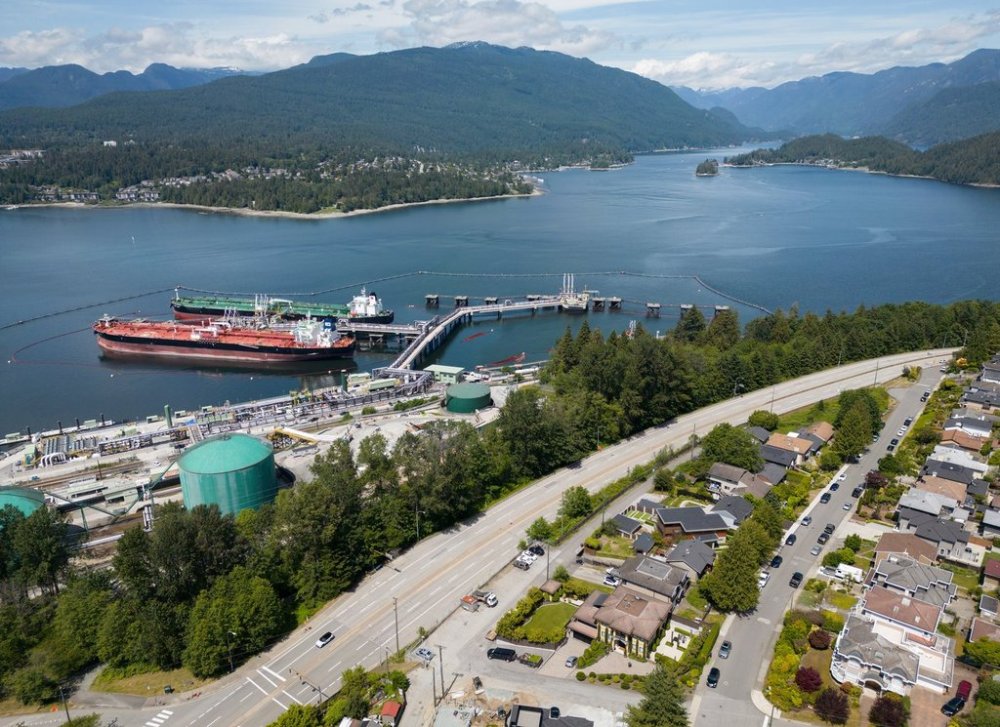
George-Wilson’s B.C.-based First Nation fought in court against the Trans Mountain expansion pipeline, which ends in Burrard Inlet, part of her people’s ancestral territory.
They initially succeeded in reversing the Trudeau government’s approval of the project in 2018 over a lack of consultation. However, after the government reapproved the project in 2019, First Nations such as Tsleil-Waututh were unable to stop it.
It was during this legal battle that the federal government purchased the Trans Mountain project from Kinder Morgan, which had been preparing to withdraw.
The TMX saga has left George-Wilson feeling pessimistic about the government’s approach to other projects. “Even today … the government has not responded to the significant impacts that Trans Mountain has had and continues to have on our community,” she said.
She says she is not reassured by Carney’s promise to respect section 35 of the Constitution Act — which guarantees the ancestral rights of Indigenous peoples — nor by the meetings he held over the summer with Indigenous leaders on his government’s plans to quickly approve infrastructure projects.
Some Indigenous communities have said they were not consulted during the drafting of the new legislation and fear it will infringe on their rights. Nine First Nations in Ontario have already filed a legal challenge against the Building Canada Act.
With the law, Carney wants to speed up projects that Ottawa considers to be in the national interest, with the goal of limiting approval times to two years.
“I don’t think this piece of legislation is going to speed up the projects at all because they’re going to end up in court,” she said.
However, Joe Dion a former grand chief in Alberta, says he thinks the Carney government will respect Section 35 and honour the principle of free, full, and informed consent of First Nations.
“For the government to revoke this section or to go against it would be a national shame. So I don’t think it’s going to happen’,” said Dion, who is the CEO and director of the Western Indigenous Pipeline Group.
The group includes dozens of Indigenous communities that, in partnership with Pembina Pipeline Corporation, want to acquire TMX. Ottawa has signalled its intention to divest itself of the pipeline ever since it purchased it from Kinder Morgan, though it has not yet done so.

Dion believes that things have changed significantly since the Trans Mountain saga began, and believes the Carney government intends to fully involve Indigenous communities in future projects labelled as in the national interest.
“The government is now saying that the First Nations and the Indigenous groups will have equity, will have ownership in these projects,” he said in an interview. “When TMX started, there was no promise of that at all … We had to fight for it, we have to fight for it.”
Dion acknowledges that the Building Canada Act has drawn criticism from many Indigenous communities, but he said, “You will never have unanimity, whether it’s First Nations or non-First Nations.”
In his view, projects that would “severely affect” Indigenous communities will simply not go ahead, and won’t be selected as being in the national interest.
This report by The Canadian Press was first published Aug. 18, 2025.