As the Atlantic Ocean warms, climate change is fueling Hurricane Melissa’s ferocity
Advertisement
Read this article for free:
or
Already have an account? Log in here »
To continue reading, please subscribe:
Digital Subscription
One year of digital access for only $1.44 a week*
- Enjoy unlimited reading on winnipegfreepress.com
- Read the E-Edition, our digital replica newspaper
- Access News Break, our award-winning app
- Play interactive puzzles
*Billed as $5.77 plus GST every four weeks. After 52 weeks, price increases to the regular rate of $19.95 plus GST every four weeks. Offer available to new and qualified returning subscribers only. Cancel any time.
To continue reading, please subscribe:
Add Free Press access to your Brandon Sun subscription for only an additional
$1 for the first 4 weeks*
- Enjoy unlimited reading on winnipegfreepress.com
- Read the E-Edition, our digital replica newspaper
- Access News Break, our award-winning app
- Play interactive puzzles
*Your next Brandon Sun subscription payment will increase by $1.00 and you will be charged $17.95 plus GST for four weeks. After four weeks, your payment will increase to $24.95 plus GST every four weeks.
Read unlimited articles for free today:
or
Already have an account? Log in here »
Hey there, time traveller!
This article was published 27/10/2025 (359 days ago), so information in it may no longer be current.
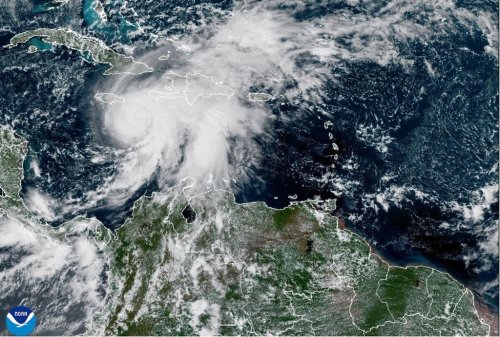
The warming of the world’s oceans caused by climate change helped double Hurricane Melissa’s wind speed in less than 24 hours over the weekend, climate scientists said Monday.
Melissa is currently a Category 5 storm, the highest category, with sustained wind speeds of over 157 mph (252 kph). Melissa is forecast to make landfall in Jamaica on Tuesday before crossing Cuba and the Bahamas through Wednesday.
Scientists said this is the fourth storm in the Atlantic this year to undergo rapid intensification of its wind speed and power.
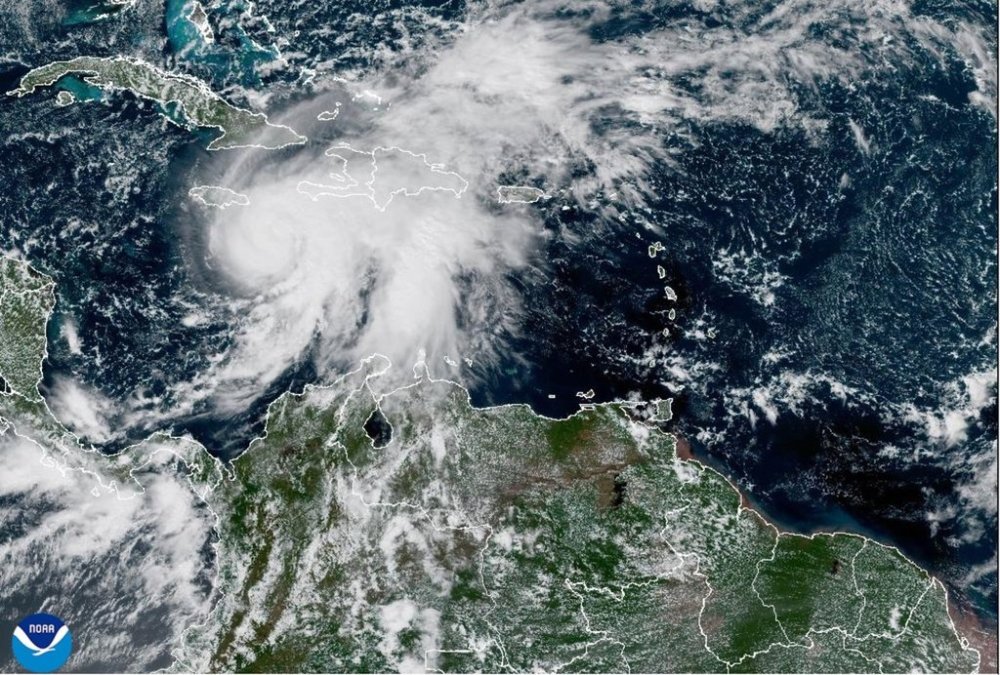
“That part of the Atlantic is extremely warm right now — around 30 degrees Celsius (86 degrees Fahrenheit), which is 2 to 3 degrees Celsius above normal,” said Akshay Deoras, a meteorologist at the University of Reading, in the United Kingdom. “And it’s not just the surface. The deeper layers of the ocean are also unusually warm, providing a vast reservoir of energy for the storm.”
Deoras, who has tracked the impact of climate change on weather phenomena for decades, said scientists are seeing storms intensify quickly.
“Climate change is fundamentally changing our weather. It does not mean that every single tropical cyclone is going to go through rapid or super-rapid intensification. However, in our warmer world, it will continue to increase the likelihood of storms going through rapid and super-rapid intensification,” said Bernadette Woods Placky, chief meteorologist at Climate Central, an independent group of scientists and communicators.
Storms more likely to intensify
A 2023 study had found that Atlantic hurricanes are now more than twice as likely as before to intensify rapidly from minor storms to powerful and catastrophic events. The study looked at 830 Atlantic tropical cyclones since 1971. It found that in the last 20 years, 8.1% of storms powered from a Category 1 minor storm to a major hurricane in just 24 hours. That happened only 3.2% of the time from 1971 to 1990, according to a study in the journal Scientific Reports.
The U.S. National Hurricane Center has warned of “ catastrophic flash flooding and numerous landslides ” from Melissa in Jamaica, where some areas could receive up to 40 inches (1 meter) of rain. The storm has already killed at least four people in Haiti and the Dominican Republic.
Climate scientists have long warned that warming oceans — driven by greenhouse gas emissions — are making such explosive storm development more common. “We’re living in a warmer world, and that means hurricanes are more likely to intensify quickly, especially near coastlines,” Deoras said.
Storms intensifying faster near land poses greater risks to lives and infrastructure, said Deoras. “If a hurricane forms deep in the ocean and just dissipates over the ocean, it’s fine. It’s not going to affect anyone. But if it forms close to the coast, and if it just crosses the coast, as we are going to see in the case of Jamaica and other regions, it’s a big problem,” he said.
Deoras added that while hurricanes are natural phenomena, climate change is amplifying their impact. “We can’t stop hurricanes, but we can reduce the risk by cutting emissions and improving coastal defenses,” he said. Investment is needed in early warning systems, sea walls and other infrastructure to make communities, especially in island countries, more resilient to climate impacts, he said.
The world has warmed too much to prevent phenomena like rapid intensification, he said. Various global weather agencies found that last year was the hottest year on record.
Islands at risk
The impact of climate change is putting lives at risk on islands and in coastal areas, Placky said. “With 90% of our extra heat going into our oceans, we’re seeing these oceans warm and they’re rising. And that plays out with sea level rise. So even outside of any storm, the water levels are getting higher. They’re creeping away at our coastlines and they’re going farther inland,” she said.
A storm like Melissa only compounds these impacts, according to Placky. “These storms are really ripping away at the coastal infrastructure of these islands,” she said.
The NOAA predicted a busier-than-usual Atlantic hurricane season this year, with 13 to 18 named storms, five to nine hurricanes and two to five major hurricanes. After a slow start, that’s been largely accurate, with 13 storms and four major hurricanes and roughly another month left in the season.
The impact of such storms increases the urgency for global action to reduce the amount of planet-heating gases released into the atmosphere according to policymakers in small island countries.
At least six people have already died as a result of Melissa in the northern Caribbean and the storm has damaged nearly 200 homes in the Dominican Republic. When the hurricane makes landfall in Jamaica, it’ll likely be the strongest storm to hit the island since record-keeping began in 1851.
“All of our small island developing states know all too well the fear and dread those in the hurricane’s path are feeling. This trauma should not be anyone’s norm,” said Anne Rasmussen, lead negotiator for the Alliance of Small Island States at the United Nations climate talks, the next session of which is scheduled to be held in Brazil next month.

Rasmussen said extreme weather events like Hurricane Melissa only make it more urgent for countries to begin acting more decisively on climate change. “We need urgent action that gets us back on track with a 1.5 degrees Celsius (2.7 degrees Fahrenheit) warming limit increase, so we can avoid even worse impacts to come,” she said.
___
Follow Sibi Arasu on X at @sibi123
__
The Associated Press’ climate and environmental coverage receives financial support from multiple private foundations. AP is solely responsible for all content. Find AP’s standards for working with philanthropies, a list of supporters and funded coverage areas at AP.org.
Related Articles
Canada not on track to meet 2030 climate targets, report finds
Advertisement Advertise With Us
Advertisement Advertise With Us