Climate change boosted Hurricane Melissa’s destructive winds and rain, analysis finds
Advertisement
Read this article for free:
or
Already have an account? Log in here »
To continue reading, please subscribe:

Digital Subscription
One year of digital access for only $205*
- Enjoy unlimited reading on winnipegfreepress.com
- Read the E-Edition, our digital replica newspaper
- Access News Break, our award-winning app
- Play interactive puzzles
*First annual payment billed as $205.00 + GST for one year. This annual subscription will automatically renew at $233.00 + GST every 52 weeks (10% off the regular annual price of $259.35). Offer available to new and qualified returning subscribers only. Cancel any time.
To continue reading, please subscribe:
Add Free Press access to your Brandon Sun subscription for only an additional
$1 for the first 4 weeks*
- Enjoy unlimited reading on winnipegfreepress.com
- Read the E-Edition, our digital replica newspaper
- Access News Break, our award-winning app
- Play interactive puzzles
*Your next Brandon Sun subscription payment will increase by $1.00 and you will be charged $17.95 plus GST for four weeks. After four weeks, your payment will increase to $24.95 plus GST every four weeks.
Read unlimited articles for free today:
or
Already have an account? Log in here »
Hey there, time traveller!
This article was published 06/11/2025 (315 days ago), so information in it may no longer be current.
Human-caused climate change boosted the destructive winds and rain unleashed by Hurricane Melissa and increased the temperatures and humidity that fueled the storm, according to an analysis released Thursday.
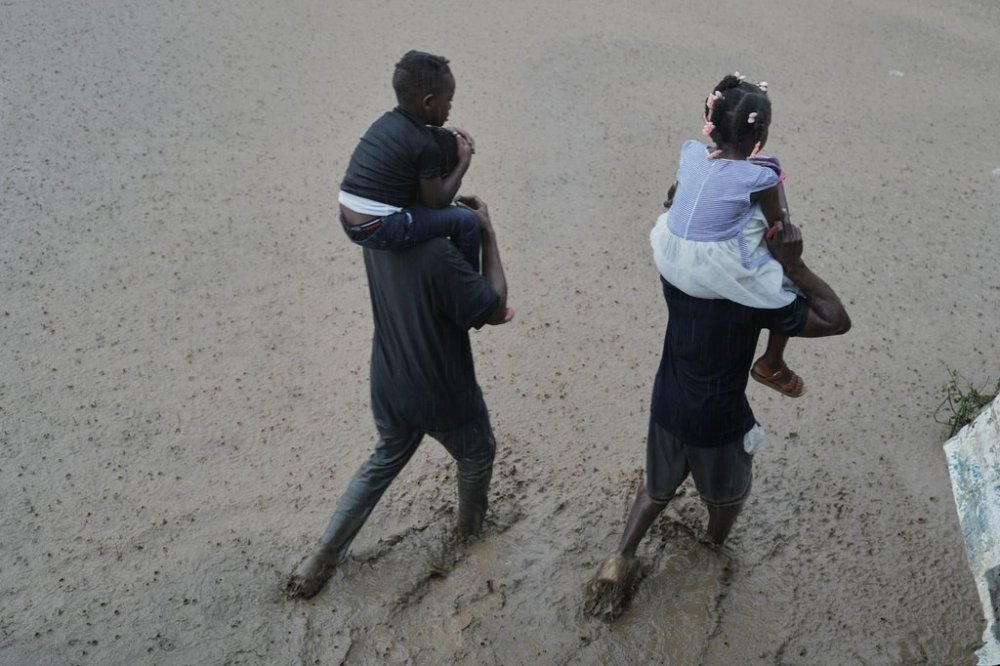
Melissa was one of the strongest Atlantic hurricanes to make landfall and brought destructive weather to Jamaica, Haiti, Dominican Republic and Cuba, causing dozens of deaths across the Caribbean. Roofs were torn off of homes, hospitals were damaged, roads were blocked by landslides and crop fields were ruined.
The rapid analysis by World Weather Attribution found that climate change increased Melissa’s maximum wind speeds by 7% and made the rainfall near the center of the storm 16% more intense. The scientists also wrote that the temperature and humidity in which the storm intensified were made six times more likely due to climate change compared to a pre-industrial world.
Rapid attribution analyses are a type of research that study factors influencing an extreme weather event and explore what the event would have been like in a world without climate change. They are typically published days or weeks after an extreme weather event.
Melissa slowly tracked across the region and drew in enormous amounts of energy from abnormally warm ocean water. The analysis reported ocean temperatures in Melissa’s path through the Caribbean were about 1.4°C (2.5°F) warmer compared to a pre-industrial climate.
“Warmer ocean temperatures are effectively the engine that drives a hurricane … the warmer the ocean temperatures, the greater the wind speed a hurricane can have,” said Theodore Keeping, a climate scientist who works for WWA and contributed to the analysis.
Melissa is the fourth storm in the Atlantic this year to undergo rapid intensification, which is when a tropical cyclone’s maximum sustained winds increase by at least 30 knots (about 35 mph or 56 kph) in 24 hours.
“A hurricane this rare would actually have had wind speeds about 10 mph (16 kph) less extreme” in a pre-industrial climate, said Keeping. He said research links hurricane wind speeds to economic damage and there would have been less destruction caused by Melissa if the winds were slower.
Scientists have linked rapid intensification of hurricanes in the Atlantic to human-caused climate change. Planet-warming gases released by humans, such as carbon dioxide, cause the atmosphere to hold more water vapor and increase ocean temperatures. Warmer oceans give hurricanes fuel to unleash more rain and strengthen more quickly.
“It’s like basically taking a sponge and wringing it out, and climate change is making that sponge even larger,” said Brian Tang, a professor of atmospheric science at University at Albany.
Tang, who was not involved in the WWA research, said the methodology of the study released Thursday seems robust, and one of the more novel aspects of the analysis was the connection the scientists drew between wind speeds and increase in damage, which he said is a challenging area of research.

Andrew Dessler, professor of atmospheric sciences at Texas A&M University, who was not involved in the WWA research, said the findings of the rapid analysis are in line with existing research about climate change and tropical storms in the Atlantic. “This is completely consistent with our expectation of what’s going to happen in the future,” Dessler said.
Rapid attribution analyses help fill the need for an explanation about the influence of climate change shortly after a catastrophic weather event occurs, said Dessler. He said such analyses are “very valuable as a quick look” before the scientists are able to do more time-consuming calculations.
Dessler said one of the scariest aspects of Melissa was the storm’s peak sustained winds of 185 mph (298 kph) winds. “That’s pretty rare to have a storm that strong. And I think that, to the extent that this is a harbinger of the future, it’s not good,” he said.
___
The Associated Press’ climate and environmental coverage receives financial support from multiple private foundations. AP is solely responsible for all content. Find AP’s standards for working with philanthropies, a list of supporters and funded coverage areas at AP.org.