A rare whale is having an encouraging season for births. Scientists warn it might still go extinct
Advertisement
Read this article for free:
or
Already have an account? Log in here »
To continue reading, please subscribe:
Digital Subscription
One year of digital access for only $1.44 a week*
- Enjoy unlimited reading on winnipegfreepress.com
- Read the E-Edition, our digital replica newspaper
- Access News Break, our award-winning app
- Play interactive puzzles
*Billed as $5.77 plus GST every four weeks. After 52 weeks, price increases to the regular rate of $19.95 plus GST every four weeks. Offer available to new and qualified returning subscribers only. Cancel any time.
To continue reading, please subscribe:
Add Free Press access to your Brandon Sun subscription for only an additional
$1 for the first 4 weeks*
- Enjoy unlimited reading on winnipegfreepress.com
- Read the E-Edition, our digital replica newspaper
- Access News Break, our award-winning app
- Play interactive puzzles
*Your next Brandon Sun subscription payment will increase by $1.00 and you will be charged $17.95 plus GST for four weeks. After four weeks, your payment will increase to $24.95 plus GST every four weeks.
Read unlimited articles for free today:
or
Already have an account? Log in here »
Hey there, time traveller!
This article was published 05/01/2026 (291 days ago), so information in it may no longer be current.
PORTLAND, Maine (AP) — One of the world’s rarest whale species is having more babies this year than in some recent seasons, but experts say many more young are needed to help stave off the possibility of extinction.
The North Atlantic right whale’s population numbers an estimated 384 animals and is slowly rising after several years of decline. The whales have gained more than 7% of their 2020 population, according to scientists who study them.
The whales give birth off the southeastern United States every winter before migrating north to feed. Researchers have identified 15 calves this winter, the National Oceanic and Atmospheric Administration said Monday.
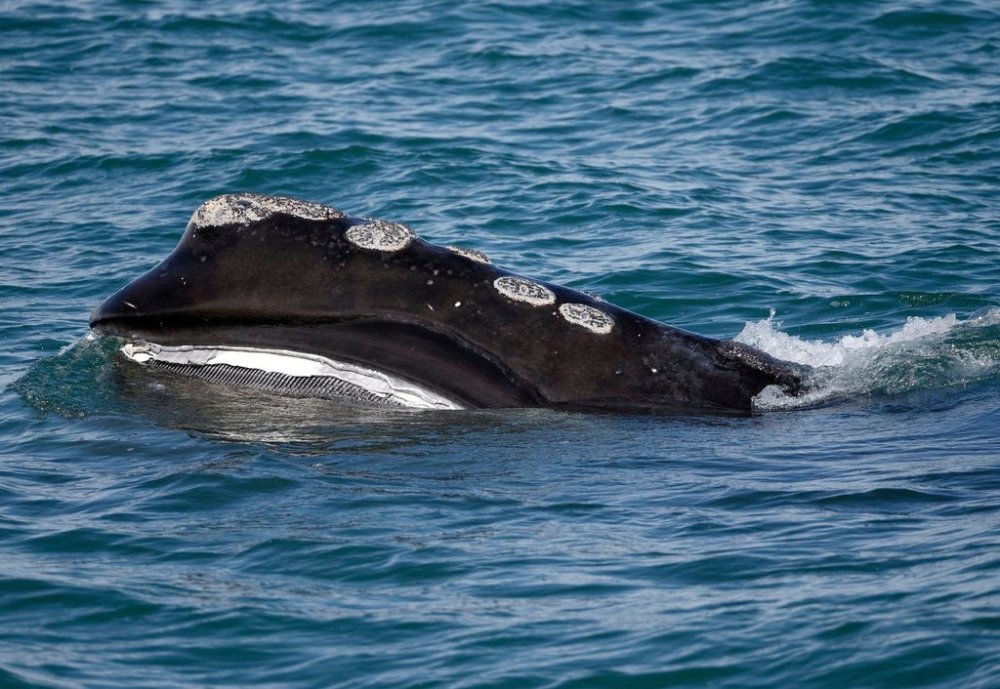
That number is higher than two of the last three winters, but the species needs “approximately 50 or more calves per year for many years” to stop its decline and allow for recovery, NOAA said in a statement. The whales are vulnerable to collisions with large ships and entanglement in commercial fishing gear.
This year’s number is encouraging, but the species remains in peril without stronger laws to protect against those threats, said Gib Brogan, senior campaign director with environmental group Oceana. The federal government is in the midst of a moratorium on federal rules designed to protect right whales until 2028, and commercial fishing groups have pushed for a proposal to extend that pause for even longer.
There is still time left for more baby whales to be born this winter, but 50 is not a reasonable expectation because of a lack of reproductive females in the population, Brogan said.
“We’re not going to be able to calve ourselves to recovery,” Brogan said. “We also need to be doing more to tackle the two primary causes of right whale deaths, being entanglement in fishing gear and being hit by boats.”

The whales have fared better than last winter, when they gave birth to only 11 calves, according to NOAA data. The whales have reached 20 calves only twice since 2010, and they gave birth to no calves in a disastrous 2018 season. The whales are less likely to reproduce when they have suffered injuries or are underfed, scientists have said.
The whales were hunted to the brink of extinction during the era of commercial whaling and have been federally protected for decades. They remain in a crisis at the moment because there have been more deaths than births in the population in the past decade, NOAA said in its statement.