Winter drilling program in Alaska petroleum preserve can proceed, judge rules
Advertisement
Read this article for free:
or
Already have an account? Log in here »
To continue reading, please subscribe:

Digital Subscription
One year of digital access for only $205*
- Enjoy unlimited reading on winnipegfreepress.com
- Read the E-Edition, our digital replica newspaper
- Access News Break, our award-winning app
- Play interactive puzzles
*First annual payment billed as $205.00 + GST for one year. This annual subscription will automatically renew at $233.00 + GST every 52 weeks (10% off the regular annual price of $259.35). Offer available to new and qualified returning subscribers only. Cancel any time.
To continue reading, please subscribe:
Add Free Press access to your Brandon Sun subscription for only an additional
$1 for the first 4 weeks*
- Enjoy unlimited reading on winnipegfreepress.com
- Read the E-Edition, our digital replica newspaper
- Access News Break, our award-winning app
- Play interactive puzzles
*Your next Brandon Sun subscription payment will increase by $1.00 and you will be charged $17.95 plus GST for four weeks. After four weeks, your payment will increase to $24.95 plus GST every four weeks.
Read unlimited articles for free today:
or
Already have an account? Log in here »
Hey there, time traveller!
This article was published 28/01/2026 (232 days ago), so information in it may no longer be current.
JUNEAU, Alaska (AP) — ConocoPhillips Alaska can proceed with an oil and gas exploration program in a portion of a vast petroleum reserve in the state after a federal judge denied a request from project opponents to halt it.
U.S. District Court Judge Sharon Gleason rejected a request by conservation groups and an Iñupiat-aligned group that sought to halt ConocoPhillips Alaska’s planned exploration program in the National Petroleum Reserve-Alaska until the groups’ legal challenge to the program’s authorization by the U.S. Bureau of Land Management was resolved.
The groups said the federal government improperly analyzed the drilling program. The company, meanwhile, said the program was imperative to preserving its leases.
Gleason said in her order dated Tuesday that the groups had not shown that they have a “fair chance of success” on the merits of their claims.
The decision comes after a mobile drilling rig the company planned to use as part of its program toppled onto snow-covered tundra near existing oil and gas infrastructure while being transported last week. Attorneys for the company in a court filing said the incident would not deter ConocoPhillips Alaska’s overall plans and that a substitute drill rig would be used.
The petroleum reserve, which covers an area roughly the size of Indiana on Alaska’s North Slope, has been a focal point of a more aggressive oil and gas development push in the state backed by President Donald Trump and congressional Republicans. A law passed last year calls for at least five lease sales in the reserve over a 10-year period. The last lease sale was held in 2019.
The Bureau of Land Management in late November approved a program proposed by ConocoPhillips Alaska that included seismic surveys aimed at helping identify oil and gas reserves and plans to drill four exploration wells. The lawsuit, brought by Sovereign Iñupiat for a Living Arctic, the Center for Biological Diversity and The Wilderness Society, alleges the process around the company’s application and its subsequent approval lacked transparency and was rushed.
In December, the federal land management agency issued a revised approval that it said took into account recent changes, including the Trump administration’s adoption of a plan that would reopen most of the reserve to leasing. The groups that sued said in a court filing that the revised approval did not address their concerns.
The activities would occur near existing ConocoPhillips Alaska developments, including the large Willow oil project, approved by the Biden administration in 2023 and currently under development, the groups said.
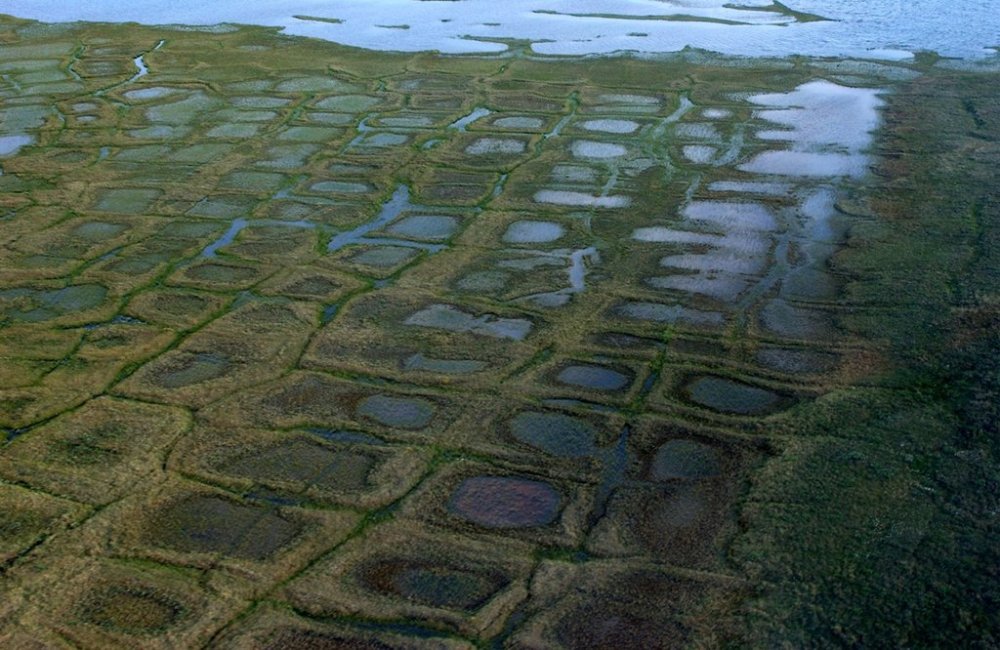
They said the planned program could harm caribou and bird habitat areas and cited a balancing act required between allowing oil- and gas-related activities and protecting resources on the land. The petroleum reserve provides an array of habitats, including tundra, wetlands, rivers and lakes. Millions of migratory birds nest and feed in the reserve, which also provides a home for such wildlife as caribou, polar bears and arctic foxes.
But Gleason said the Bureau of Land Management is not required “to prevent all impacts to surface resources” in the reserve. She said the agency “conducted a reasonably thorough analysis of the impacts of the winter program on tundra in the project area on various types of vegetation.”
She also said the agency in its analysis highlighted planned mitigation measures.
The lawsuit names as defendants the Department of Interior and Bureau of Land Management and top agency officials, including Interior Secretary Doug Burgum. ConocoPhillips Alaska filed as an intervenor, in support of the government’s actions.
Ian Dooley, an attorney with Earthjustice representing the plaintiffs, in a statement said Gleason’s decision does not end his clients’ challenge to the exploration program. He called it “remarkable” that the Bureau of Land Management had not on its own halted the project to determine the cause of last week’s rig collapse.
The agency’s “lack of action is consistent with the rushed process here that has prioritized extraction over protecting the Reserve’s remarkable environment and the people who live in and use it,” he said.
ConocoPhillips Alaska, in a statement, said it welcomed the decision and looked forward “to building on our track record of responsibly exploring and developing Alaska’s resources in ways that benefit all Alaskans.”
Brandi Sellepack, manager of exploration for ConocoPhillips Alaska, in a December court filing said the company had invested “tens of millions of dollars” on the program “that cannot be recovered” if the program were blocked for the winter.
Sellepack said information gleaned from exploration activities is vital to determining if future investment in leases is warranted. She also said timely exploration activities were imperative to preserving lease rights.
While leases are for a 10-year period, exploration, construction and development in the reserve “is a slow process, constrained because of its remote location and short construction seasons, which are typically limited to the winter season,” she said.