Audit finds flood hazard mapping behind schedule, doesn’t account for climate change
Advertisement
Read this article for free:
or
Already have an account? Log in here »
To continue reading, please subscribe:

Digital Subscription
One year of digital access for only $205*
- Enjoy unlimited reading on winnipegfreepress.com
- Read the E-Edition, our digital replica newspaper
- Access News Break, our award-winning app
- Play interactive puzzles
*First annual payment billed as $205.00 + GST for one year. This annual subscription will automatically renew at $233.00 + GST every 52 weeks (10% off the regular annual price of $259.35). Offer available to new and qualified returning subscribers only. Cancel any time.
To continue reading, please subscribe:
Add Free Press access to your Brandon Sun subscription for only an additional
$1 for the first 4 weeks*
- Enjoy unlimited reading on winnipegfreepress.com
- Read the E-Edition, our digital replica newspaper
- Access News Break, our award-winning app
- Play interactive puzzles
*Your next Brandon Sun subscription payment will increase by $1.00 and you will be charged $17.95 plus GST for four weeks. After four weeks, your payment will increase to $24.95 plus GST every four weeks.
Read unlimited articles for free today:
or
Already have an account? Log in here »
OTTAWA – Federal efforts to map parts of the country facing the highest risk of flooding are not on track to finish by the 2028 target date and don’t account for the effects of climate change, Canada’s environment watchdog said in a new report.
The report was one of five issued by environment commissioner Jerry DeMarco and auditor general Karen Hogan on Monday. The other audits reviewed Canada’s avian flu response, First Nations funding, the climate resilience of federal assets, and how well the government accommodates accessibility needs in the public service.
The flood mapping report found the flood risk awareness portal under development at the Public Safety Department does not consider how climate change is affecting flood patterns.
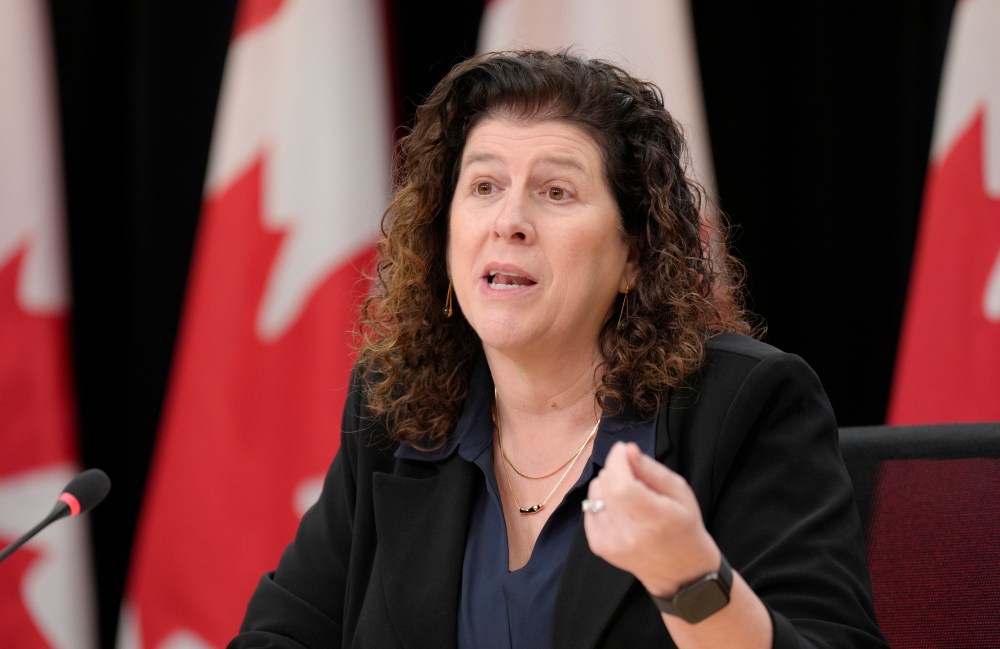
“Climate change projections and easily available flood maps are needed to reliably inform long-term planning decisions, such as where to build homes or develop infrastructure,” DeMarco said at a press conference.
The risk ratings for the portal were generated using present-day assumptions and the audit found that because the government used a private sector contractor to create a proprietary system, it was not able to adjust the model.
The report said Public Safety Canada determined there was a “high level of uncertainty associated with climate-impacted flood estimation” and the department intended to look into whether climate change considerations could be added.
The audit also looked at efforts to map high-risk flood areas at the Natural Resources department.
The government identified 200 areas at high risk of flooding in 2022 but the audit found it did not monitor whether the mapping projects actually covered those priority areas.
As a result, the audit said, less than half of the 131 mapping projects cover the high-risk areas identified after that 2022 analysis. Only 11 of those maps had been posted to the Canada flood map inventory.
Flood relief efforts cost the federal government an average of $230 million a year between 2016 and 2025. That average cost is rising as a result of climate change and population growth.
The national risk profile found about 80 per cent of highly populated areas of the country are at least partially in flood hazard zones.
DeMarco is recommending the government create user-friendly, interactive flood maps to ensure people can prepare.
The audit notes federal investments in homes and infrastructure, “including those announced in Budget 2025, could be planned and designed with climate readiness in mind by using reliable and actionable flood hazard information.”
DeMarco said that to be useful to Canadians, the public portal must be able to factor in new information and climate change scenarios.
“Right now, the way it’s designed, it doesn’t have those capabilities,” he said.
Emergency Preparedness Minister Eleanor Olszewski said in an interview that she used the portal last week and found it to be “an incredible tool” that was easy to navigate.
“The risk data set is based on years of information and it does take into account, as climate change factors and as the situation evolves, those maps will be updated to take that information into account,” she said.
Another report found that the Treasury Board of Canada Secretariat’s oversight of a federal climate strategy had “significant gaps.”
The report looked into the Greening Government Strategy, aimed at getting departments and agencies to assess and reduce climate change risks by 2022. The government in 2024 pushed back commitments to 2035 and later, without any interim targets or public reports.
The audit found that National Defence, Public Services and Procurement Canada and Fisheries and Oceans Canada were slow to improve their climate resilience. The report said that lack of progress undermines the protection of federal assets, like bridges, roads and buildings, which have a combined value of around $100 billion.
“As Canada warms at twice the global average, accelerating efforts to protect federal assets and services will sustain communities and save taxpayers money over time,” DeMarco said.
On avian influenza, DeMarco found the Public Health Agency of Canada wasted most of the vaccines it procured to help people who were most at risk of contracting the virus, including farmers and veterinarians.
The agency bought 870,000 doses of vaccines, despite having assessed the need in Canada at 300,000, and ultimately wasted 95 per cent of those when they expired in February.
Hogan’s office also released reports on Monday about funding for First Nations and accessibility in federal workplaces.
It found Indigenous Services Canada failed to effectively implement, monitor or assess funding for First Nations.
The audit found that more than $6.5 billion has been provided to First Nations and First Nations-led organizations through 10-year grants, but the government didn’t consistently monitor whether recipients remained eligible for the funding. The department also didn’t assess whether the grants were helping address inequities between First Nations and other Canadians.
A final report looked into federal workplace accessibility at seven organizations, including the Canada Revenue Agency and Shared Services Canada.
It found that while the representation of employees with disabilities increased overall, the organizations didn’t have effective processes to handle accommodation requests. It said some employees waited up to 310 days for a response.
“Federal organizations have a duty to ensure that employees can participate fully and equally in the workplace. Building on the progress made to date requires an ongoing focus on accessibility and efficient processes,” Hogan said.
The government says it has accepted all of the recommendations in the audits.
This report by The Canadian Press was first published May 4, 2026.
— With files from Jordan Omstead in Toronto