New England grid operator forecasts modest growth in electricity demand over next 10 years
Advertisement
Read this article for free:
or
Already have an account? Log in here »
To continue reading, please subscribe:

Digital Subscription
One year of digital access for only $205*
- Enjoy unlimited reading on winnipegfreepress.com
- Read the E-Edition, our digital replica newspaper
- Access News Break, our award-winning app
- Play interactive puzzles
*First annual payment billed as $205.00 + GST for one year. This annual subscription will automatically renew at $233.00 + GST every 52 weeks (10% off the regular annual price of $259.35). Offer available to new and qualified returning subscribers only. Cancel any time.
To continue reading, please subscribe:
Add Free Press access to your Brandon Sun subscription for only an additional
$1 for the first 4 weeks*
- Enjoy unlimited reading on winnipegfreepress.com
- Read the E-Edition, our digital replica newspaper
- Access News Break, our award-winning app
- Play interactive puzzles
*Your next Brandon Sun subscription payment will increase by $1.00 and you will be charged $17.95 plus GST for four weeks. After four weeks, your payment will increase to $24.95 plus GST every four weeks.
Read unlimited articles for free today:
or
Already have an account? Log in here »
As more people in Maine and New England buy heat pumps and electric vehicles, power grid operator ISO New England expects electricity use in the region to grow by about 9 percent over the next decade, according to a report released on May 1.
While this latest annual forecast still predicts overall growth, the projections are more conservative than in recent years, in large part due to changes in federal government policies on climate change and energy. Last year, ISO New England had projected about 11 percent growth in electricity demand over the next decade.
But regardless of the pivot at the federal level, Maine’s state-level energy efficiency goals and programs remain intact, according to those programs’ administrator, the Efficiency Maine Trust.
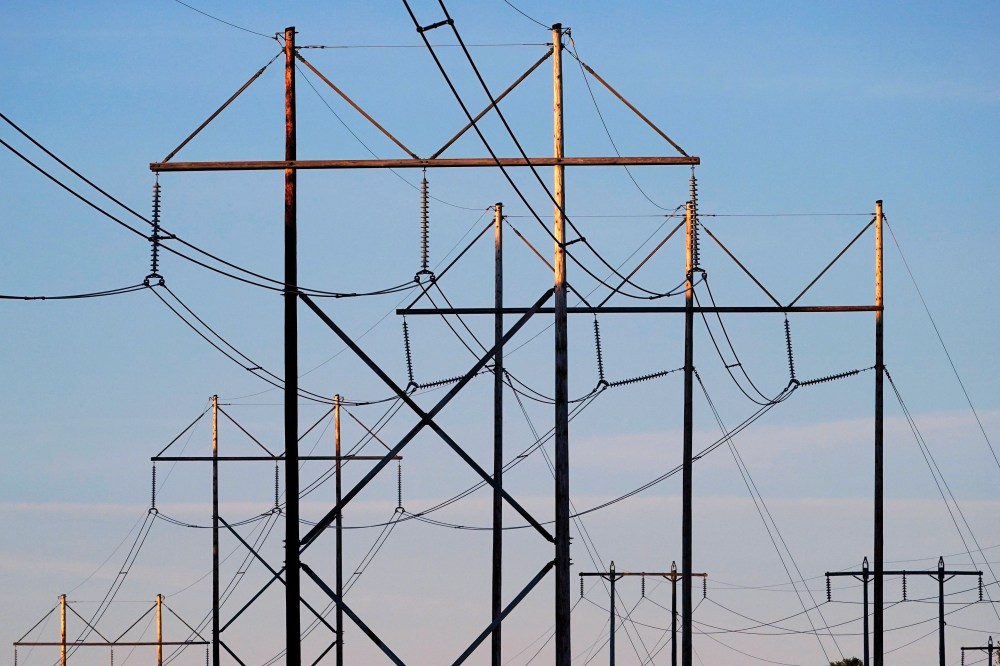
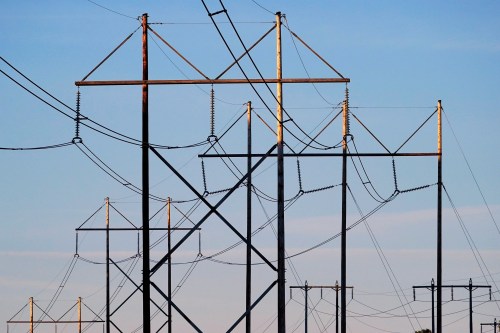
The projected growth for the New England power grid would reverse the past two decades’ trend of falling electricity use as heating and cooling systems, lighting and appliances all grew more energy-efficient. Demand for electricity from the grid also fell as people installed solar panels that generate power “behind the meter.”
“We’ve had years of relatively flat demand, and that’s thanks to states in the region making real investments in energy efficiency measures. But looking ahead to the future, there is going to be a shift,” said Mary Cate Colapietro, a spokesperson for ISO New England.
As concerns about climate change have grown, many people, businesses and institutions are switching to technologies that run on electricity rather than on fossil fuels.
“The two big factors that are driving this growth are the electrification of heating and transportation,” Colapietro said.
Heat pumps and electric vehicles tend to be more efficient than oil or gas-powered heaters and traditional combustion engine cars. And electricity in the United States, including New England and Maine, is increasingly coming from cleaner sources such as solar and wind.
ISO New England, which is set up as an independent nonprofit organization, oversees the wholesale electricity market and acts as a traffic cop for the flow of electricity across transmission lines, but does not itself own any power sources or transmission lines. The organization’s forecasts help utilities and policymakers plan future investments into the grid’s infrastructure.
The forecasters’ models incorporate data on power demand from homes and businesses, electric vehicles, electric heating systems including heat pumps, and behind-the-meter power generation by solar panels.
This year, the projections included for the first time estimates of electricity demand from large users such as data centers. So far, New England isn’t facing as much data center demand as other parts of the country, but the latest forecast included one planned facility in Massachusetts. This year’s report also included behind-the-meter battery storage systems for the first time.
“Increases to the grid cost money,” said Michael Stoddard, executive director of Efficiency Maine. “You want to find this Goldilocks amount. You want to build it to the right size at the right time.”
Stoddard said he believes that ISO New England has been too aggressive in its past projections of the growing number of electric vehicles and heat pumps in the region, and that this year’s forecast for the sheer number of those technologies to be added is “more reasonable.” But he also believes the grid operator’s estimates of how much electricity heat pumps consume are still too high and said he hopes the forecasters “start to take a harder look” at that part of the equation.
ISO New England did update its assumptions and adjust its modeling for heat pumps’ electricity demand this year, according to Colapietro. The forecasters also factored in some reduced demand from building weatherization efforts, she said.
“The CELT (Capacity, Energy, Loads, and Transmission) report goes through a variety of additions, revisions and changes each year to reflect the ever-evolving changes of the bulk power system,” she wrote in an email. “Each year our forecasters examine a variety of factors to develop these long-term projections and build upon techniques developed during prior report cycles.”
Diverging federal and state incentives for electrification
The 2022 Inflation Reduction Act funded federal tax credits to encourage people to buy heat pumps and electric vehicles. But those tax credits expired at the end of 2025, sooner than planned, as the Trump administration took office and pivoted federal policy away from electrification and renewable energy toward continued use of fossil fuels.
Maine has legally mandated goals of at least 115,000 households being fully heated by heat pumps and an additional 130,000 partially heated by heat pumps by 2030. The same law also sets a goal of having at least 220,000 battery electric and plug-in hybrid vehicles registered in the state by 2030.
The state offers rebates through Efficiency Maine for both residential and commercial heat pumps. These incentives are mostly funded through regional sources, including money set aside by utilities for energy efficiency initiatives; revenue from ISO New England’s forward capacity market, which is a set of annual auctions that secure new sources of electricity; and the Regional Greenhouse Gas Initiative, a cap-and-trade system for carbon dioxide pollution among 11 New England and Mid-Atlantic states.
This funding has been sustained for more than a dozen years, with comparable rebate amounts each year, said Stoddard.
“I think that’s been an extremely important part of our recipe for success, is to sustain that funding from year to year. And yes, we will be sustaining it into the future,” he said.
The consistency has given contractors the confidence to expand their businesses, including hiring and training new staff to install heat pumps, according to Stoddard. Mainers have embraced the technology, with more than 200,000 heat pumps installed across the state already, according to the governor’s office.
Maine also offers similar rebates for electric vehicles, funded by utilities and the ISO New England forward capacity market. Electric vehicles have been slower to take off, with about 9,700 registered in Maine as of 2024, according to the U.S. Department of Energy. That represents 0.8 percent of all vehicles in the state. Efficiency Maine has issued about 2,000 rebates for electric vehicles over the past five years, Stoddard said.
Maine’s grid has some capacity to absorb this growth in electricity use, especially after the closures of many former mills, according to Judy Long, a spokesperson for the utility company Versant. But planning for a grid with higher demand in the winter from heat pumps will require investments, she said.
Both Versant and Central Maine Power recently submitted new integrated grid plans, meant to help prepare the state’s grid for further climate change, to the Public Utilities Commission for review. These plans relied in part on ISO New England’s forecast from two years ago. But Versant built in some flexibility, so this year’s more conservative forecast shouldn’t throw off the company’s grid plan, Long said.
As electricity demand rises, people’s utility bills don’t necessarily have to rise steeply, said Francesca Hsie, deputy director for electricity at the moderate think tank Third Way, which recently published an analysis of electricity prices in Maine.
“It depends on the amount of what the energy supply mix looks like, what we invest in and how much we need to expand the grid,” she said.
Using smarter grid technologies such as advanced conductors can help. Building more solar and wind farms, which is now generally cheaper than building new natural gas power plants, would lower costs. So would building these new projects faster, without hurdles such as those the federal government is currently putting up, according to Hsie.
“There has to be an emphasis, especially in the near term, on the lowest-cost solutions to upgrade the grid,” she said.
Electric bills in Maine have risen at the third highest rate in the country in recent years.
In addition to the integrated grid planning process run by the Public Utilities Commission, the Maine Department of Energy Resources is now kicking off the drafting process for the next Maine Energy Plan, which is updated every two years.
___
This story was originally published by The Maine Monitor and distributed through a partnership with The Associated Press.