Do Jackson Hole’s busiest trails create a wildlife ‘sacrifice zone’? Study finds coexistence.
Advertisement
Read this article for free:
or
Already have an account? Log in here »
To continue reading, please subscribe:

Digital Subscription
One year of digital access for only $205*
- Enjoy unlimited reading on winnipegfreepress.com
- Read the E-Edition, our digital replica newspaper
- Access News Break, our award-winning app
- Play interactive puzzles
*First annual payment billed as $205.00 + GST for one year. This annual subscription will automatically renew at $233.00 + GST every 52 weeks (10% off the regular annual price of $259.35). Offer available to new and qualified returning subscribers only. Cancel any time.
To continue reading, please subscribe:
Add Free Press access to your Brandon Sun subscription for only an additional
$1 for the first 4 weeks*
- Enjoy unlimited reading on winnipegfreepress.com
- Read the E-Edition, our digital replica newspaper
- Access News Break, our award-winning app
- Play interactive puzzles
*Your next Brandon Sun subscription payment will increase by $1.00 and you will be charged $17.95 plus GST for four weeks. After four weeks, your payment will increase to $24.95 plus GST every four weeks.
Read unlimited articles for free today:
or
Already have an account? Log in here »
Trail runners, mountain bikers, cross-country skiers and townsfolk just out for lunchtime walks take to the trails around Jackson in droves.
Bordering wild country that includes a wilderness area and wildlife refuge, recreators regularly bump into and sometimes conflict with wildlife, whether it’s moose, wolves, mountain lions or even grizzly bears.
But encounters with bipeds don’t appear to faze an impressive array of wildlife.
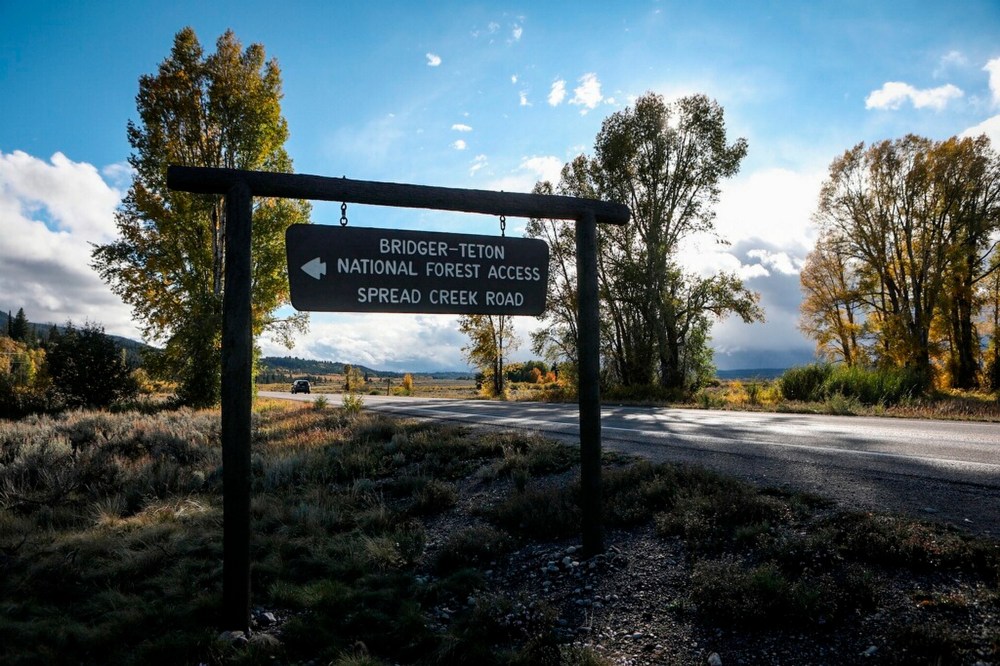
That’s one of the chief findings of a yearslong ecological inquiry that analyzed humans and critters passing by 27 remote cameras set along nonmotorized trails in a 36-square-mile area south and east of Jackson. Led by Courtney Larson, a conservation scientist with The Nature Conservancy, the research set out to find if the habitat in the near-town trail system had truly been overrun by outdoorsy locals and several million tourists that flock to recreation-centered Teton County every year.
“People think of that area as like a sacrifice zone,” Larson told WyoFile. “There’s super heavy recreational use and you’re probably not expecting (much) wildlife. We wanted to test that.”
Much of the existing body of research, including studies conducted near Jackson, have found that recreation can have significant adverse effects on wildlife. In the Teton Range, for example, backcountry skiing has displaced bighorn sheep from prime winter habitat.
But along trails near Jackson, Larson found mostly “encouraging” results. The research team drew its conclusions by analyzing 1.9 million images, including roughly 310,000 photos of humans, 54,000 detections of domestic dogs and 8,300 photos of wild mammals.
“Overall, we didn’t find a lot of significant avoidance,” Larson said. “We really do have all these different wildlife species using the area, despite really high recreation.”
Dubbed “Neighbors to Nature: Cache Creek Study,” the research kicked off six years ago and was a joint effort of The Nature Conservancy, Bridger-Teton National Forest, Jackson Hole Wildlife Foundation, Friends of Pathways and Teton Raptor Center.
The research team’s study area was the Bridger-Teton National Forest extending out from Snow King Mountain. That area, which includes 50-plus miles of trails, reaches from Josie’s Ridge up the Cache Creek drainage, down to Game Creek and is bounded on the west by U.S. Highway 89.
In April, the collaborators published their findings in the academic journal Conservation Science and Practice. The study looked at how different species responded to different types of human recreation, both in terms of the time of day they used the habitat or if they avoided an area altogether.
Elk appeared to be the most sensitive to disruptions. Faced with high human use, they were more active in the mornings and evenings. Elk also avoided areas with lots of recreation, the researchers found.
Moose did not avoid habitat altogether but did adjust the time of day they used highly trafficked areas.
Mule deer, black bear, coyote, skunk and mountain lion did not significantly alter their use of habitat due to recreation.
The analysis of remote camera images showed that foot traffic — hiking, skiing and snowshoeing — produced more negative wildlife responses than did cycling or the presence of domestic dogs.
“The results on that were mixed, and kind of confusing,” Larson said. “It’s nuanced, because there are greater numbers of hikers. We also aren’t able to look at distance. The average person going out hiking is probably going a couple miles, but the average person going out for a mountain bike ride is going to go much further.”
Larson emphasized her research’s limitations. The cameras, she pointed out, measured use during a 2.5-year “snapshot in time” when the trails were already in place.
“This area has been used really heavily for recreation for a long time,” Larson said. “We don’t know how many mule deer were using the area before.”
“I don’t want it to be portrayed as, ‘We have no impact, recreation and wildlife are totally fine,’” she added.
The study results come out at a time when the Bridger-Teton National Forest is revising its forest plan. Recreation is expected to be a central issue in the planning effort, which is in the early stages and will update a forest plan that’s 36 years old.
Linda Merigliano, a retired Bridger-Teton recreation specialist and collaborator on the study, hopes her successors put the new data to use.

“We really wanted this to serve as a baseline,” she said. “As we look at the forest plan, let’s try to build in metrics for wildlife-recreation coexistence.”
The beloved Cache Creek area (it’s even the subject of a book ) “is not a sacrifice zone,” Merigilano said. The area’s wildness and resilience, she said, is influenced by its setting, bordering the Gros Ventre Wilderness and National Elk Refuge.
“If Snow King was completely surrounded by development, we wouldn’t have the kind of critters that we have there,” Merigliano said. “There can be coexistence, but it’s not like anything goes. It requires active management, having season closures, and trails that people primarily stay on.”
___
This story was originally published by WyoFile and distributed through a partnership with The Associated Press.