Ottawa under increasing pressure to show how policy changes are affecting emissions
Advertisement
Read this article for free:
or
Already have an account? Log in here »
To continue reading, please subscribe:

Digital Subscription
One year of digital access for only $205*
- Enjoy unlimited reading on winnipegfreepress.com
- Read the E-Edition, our digital replica newspaper
- Access News Break, our award-winning app
- Play interactive puzzles
*First annual payment billed as $205.00 + GST for one year. This annual subscription will automatically renew at $233.00 + GST every 52 weeks (10% off the regular annual price of $259.35). Offer available to new and qualified returning subscribers only. Cancel any time.
To continue reading, please subscribe:
Add Free Press access to your Brandon Sun subscription for only an additional
$1 for the first 4 weeks*
- Enjoy unlimited reading on winnipegfreepress.com
- Read the E-Edition, our digital replica newspaper
- Access News Break, our award-winning app
- Play interactive puzzles
*Your next Brandon Sun subscription payment will increase by $1.00 and you will be charged $17.95 plus GST for four weeks. After four weeks, your payment will increase to $24.95 plus GST every four weeks.
Read unlimited articles for free today:
or
Already have an account? Log in here »
OTTAWA – The federal government is facing increased pressure to state whether it knows how some of its recent policy changes will affect Canada’s greenhouse gas emissions.
Environment Minister Julie Dabrusin was peppered with questions on the issue at a parliamentary committee hearing on Thursday.
Bloc Québécois MP Patrick Bonin pressed Dabrusin on whether the government had modelling to show how it plans to lower emissions, considering the amount of climate policy rollbacks over the past year.
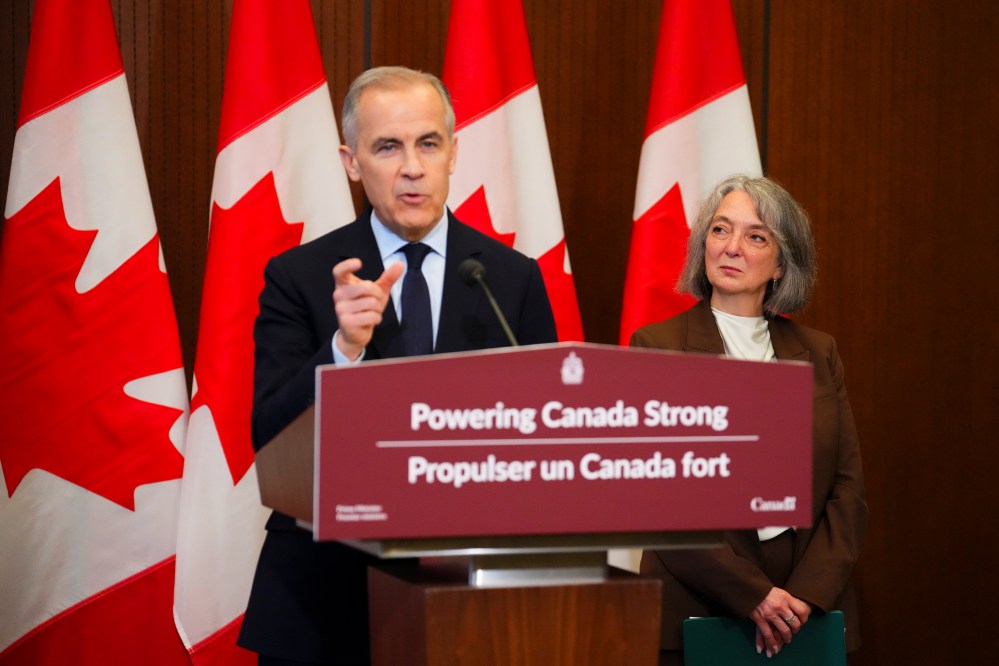
“Do you have an expert, or anyone who can show us that you’re advancing on climate change and not backtracking like (other experts) say. Do you have figures to show that?” Bonin said, in French.
Dabrusin pointed to the government’s methane regulations, published in December, as an example of a measure the government is taking to lower Canada’s emissions.
When Bonin pressed her on the entirety of the government’s policy changes, Dabrusin pointed to the publication of the national inventory report in April — although the figures in that report are from 2024 and precede the Carney government and its policy changes.
Later in the hearing, Environment Canada Deputy Minister Mollie Johnson said that while the department provides analysis and advice, it has “some work to do” on crunching the numbers to determine the impact on Canada’s emissions.
“So that’s what we’re working on right now, in order to take what has been happening, and the decisions that have been made over the past period of time, and putting that together so that we can come forward and deliver a comprehensive modelling,” Johnson told the committee.
A senior government official, speaking to The Canadian Press on background because they were not authorized to speak publicly on the matter, said part of the trouble with doing modelling before the government announces new measures — and sometimes even after — is that the announcements often lack details.
When it unveiled its electricity strategy earlier this month, the government announced its intention to introduce energy-saving retrofits for up to one million households. But the promise lacked specifics, making it impossible for Environment Canada to plug that measure into its models.
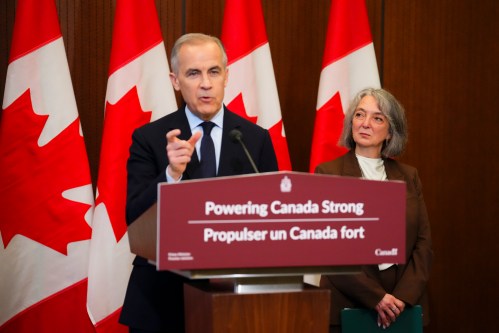
Prime Minister Mark Carney has for months been accused of backsliding on Canada’s climate initiatives. Former Liberal environment minister Steven Guilbeault announced his plans to resign as an MP earlier this week, citing the government’s new direction on climate.
Carney repealed the consumer carbon price on his first day in office. Since then, his government has repealed the electric vehicles sales mandate, opened the door to ending the emissions cap on oil and gas producers, scrapped anti-greenwashing legislation, expanded fossil fuel subsidies and made the federal industrial carbon price backstop more lenient.
All of those changes have been hailed by industry stakeholders. The government also has signalled it intends to introduce other measures to help lower emissions — like a national electricity strategy, despite the fact that it will deploy natural gas plants — and the promise to offer green retrofits for one million households.
The government still has not produced modelling to show how those changes would affect Canada’s emissions.
The government did publish a progress report in December, which is required under the government’s Net-Zero Emissions Accountability Act. It showed Canada’s best-case scenario model had the country achieving only a 28 per cent reduction in emissions from 2005 levels in 2030.
Under the Paris climate agreement, Canada committed to reducing its emissions by 40 to 45 per cent from the 2005 level by 2030. Carney said earlier this month Canada is still committed to that target but hasn’t said how it can achieve it.
But the best-case scenario model assumed industrial carbon pricing would reach $170 a tonne by 2030. Earlier this month, the Carney government signed an agreement with Alberta to set the headline price at $115 by 2030 — a timeline which will also apply across all provinces and territories.
A study in February by the Canadian Climate Institute suggested Canada is not on track to meet any of its climate targets — the 2026 interim emissions reduction target, the 2030 Paris Agreement commitment and the long-term goal of net-zero emissions by 2050.
“There’s no evidence that we’ve been presented with … with the scale of gutting of climate ambition … that there’s any pathway to meet near-term or long-term emission reduction commitments,” said Tim Gray, the executive director of Environmental Defence.
He said Dabrusin’s testimony at Thursday’s committee hearing amounted to her defending “the indefensible.”

“I think it’s a reasonable thing for the public to ask for evidence of that being the case, if the government is going to insist upon saying that, in fact, we have it wrong,” he said. “You know, obviously we’re open to that, but there’s been no evidence presented about why gutting all of this legislation would not have a negative impact in the way that we’re describing.”
Caroline Brouillette, executive director of Climate Action Network Canada, said the idea behind the Net-Zero Emissions Accountability Act — which her organization helped to push forward — was to get federal departments to conduct ongoing accounting to help create policy.
“The (environment) minister and the prime minister keep saying that we’re still committed to those targets, but meanwhile their actions and their policy decisions are doing the exact contrary,” Brouillette said.
“I think this also speaks to the highly centralized way in which decision-making is happening right now. Sometimes, we’re hearing (decisions are being made) without involvement of key departments. So that also makes it harder.”
This report by The Canadian Press was first published May 30, 2026.
Advertisement Advertise With Us
Advertisement Advertise With Us