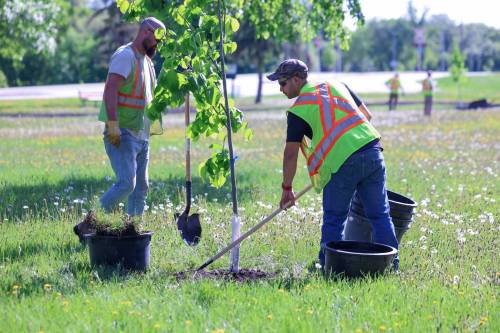
City starting to see the forest through its trees As long-term battle plan to repair, protect damaged urban canopy advances, efforts are underway to determine the ecological, economic benefits of Winnipeg’s shady side
Read this article for free:
or
Already have an account? Log in here »
To continue reading, please subscribe:

Digital Subscription
One year of digital access for only $205*
- Enjoy unlimited reading on winnipegfreepress.com
- Read the E-Edition, our digital replica newspaper
- Access News Break, our award-winning app
- Play interactive puzzles
*First annual payment billed as $205.00 + GST for one year. This annual subscription will automatically renew at $233.00 + GST every 52 weeks (10% off the regular annual price of $259.35). Offer available to new and qualified returning subscribers only. Cancel any time.
To continue reading, please subscribe:
Add Free Press access to your Brandon Sun subscription for only an additional
$1 for the first 4 weeks*
- Enjoy unlimited reading on winnipegfreepress.com
- Read the E-Edition, our digital replica newspaper
- Access News Break, our award-winning app
- Play interactive puzzles
*Your next Brandon Sun subscription payment will increase by $1.00 and you will be charged $17.95 plus GST for four weeks. After four weeks, your payment will increase to $24.95 plus GST every four weeks.
Read unlimited articles for free today:
or
Already have an account? Log in here »
Only a handful of years ago, the outlook for Winnipeg’s iconic urban forest was grim.
The ash and elm-dominated canopy, best known for its elegant boulevard archways, had fallen into the clutches of Dutch elm disease and a scourge of emerald ash borer beetles. The city was losing public trees far faster than they could be replaced, planting just one for every three removed, according to the city’s 2021 state of the urban forest report.
But the introduction of Winnipeg’s urban forest strategy in 2023 changed the trajectory.
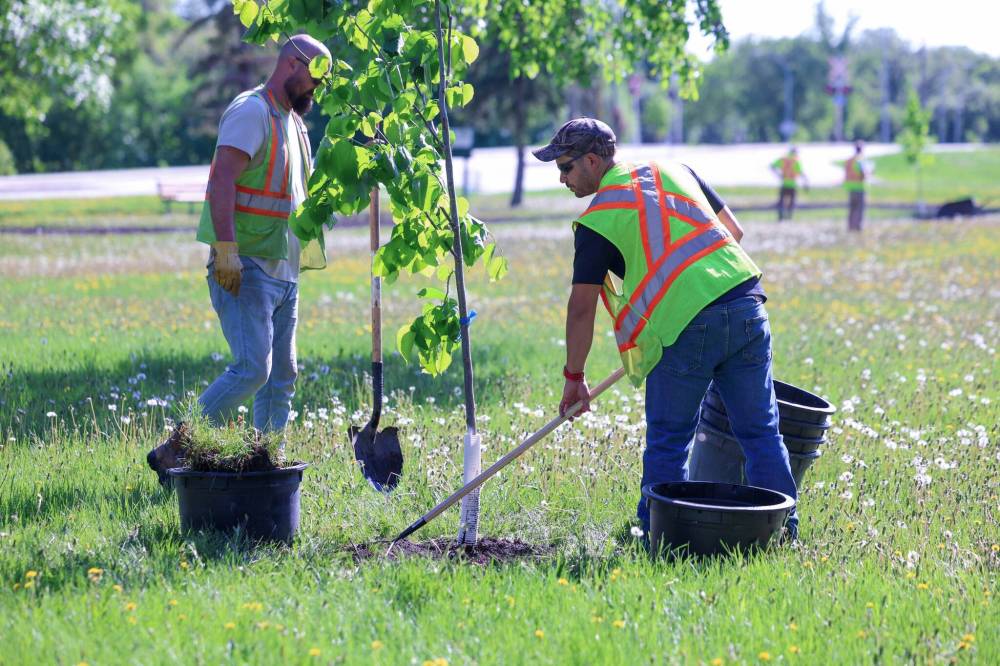
The comprehensive planning document laid out a 20-year path to restore forest health, grow the city’s picturesque canopy and minimize the risks to tree assets.
In response, the city hired more forestry staff and increased the department’s spending from approximately $11 million (where it had hovered since 2016) to an average of more than $17 million between 2023 and 2025, according to a review of city budgets.
Results followed: Winnipeg had planted an average 2,500 public trees each year between 2018 and 2022. In the years since the urban forest strategy was finalized, it has planted more than 6,000 per year.
Since 2023, the city has replaced felled trees on public lands at about a one-to-one pace (though this does not account for trees on private property or in natural areas such as the Assiniboine forest or the city’s riverbanks).
But planting alone does not guarantee Winnipeg will make progress toward the urban forest strategy’s ultimate goal: to grow the city’s tree canopy cover from 17 to 24 per cent by 2065.
Young trees must survive heat waves, droughts, severe storms, pests and disease to reach maturity and deliver the full benefits of the urban canopy.
How a municipality cares for its trees — especially under increasing climate pressures — is just as critical to forest health as planting.
According to Dave Domke, Winnipeg’s manager of parks and open space, the city’s trees are managed by a mosaic of forest stewards. Trees in new neighbourhoods are planted and maintained by developers, while the city’s urban forestry crews are responsible for replacing felled trees on boulevards or in parks.
Community groups, neighbourhood associations and volunteers also plant and care for smaller trees in natural areas. Typically, these trees are planted as seedlings.
Domke calls the bigger trees the city looks after “large, ornamental trees.” These trees leave the nurseries when they are between seven and 10 years old and their trunks have grown to a 60-millimetre diameter.
“They need to be a substantial size in order to withstand our snow,” Domke said in an interview. “It also gives a nice esthetic and it’s quite a nice size to grow on into the future.”
After planting, volunteer groups, developers and city staff are then responsible for two years of dedicated tree maintenance called the “establishment period.”
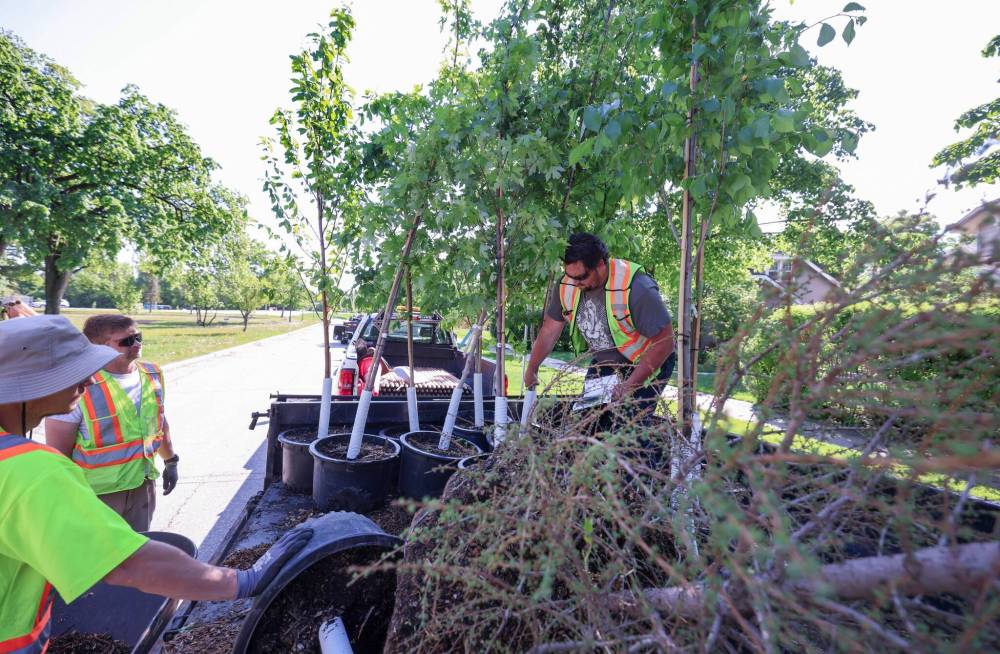
“When you remove a tree from the nursery, you’re leaving about 80 per cent of the roots in the ground. You’re trying to get the trees re-established as quickly as you can,” Domke said.
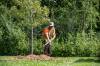
During this time, trees are watered, weeded, mulched and protected according to a detailed list laid out in the city’s tree planting and maintenance specification.
Crews are expected to water trees immediately upon planting, then every one to two weeks throughout the summer. Trees should be hand-weeded during this time, the specifications say, and supported with protection collars and stakes.
Domke said the city’s maintenance work has been successful. Newly planted trees on boulevards and in parks survive about 90 per cent of the time, he said, about on par with the city’s expectations.
Smaller trees in natural areas have a much lower survival rate, between 50 and 80 per cent, because they face more environmental challenges, he noted. The city compensates for the higher mortality rate by over-planting trees in these areas.
“We’re dealing with living things here, and you’re not going to be 100 per cent successful,” he said.
Healthy and mature trees provide a variety of environmental, health and affordability benefits to communities.
A robust tree canopy provides shade, which can cool city streets, reduce the risk of heat-related illness and reduce air conditioner use by up to 30 per cent, according to the urban forest strategy.
Winnipeg’s forest also stores an estimated 500,000 tonnes of carbon and sequesters nearly 40,000 tonnes of carbon dioxide each year — roughly double the city’s annual emissions from building electricity. At the same time, the city’s trees scrub pollutants from the air and produce approximately 15,000 tonnes of oxygen annually. Trees also absorb stormwater runoff, reducing strain on sewer systems.
“Trees should be considered valuable natural assets, and like all assets they require maintenance.”
But these benefits don’t come without maintenance, according to the Green Municipal Fund, an endowment group that supports Canadian municipalities investing in sustainability projects, including urban forestry initiatives.
“Trees should be considered valuable natural assets, and like all assets they require maintenance,” communications director Julie Smithers said in an email.
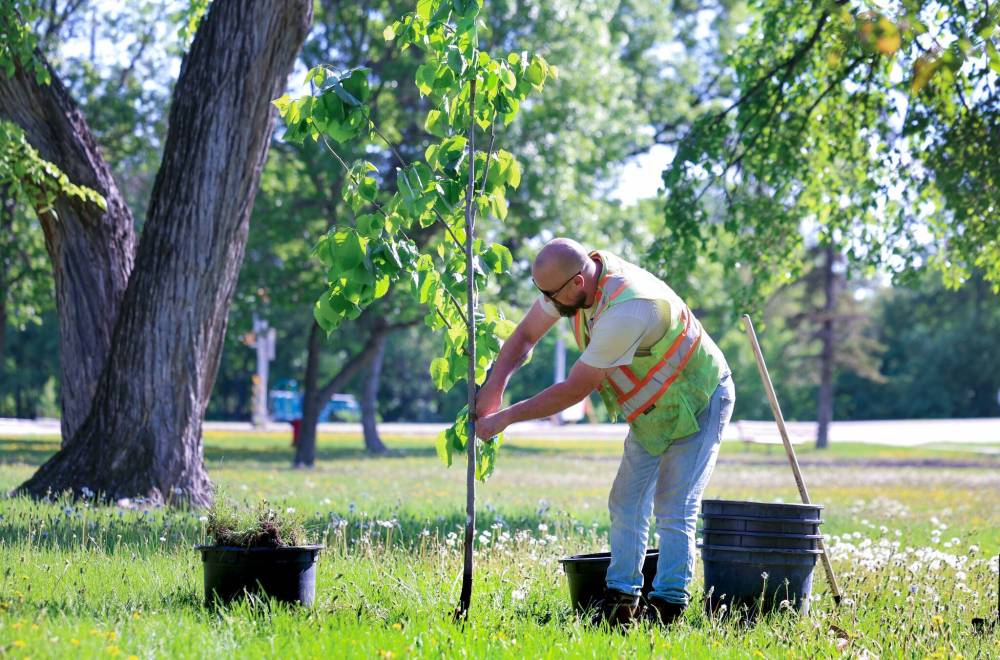
But unlike traditional grey infrastructure, which has a peak value when it’s first installed and deteriorates over its lifetime, trees are least valuable when first planted, but mature into their peak value over a period of several decades.
“Given that the benefits of trees grow with time, maximizing their health and life expectancy is essential,” Winnipeg’s urban forest strategy says. “Tree assets cost the most at the beginning and end of their life cycles (planting and removal), so extending their time in healthy maturity ensures the urban forest maximizes the return on investment in tree planting and maintenance.”
The strategy gives the example of a single linden tree planted on a Winnipeg street: the city pays for its planting and annual maintenance until its removal. If it lives a long life, the strategy says, it will produce enough benefits — including carbon storage, avoided runoff, energy savings and pollution scrubbing — to give the city a positive return on its investment.
But if it dies before maturity and must be repeatedly replaced, that single linden tree can cost the city a net loss of $18,000 over 100 years. That figure doesn’t account for the lost opportunity costs of having a healthy, mature tree over the same time period.
Climate change makes maintenance more challenging. More frequent storms mean more pruning is necessary, and more frequent droughts and heat waves necessitate more watering — especially for young, vulnerable trees.
While the city does not have exact figures outlining the cost to maintain a tree throughout its lifetime, Domke said the average public tree costs roughly $1,000 to plant and care for through the establishment period.
Winnipeg has used that $1,000 figure, called the replacement cost, as a baseline to define the value of its trees. The city’s 2018 asset-management plan valued the public tree inventory at just $226 million, based on a replacement cost at the time of $740.
“This replacement valuation did not account for the fact trees grow and their value increases with size, age and health,” the urban forest strategy noted.
“Valuing trees based on their size and condition would provide a better indication of the true cost of replacing Winnipeg’s tree assets, and the cost avoided by investing in maintenance to maximize their safe useful life expectancy.”
The forestry strategy recommended valuing trees according to a diameter-based replacement system, which it already employed for trees removed for construction. Small trees, with diameters of less than 10 centimetres, are valued at $1,000, while larger trees must be appraised according to a standardized formula.
According to the strategy, this approach pegs the value of the city’s tree inventory between $683 million and $740 million — more than double the asset-management plan’s previous assessment.
Cities across Canada are employing tree appraisals and other natural asset valuation systems to better account for the benefits of urban forests, according to Tree Canada, a national rural and urban forestry non-profit.
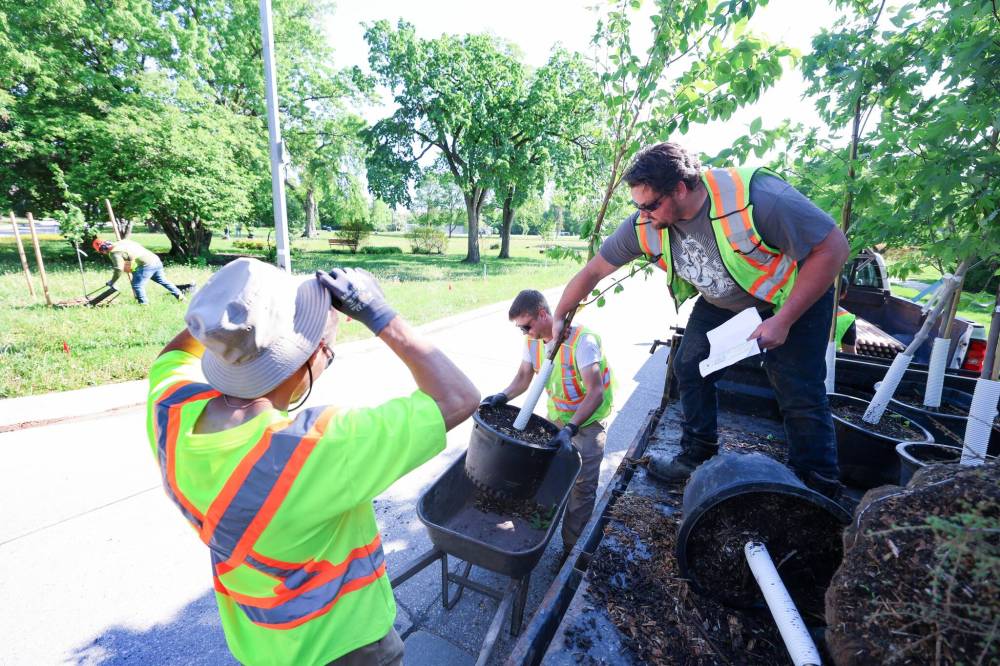
Using remote sensing and mapping technologies, as well as on-the-ground sampling, cities are better able to quantify the ecological and economic benefits of the forest canopy, Tree Canada notes in its urban forestry guide.
“Valuing trees based on their size and condition would provide a better indication of the true cost of replacing Winnipeg’s tree assets.”
These valuations make it easier for municipalities to measure the return on investment in tree maintenance.

In 2014, TD Economics estimated the ecological and economic value of forests in Toronto, Vancouver, Halifax and Montreal, and found every dollar invested in maintenance generated between $1.88 and $12.70 in benefits.
A similar valuation strategy is on the horizon in Winnipeg, Domke said. The city is planning a flyover to analyze the tree canopy cover and support a more robust quantification of the forest’s value.
“We all know they look good and are beautiful, but how much carbon sequestration are they undertaking? How much of the stormwater sewer management do they contribute to? What oxygen production is coming out?” he said.
“These are the kinds of things that other cities have started to quantify, and Winnipeg is now on the road to doing that.”
Julia-Simone Rutgers is a reporter covering environmental issues in Manitoba. Her position is part of a partnership between The Narwhal and the Winnipeg Free Press.

Julia-Simone Rutgers is an investigative reporter who joined the Free Press in 2020. Read more about Julia-Simone.
Every piece of reporting Julia-Simone produces is reviewed by an editing team before it is posted online or published in print — part of the Free Press‘s tradition, since 1872, of producing reliable independent journalism. Read more about Free Press’s history and mandate, and learn how our newsroom operates.
Our newsroom depends on a growing audience of readers to power our journalism. If you are not a paid reader, please consider becoming a subscriber.
Our newsroom depends on its audience of readers to power our journalism. Thank you for your support.
Related Articles
Urban forester Mike Allen put down deep roots in Winnipeg