Heat warnings as hot, humid weather forecast for Maritimes until Saturday
Advertisement
Read this article for free:
or
Already have an account? Log in here »
To continue reading, please subscribe:

Digital Subscription
One year of digital access for only $205*
- Enjoy unlimited reading on winnipegfreepress.com
- Read the E-Edition, our digital replica newspaper
- Access News Break, our award-winning app
- Play interactive puzzles
*First annual payment billed as $205.00 + GST for one year. This annual subscription will automatically renew at $233.00 + GST every 52 weeks (10% off the regular annual price of $259.35). Offer available to new and qualified returning subscribers only. Cancel any time.
To continue reading, please subscribe:
Add Free Press access to your Brandon Sun subscription for only an additional
$1 for the first 4 weeks*
- Enjoy unlimited reading on winnipegfreepress.com
- Read the E-Edition, our digital replica newspaper
- Access News Break, our award-winning app
- Play interactive puzzles
*Your next Brandon Sun subscription payment will increase by $1.00 and you will be charged $17.95 plus GST for four weeks. After four weeks, your payment will increase to $24.95 plus GST every four weeks.
Read unlimited articles for free today:
or
Already have an account? Log in here »
HALIFAX – Maritimers are being told to prepare for a couple of days of high temperatures and humidity as a heat wave that began earlier this week in Ontario and Quebec has made its way east.
An Environment Canada meteorologist said the high temperatures on Thursday in the Maritimes are expected to last until Saturday in many parts of New Brunswick, Nova Scotia and Prince Edward Island, making for a “very uncomfortable” period.
However, relief is in sight, says Ian Hubbard. The hot, humid air mass over the region is expected to change overnight Saturday into Sunday.
“Winds are going to come around from the north or northwest, and that’s actually going to bring in cooler and drier air that’s originating from northern Quebec and areas of Labrador,” he said in an interview.
Temperatures are expected to rise above 28 C in all three Maritime provinces Thursday, with humidex values making it feel between 36 C to 42 C.
The highest humidex values are expected across New Brunswick, where it will feel like 40 C or higher through Friday — except along the coast of the Bay of Fundy where it will be cooler.
In Nova Scotia, humidex values are expected to reach between 36 and 39, while in P.E.I., the humidex will hover around 36 through Friday.
Hubbard said it’s important that residents in areas under heat warnings take precautions and limit their time outside.
“Avoid being outside during the hottest part of the day, but I know that’s not always possible for people … drink lots of water, replace fluids if you feel thirsty. Try to keep blinds and shades drawn to keep sunlight out of your home,” Hubbard said.
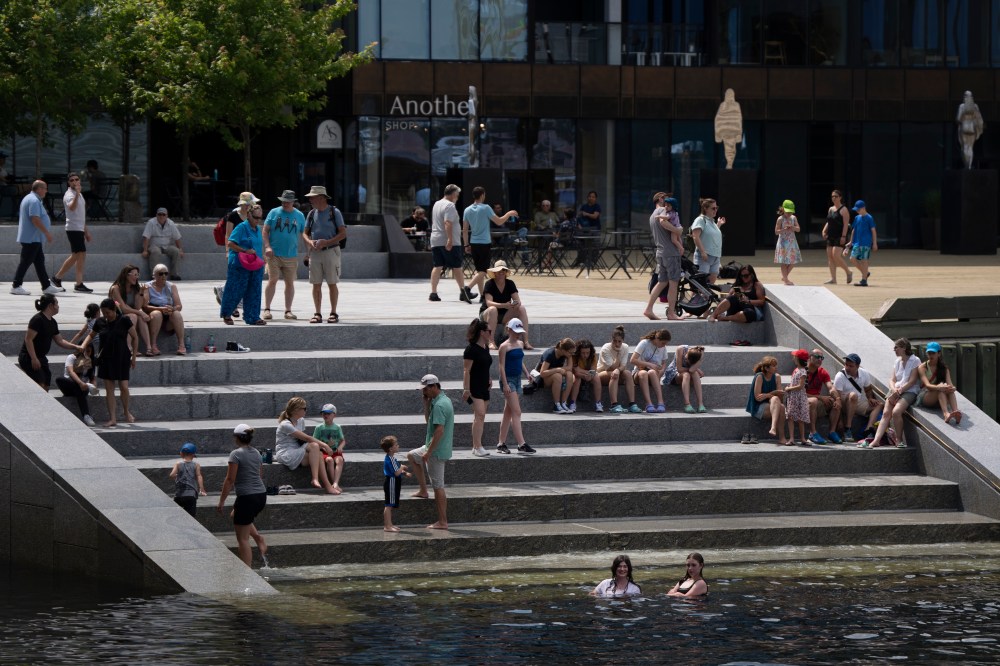
The meteorologist said the next couple days would be an ideal time for Maritimers to visit the coastline and enjoy the chillier air from the ocean.
“One of the benefits of living on the coast like we do is that the air is certainly cooler along the coast … those Atlantic Ocean waters tend to have a really strong influence on the air temperature, and can provide some relief there as well,” Hubbard said.
A heat wave began earlier this week in Ontario and Quebec, making temperatures feel higher than 40 C in many cities.

Tens of thousands of people in Quebec and Ontario were left without power Thursday after severe thunderstorms on Canada Day knocked down trees and flooded homes in some areas amid the ongoing heat wave.
Ontario and much of Quebec remained under a heat warning from Environment Canada on Thursday.
In southern Quebec, temperatures were expected to once again exceed 30 C on Thursday and Friday, with a heat index of over 40. On Wednesday afternoon, the humidex reached 44 in Montreal and 42 in Quebec City.
Heat warnings for southern Ontario say temperatures could hit up to 35 C. Temperatures and humidity in the region will begin to drop Saturday morning, according to the federal agency.
This report by The Canadian Press was first published July 2, 2026.
Related Articles
It’s not the weather — it’s the climate
Advertisement Advertise With Us
Advertisement Advertise With Us