Years in the making, massive plan to guide land and water use in Nunavut rejected

Advertisement

Advertise with us

IQALUIT - A massive plan to formally guide where, how and when land and water can be used in Canada's easternmost territory has been rejected by the federal and Nunavut governments, as well as a group representing Inuit in the territory.

Read this article for free:


or

Already have an account? Log in here »

To continue reading, please subscribe:

Subscribe and receive a limited-edition Free Press branded hat or tote.

Digital Subscription

One year of digital access for only $205*

  • Enjoy unlimited reading on winnipegfreepress.com
  • Read the E-Edition, our digital replica newspaper
  • Access News Break, our award-winning app
  • Play interactive puzzles

*First annual payment billed as $205.00 + GST for one year. This annual subscription will automatically renew at $233.00 + GST every 52 weeks (10% off the regular annual price of $259.35). Offer available to new and qualified returning subscribers only. Cancel any time.

To continue reading, please subscribe:

Add Free Press access to your Brandon Sun subscription for only an additional

$1 for the first 4 weeks*

  • Enjoy unlimited reading on winnipegfreepress.com
  • Read the E-Edition, our digital replica newspaper
  • Access News Break, our award-winning app
  • Play interactive puzzles
Start now

*Your next Brandon Sun subscription payment will increase by $1.00 and you will be charged $17.95 plus GST for four weeks. After four weeks, your payment will increase to $24.95 plus GST every four weeks.

IQALUIT – A massive plan to formally guide where, how and when land and water can be used in Canada’s easternmost territory has been rejected by the federal and Nunavut governments, as well as a group representing Inuit in the territory.

The Nunavut land-use plan went through four drafts since 2007 and, during that time, the Nunavut Planning Commission held hundreds of meetings, technical workshops, hearings and interviews across the territory’s 25 communities and in northern Manitoba.

The commission presented its plan to governments and Nunavut Tunngavik Incorporated for review in 2023.
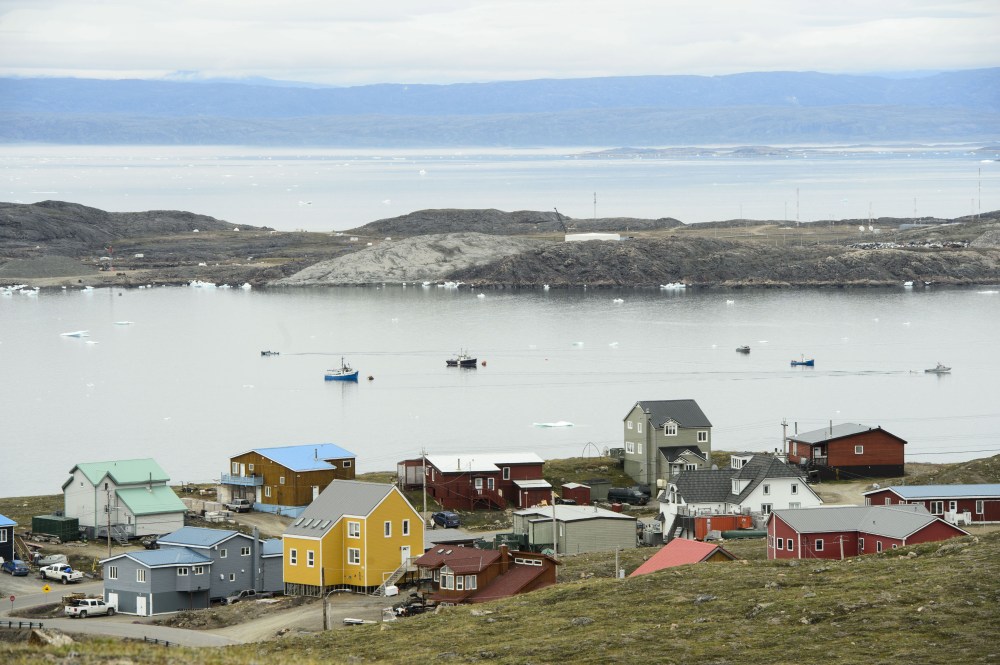
Boats make their way through the Frobisher Bay inlet in Iqaluit on Friday, Aug. 2, 2019.  A massive plan to formally guide where, how and when land and water can be used in Canada's easternmost territory has been rejected by the federal and Nunavut governments, as well as a group representing Inuit in the territory. THE CANADIAN PRESS/Sean Kilpatrick
Boats make their way through the Frobisher Bay inlet in Iqaluit on Friday, Aug. 2, 2019. A massive plan to formally guide where, how and when land and water can be used in Canada's easternmost territory has been rejected by the federal and Nunavut governments, as well as a group representing Inuit in the territory. THE CANADIAN PRESS/Sean Kilpatrick

A statement from Crown-Indigenous Relations and Northern Affairs Canada says all three parties now agree further work is needed.

It says all three parties look forward to continuing to engage with the commission through next steps of the process.

The plan is to balance economic, environmental and social needs and included requirements for key wildlife habitat, contaminated sites, military facilities, community areas of interest and drinking water.

It’s a legal requirement under the Nunavut Agreement, which was passed by parliament 30 years ago and established Nunavut as a territory in 1999.

“We will work closely with the Nunavut Planning Commission toward a final plan that meets the requirements of the Nunavut Agreement, respecting Inuit decision-making, supporting self-determination, and serving the interests of Nunavummiut for generations to come,” Northern and Arctic Affairs Minister Rebecca Chartrand said in the statement.

Brian Koonoo, Nunavut’s environment minister, said in the statement that the territorial government “remains committed to working with our partners to address outstanding concerns.”

The Nunavut Planning Commission said in 2023 that the plan featured a distinct approach to managing Inuit-owned lands, allowing Inuit associations in the territory to provide exemptions in areas that have year-round prohibitions.

It changed caribou post-calving areas from having year-round prohibitions to seasonal restrictions and identified additional key caribou habitats in the Qikiqaaluk region. It also identified more Arctic char fishing rivers, which are protected from development.

Gloria Uluqsi, president of Nunavut Tunngavik Incorporated, said the decision to get further review “brings us one step closer to achieving a plan.”

“The first territory-wide plan must reflect Inuit rights and priorities and be capable of enduring over time,” Uluqsi said in the statement.

“Getting it right is crucial to ensure it serves Inuit and Nunavummiut for generations to come.”

This report by The Canadian Press was first published July 3, 2026.

— By Rob Drinkwater in Edmonton
Report Error Submit a Tip

More Stories

Bathhouse owner upset after judge grants bail to man accused in foiled bombing

Dean Pritchard and Morgan Modjeski 5 minute read Preview

Bathhouse owner upset after judge grants bail to man accused in foiled bombing

Dean Pritchard and Morgan Modjeski 5 minute read Updated: Yesterday at 5:00 PM CDT

The owner of a Notre Dame Avenue bathhouse is troubled after a man accused of planting a pipe bomb outside his club was granted bail.

Erik Lymen Olson, 59, was granted release following a contested bail hearing last Monday.

“I don’t think he should have got out with something like this — at all,” said Christopher Gregoire, owner of AQ Sauna.

Olson was arrested Sept. 12, one day after allegedly planting a pipe bomb outside the sex and lifestyle club.

Read
Updated: Yesterday at 5:00 PM CDT

Legislation needed on vacant buildings

Editorial 4 minute read Preview

Legislation needed on vacant buildings

Editorial 4 minute read 2:00 AM CDT

There is something deeply backwards about a system that lets a property owner keep a building boarded up indefinitely while neighbours are left to live with the consequences.

Read
2:00 AM CDT

Puzzles Palace

1 minute read Monday, Jul. 27, 2026

To solve our puzzles, please subscribe with this special offer: |

Teacher barred for ‘repeated boundary-crossing conduct’

Maggie Macintosh 3 minute read Yesterday at 11:01 PM CDT

A disciplinary panel has ordered the cancellation of a Chinese-Canadian teacher’s certificate because of her “repeated boundary-crossing with a student” during her tenure at an international school with local ties.

Janice Wen Ying Ma is permanently barred from teaching on Manitoba soil or at a Manitoba-accredited institution as of Sept. 14.

The new ruling concludes that Ma engaged in inappropriate physical interaction and “emotionally intimate online messages” with a girl who attended Clifford International School in Guangzhou, China in 2024-25.

“This conduct represents a fundamental departure from the standards expected of a teacher,” the panel, chaired by public representative Gordon Schumacher, wrote in its 22-page decision.

Canada resorting to its tried and true playbook

Niigaan Sinclair 5 minute read Preview

Canada resorting to its tried and true playbook

Niigaan Sinclair 5 minute read Yesterday at 6:00 AM CDT

In 1846, Britain faced an emergency influenced by the Irish famine, so leaders repealed the country’s “Corn Laws” and restrictions on imported food and grain, transitioning to a system of free trade.

This created a crisis in the then Province of Canada, which had relied on British “preferential” status to prop up its agricultural and resource industries.

As a result, Canada looked south for new markets and eventually negotiated a free trade agreement with the United States.

This required land to be acquired and converted for industrial use quickly, so Canada quickly dispatched Commissioner William Robinson to negotiate with Indigenous communities along Lake Huron and Lake Superior for land.

Read
Yesterday at 6:00 AM CDT

What’s open, what’s closed, what’s up in Winnipeg on National Day for Truth and Reconciliation Sept. 30, 2026

Free Press staff 4 minute read Preview

What’s open, what’s closed, what’s up in Winnipeg on National Day for Truth and Reconciliation Sept. 30, 2026

Free Press staff 4 minute read Sunday, Sep. 27, 2026

The National Day of Truth and Reconciliation, or Orange Shirt Day, as it's known in Manitoba, happens Sept. 30 with many commemorative community events scheduled.

Read
Sunday, Sep. 27, 2026