US cancels automatic protections for imperiled animals as critics warn of extinctions

Advertisement

Advertise with us

BILLINGS, Mont. (AP) — The U.S. Interior Department on Friday canceled a rule meant to protect plants and animals that are determined to be threatened with extinction, the latest step by President Donald Trump’s administration to dismantle key provisions of the landmark Endangered Species Act at the behest of industry.

Read this article for free:


or

Already have an account? Log in here »

To continue reading, please subscribe:

Subscribe and receive a limited-edition Free Press branded hat or tote.

Digital Subscription

One year of digital access for only $205*

  • Enjoy unlimited reading on winnipegfreepress.com
  • Read the E-Edition, our digital replica newspaper
  • Access News Break, our award-winning app
  • Play interactive puzzles

*First annual payment billed as $205.00 + GST for one year. This annual subscription will automatically renew at $233.00 + GST every 52 weeks (10% off the regular annual price of $259.35). Offer available to new and qualified returning subscribers only. Cancel any time.

To continue reading, please subscribe:

Add Free Press access to your Brandon Sun subscription for only an additional

$1 for the first 4 weeks*

  • Enjoy unlimited reading on winnipegfreepress.com
  • Read the E-Edition, our digital replica newspaper
  • Access News Break, our award-winning app
  • Play interactive puzzles
Start now

*Your next Brandon Sun subscription payment will increase by $1.00 and you will be charged $17.95 plus GST for four weeks. After four weeks, your payment will increase to $24.95 plus GST every four weeks.

BILLINGS, Mont. (AP) — The U.S. Interior Department on Friday canceled a rule meant to protect plants and animals that are determined to be threatened with extinction, the latest step by President Donald Trump’s administration to dismantle key provisions of the landmark Endangered Species Act at the behest of industry.

Instead of receiving automatic protections, imperiled species will need individualized protection plans once they are added to the threatened species list. That’s a potentially lengthy process in which companies could seek exemptions for oil and gas drilling, mining and other development where those species live.

Opponents said it would make it harder to save wildlife that’s awaiting federal protections and in danger of disappearing, such as monarch butterflies and alligator snapping turtles.
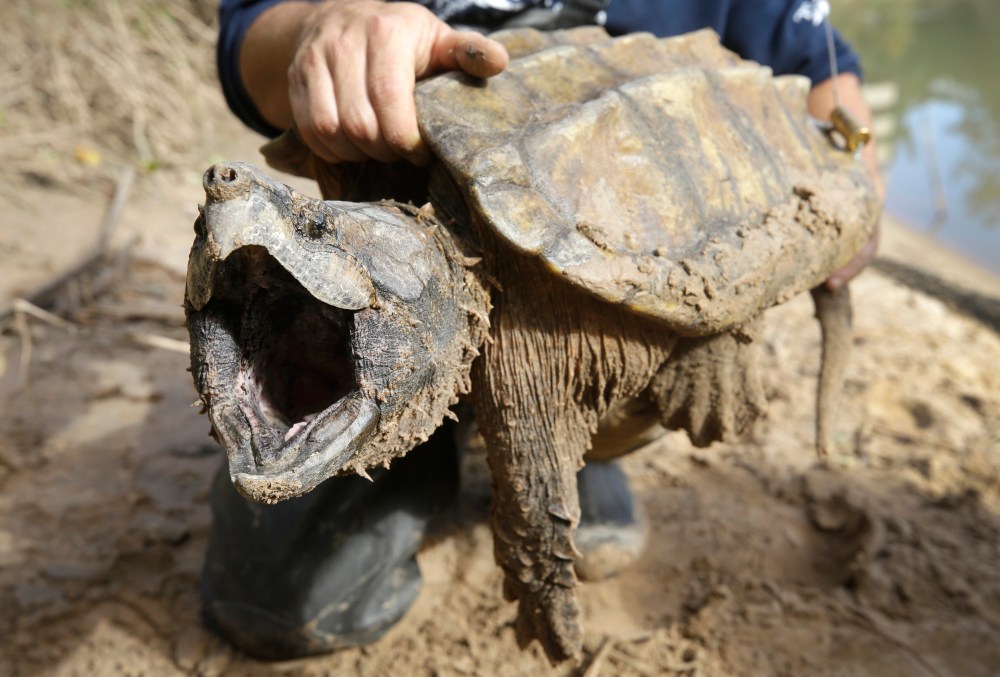
FILE - A male alligator snapping turtle is held after being trapped by the Turtle Survival Alliance-North American Freshwater Turtle Research Group, Nov. 24, 2018, as part of the process of tagging turtles. (Melissa Phillip/Houston Chronicle via AP, File)

Interior Secretary Doug Burgum said in a statement that the Endangered Species Act had been used for too long “to stop almost any new project in America, driving up costs for families, weakening our competitiveness, and undermining our national security.”

“Success should be measured by species recovery and delisting, not by adding more species to the list,” Burgum added.

A second change finalized Friday requires officials to analyze economic impacts when deciding whether habitat is critical to a species’ survival. Critics say it gives corporations an opportunity to put their thumb on the scale so that officials will allow development in those areas.

“If you’re exempting certain industries that cause habitat destruction, in many instances you’ll be exempting the main threat to those species,” said Noah Greenwald with the environmental group Center for Biological Diversity.

Officials made similar changes during Trump’s first term but they were reversed under former Democratic President Joe Biden.

The rules that gave what some consider “blanket protections” to threatened species were first adopted for wildlife in 1975 and for plants in 1977.

Two groups, the Rocky Mountain Elk Foundation and the Property and Environment Research Center, sued the Biden administration in 2024 after officials restored the blanket protections rule. They argued the rule unfairly imposed the same restrictions on landowners when a species’ status improves from endangered, which is more dire, to threatened.

That removed incentives for landowners to participate in species recovery, said Jonathan Wood, vice president at the Montana-based research center.

Wood said the Trump administration’s approach allows officials to “better reward progress and encourage proactive conservation.”

There have been no species added to the endangered or threatened lists in Trump’s second term. By comparison, more than 20 species were added in Trump’s first term, and about 60 during Biden’s presidency.

About 30 species are currently proposed to be listed as threatened. Besides monarchs and alligator snapping turtles, they include California spotted owls and various snakes, fish, clams and insects.

Changes to government policies for endangered plants and wildlife have come faster and extended further in Trump’s second term than in his first.

The administration in March exempted oil and gas drilling in the Gulf of Mexico from the Endangered Species Act after Defense Secretary Pete Hegseth said environmentalists’ lawsuits threatened to hobble domestic energy supplies as the U.S. wages war against Iran.

Last week, Interior officials sharply narrowed the definition of what constitutes “harm” to a species. The change would allow development on critical wildlife habitat so long as the animals themselves are not immediately killed or injured.

This week officials sharply reduced the amount of critical habitat in the U.S. Rocky Mountains designated for Canada lynx, forest dwelling wildcats that are threatened by climate change and other pressures.

Also this week, Burgum said in a visit to Montana that the U.S. Fish and Wildlife Service would turn over more management authority for grizzly bears to states where the bruins live. That’s been a longstanding priority for the Republican governors of Wyoming, Idaho and Montana.

The Endangered Species Act is credited with bringing back iconic animals including the bald eagle and American alligator from the brink of extinction.

Burgum noted Friday that 97% of the species that have been given protections still have them. That’s a frustration for Republican lawmakers who say species should be taken off the endangered and threatened lists more quickly once they’ve recovered.

Report Error Submit a Tip

More Stories

Man who pleaded guilty to killing three cats dies before sentencing

Morgan Modjeski 3 minute read Preview

Man who pleaded guilty to killing three cats dies before sentencing

Morgan Modjeski 3 minute read Updated: Yesterday at 12:51 PM CDT

A Winnipeg man awaiting sentencing after admitting he strangled three cats to death and dumped two of their carcasses under a city bridge, has died, the Free Press has learned.

Randy Jensen, 25, pleaded guilty on May 13 to one count of wilfully causing injury or suffering to animals in connection to the 2024 killings.

He was scheduled to be sentenced in January.

“That’s not something that anybody wanted,” said Kristy Zamonsky, founder of Project Artemis Animal Advocates. “We were all hoping for justice through the courts.”

Read
Updated: Yesterday at 12:51 PM CDT

Letters, Sept. 4

7 minute read Preview

Letters, Sept. 4

7 minute read Updated: Yesterday at 8:22 AM CDT

I do think it’s important to stand up and be heard — and that is why I want to add my voice to the chorus of folks condemning U.S. Defence Secretary Pete Hegseth for his recent social media post that very obviously drew attention in a negative way to the physical stature of two Canadian cadets at a military training course.

Read
Updated: Yesterday at 8:22 AM CDT

Billboard evangelism may look outdated but group says it’s effective

John Longhurst 5 minute read Preview

Billboard evangelism may look outdated but group says it’s effective

John Longhurst 5 minute read 2:01 AM CDT

Maybe you’ve seen them in Winnipeg — billboards that say things like: “Jesus is alive!” “Are you prepared to meet Jesus?” “After you die, you will meet God.” They include a phone number to call: 844-FIND-TRUTH.

There are two billboards in Winnipeg. One is on Henderson Highway in Elmwood. The other is on Balmoral Street, by Cumberland.

Have you ever wondered who is behind them, and why they do it?

You might be surprised to learn they are created and sponsored by an Amish/Mennonite organization called Christian Aid Ministries (CAM). Based in rural Ontario, the group is funded by Amish and some conservative Mennonite denominations and individuals.

Read
2:01 AM CDT

$8.7-million detox centre called ‘high-priced drunk tank’

Carol Sanders 4 minute read Preview

$8.7-million detox centre called ‘high-priced drunk tank’

Carol Sanders 4 minute read Updated: Yesterday at 6:08 PM CDT

The new facility to detain people in a drug psychosis for up to 72 hours is operating the way it should, the government said Friday, even though just 26 people have been held for that purpose since it opened.

“The (protective care centre) is doing what it’s meant to do: support people, meet them where they’re at, provide a caring environment,” Addictions Minister Bernadette Smith said after updated data were posted online.

The vast majority of those detained at the 20-room facility at 190 Disraeli Fwy. were recovering from alcohol intoxication, the update shows.

In total, 4,425 people were detained from the time the site opened on Dec. 2, 2025, until June 30, for an average of less than five hours.

Read
Updated: Yesterday at 6:08 PM CDT

Wonderful wines to help welcome autumn

Ben Sigurdson 4 minute read Preview

Wonderful wines to help welcome autumn

Ben Sigurdson 4 minute read 3:00 AM CDT

As we creep ever closer to fall, many wine drinkers will start to think about popping corks (or screwcaps, as it were) on wines that suit cooler temperatures.

But summer’s not quite done yet. Here are six new and/or notable wines ideal for sipping as we make the transition from warmer weather into the first hints of autumn…

Wines of the weekThe Willm NV Blanc de Noirs Crémant d’Alsace Brut (Alsace, France — $28.99, Liquor Marts and beyond) is a French bubbly made from the Pinot Noir grape in the traditional method (secondary fermentation, which creates the bubbles, happens in the bottle rather than in tanks before bottling).

It’s pale gold with a hint of pink, and on the nose offers ripe cherry, cranberry, bread dough and strawberry compote notes. On the palate it’s light-bodied and mainly dry, with an almost-wild herbal component coming with the strawberry, tart peach, cranberry, raspberry and bread dough flavours.

Read
3:00 AM CDT

Loon design wins for next Manitoba specialty licence plate, province says

The Canadian Press 1 minute read Preview

Loon design wins for next Manitoba specialty licence plate, province says

The Canadian Press 1 minute read Updated: Yesterday at 6:28 PM CDT

WINNIPEG - Manitoba says a loon design has won out in a public survey about a new specialty licence plate that pays homage to provincial parks.

The government says 62,605 people responded to the July survey.

Manitobans had five options, with a portion of the proceeds of every plate sold going to an endowment fund for park improvements.

Along with the loon on a lake, there was also a campsite at night, someone canoeing on a waterway, a replication of a map and a pure black one to represent a park at night.

Read
Updated: Yesterday at 6:28 PM CDT