5 states offer to accept nuclear waste in exchange for help developing nuclear energy

Advertisement

Advertise with us

WASHINGTON (AP) — Five states have agreed to accept nuclear waste from around the country in exchange for federal help developing nuclear energy to create thousands of jobs.

Read this article for free:


or

Already have an account? Log in here »

To continue reading, please subscribe:

Subscribe and receive a limited-edition Free Press branded hat or tote.

Digital Subscription

One year of digital access for only $205*

  • Enjoy unlimited reading on winnipegfreepress.com
  • Read the E-Edition, our digital replica newspaper
  • Access News Break, our award-winning app
  • Play interactive puzzles

*First annual payment billed as $205.00 + GST for one year. This annual subscription will automatically renew at $233.00 + GST every 52 weeks (10% off the regular annual price of $259.35). Offer available to new and qualified returning subscribers only. Cancel any time.

To continue reading, please subscribe:

Add Free Press access to your Brandon Sun subscription for only an additional

$1 for the first 4 weeks*

  • Enjoy unlimited reading on winnipegfreepress.com
  • Read the E-Edition, our digital replica newspaper
  • Access News Break, our award-winning app
  • Play interactive puzzles
Start now

*Your next Brandon Sun subscription payment will increase by $1.00 and you will be charged $17.95 plus GST for four weeks. After four weeks, your payment will increase to $24.95 plus GST every four weeks.

WASHINGTON (AP) — Five states have agreed to accept nuclear waste from around the country in exchange for federal help developing nuclear energy to create thousands of jobs.

The states — Tennessee, Louisiana, Oklahoma, Utah and Idaho — all have Republican governors who say they welcome the chance to help America reclaim its leadership in civilian nuclear energy.

If built, the storage sites would represent significant progress in a multi-decade effort to store more than 95,000 metric tons of spent nuclear fuel and radioactive waste. Plans for a permanent underground storage facility at Nevada’s Yucca Mountain have long been stalled because of staunch opposition from most residents and officials.
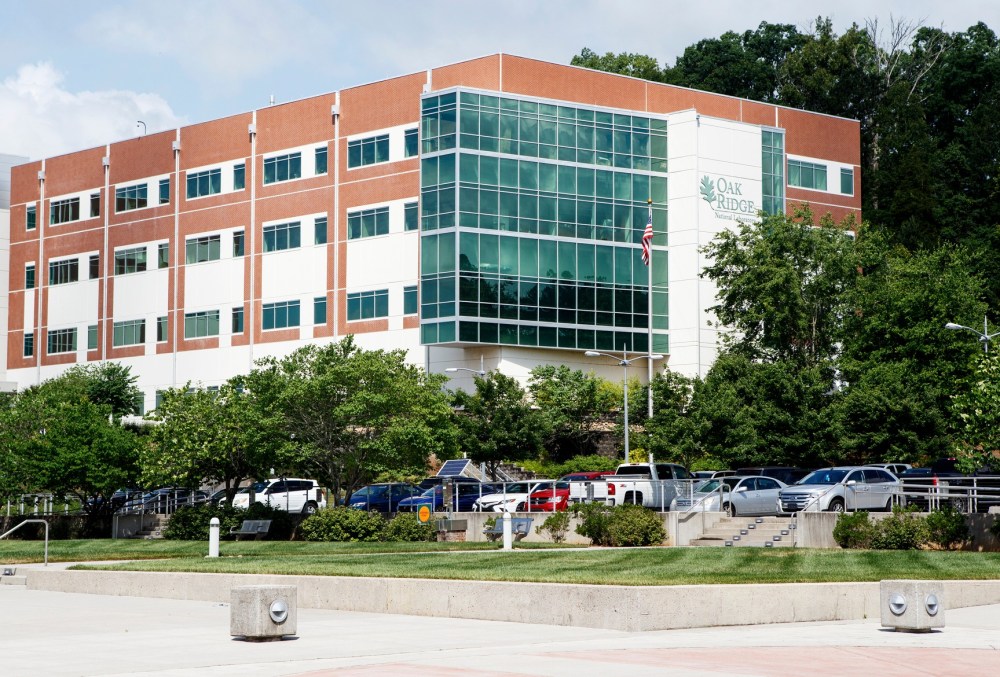
FILE - The Multiprogram Research Facility is seen at Oak Ridge National Laboratory, June 10, 2019, in Oak Ridge, Tenn. (C.B. Schmelter/Chattanooga Times Free Press via AP, File)

Spent fuel is currently stored at nuclear plants and former nuclear sites nationwide and is piling up. New storage sites would move the radioactive material away from population centers, fault lines and flood plains. Experts say the plan also should help officials gain consent from communities that will host the repositories.

Under the non-binding agreements, the states could host Nuclear Lifecycle Innovation Campuses that would include waste sites as well as uranium enrichment, spent-fuel reprocessing and fuel fabrication. The campuses may also host advanced reactor deployment, power generation and data centers, the Energy Department said.

Nuclear campuses could boost state economies

The campuses have the potential to attract up to $50 billion in private investment and generate as much as $10 billion in state and local tax revenues, the Energy Department said in a statement. Eligible projects could access federal loans worth billions of dollars, the department said.

“These campuses will be massive generators of economic growth … and be crucial to unleashing America’s nuclear renaissance,” Energy Secretary Chris Wright said in a statement. He called the proposed campuses an “innovative concept” that will “get America’s nuclear industry growing again.”

Tennessee is home to the Oak Ridge National Laboratory, which enriched uranium during World War II as part of the Manhattan Project, while Idaho hosts the Idaho National Laboratory, a key research site for nuclear energy and national security. Utah was a source of raw uranium for the Manhattan Project and a training site for crews that dropped atomic bombs on Japan in 1945.

“As the global epicenter of nuclear energy, Tennessee is honored to be selected as a potential host for a Nuclear Lifecycle Innovation Campus,” said Tennessee Gov. Bill Lee. “As our state answered the call during the Manhattan Project and helped shape the course of history, Tennessee stands ready once again to advance the safe, reliable energy solutions our nation depends on.”

Solution for storing waste needed to expand nuclear power

The announcement comes as President Donald Trump attempts to quadruple domestic nuclear energy production because of surging electricity demand due to a data center and artificial intelligence boom. Trump also has moved to reshape the independent Nuclear Regulatory Commission to speed up nuclear reactor development. Under Trump’s direction, the commission has proposed eliminating a foundational safety principle that for 50 years minimized the radiation people in the United States are exposed to.

The NRC proposal would abandon a philosophy to keep radiation exposure “as low as reasonably achievable,” instead setting a separate standard on maximum radiation exposure that includes several actions facilities must take depending on the potential dose of radiation to workers.

California Rep. Mike Levin said the nuclear fuel announcement was a long time coming and required bipartisan collaboration to fix difficult nuclear waste challenges. Levin, a Democrat, has pushed to allocate funding to safely remove and dispose of spent nuclear fuel from decommissioned nuclear plants, including the closed San Onofre nuclear power plant in Southern California.

“Today’s selection of states is a monumental step in the right direction,” Levin said in a statement. “For the first time in decades, states are raising their hands” to accept nuclear waste.

Scott Roecker, a former official at the National Nuclear Security Administration who now advises the Nuclear Scaling Initiative, a pro-nuclear group, said the campuses are a good idea, though he cautions that spent nuclear fuel should not be reprocessed there to be recycled for new fuel because of the cost and security issues.

“Getting a community to accept a long-term repository for nuclear waste has been a big challenge in the United States politically. It’s been a hard pill to swallow for certain communities,” he said in a recent interview. “The fact that they’re talking about sort of the whole fuel cycle at these centers is a positive thing. Basically, you’re getting the consent of that community for that long-term repository.”

Congress now must work to authorize the campuses and establish clear oversight, Levin said.

___

McDermott reported from Providence, R.I.
Report Error Submit a Tip

More Stories

Puzzles Palace

1 minute read Monday, Jul. 27, 2026

To solve our puzzles, please subscribe with this special offer: |

Big Loser’s latest a winning mix of country, folk

Ben Waldman 5 minute read Preview

Big Loser’s latest a winning mix of country, folk

Ben Waldman 5 minute read Yesterday at 6:00 AM CDT

The yellow trucker hat for sale on Facebook Marketplace said “Selkirk Lumber,” so Adam Wayne Brown knew he had to hammer home a deal.

Like the other millennial members of Winnipeg folk-country band Big Loser, the bassist has an affinity for the nostalgic, taking every opportunity — through music, through lyrics and through wardrobe — to recall the unique circumstances of growing up in a changing Interlake.

“I remember the matte yellow trucks driving around — the lumber trucks — and so I’ve had this strange memory of something disappearing from my youth and then persisting,” says Brown, who, like the band’s frontman Alex Paradoski, moved to Winnipeg more than a decade ago.

“I have a photo of the Lockport Bridge in my dining room,” chimes in Paradoski, whose first job as a teenager was bunning wieners and chopping fries at Skinner’s, a drive-in mainstay since 1929 along Highway 44.

Read
Yesterday at 6:00 AM CDT

Could renewed interest in strategically critical rare earth elements finally make sub-sector profitable?

Joel Schlesinger 6 minute read Preview

Could renewed interest in strategically critical rare earth elements finally make sub-sector profitable?

Joel Schlesinger 6 minute read Yesterday at 3:00 AM CDT

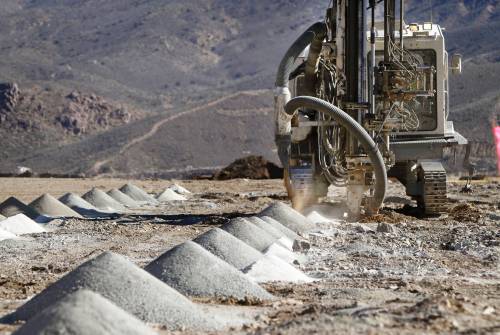
Rare earth elements are among the most critical of mined resources for modern economies.

They’re essential in manufacturing specialized magnets used in a host of technologies from wind turbines and electric vehicles to hard drives, smartphones, television screens, and fibre optics. Most notably, however, rare earth minerals are increasingly vital to the defence industry.

These 17 elements — closely related chemically and usually found all together in mineral deposits — have indeed been growing in geopolitical importance as the United States, Canada and other Western nations recognize their dependence on production from China.

It is the world’s largest producer and processor of rare earths, including the most in-demand elements neodymium and praseodymium used to manufacture very light and powerful magnets for an array of technologies, including the most advanced weapons of modern warfare.

Read
Yesterday at 3:00 AM CDT

Trailblazing Western Scrap Metals heavy-equipment operator relishes role at massive crane’s control

David Sanderson 7 minute read Preview

Trailblazing Western Scrap Metals heavy-equipment operator relishes role at massive crane’s control

David Sanderson 7 minute read Friday, Aug. 14, 2026

Less than five per cent of heavy-equipment operators in the country are women but that number is trending upward, according to a study conducted by trade magazine Crane & Hoist Canada.

It was reported that in Ontario roughly eight per cent of jobs in the transport and heavy-equipment field are currently held by women. Furthermore, in 2024 almost 20 per cent of graduates at an Edmonton-based heavy-equipment operator training school were female, the article stated.

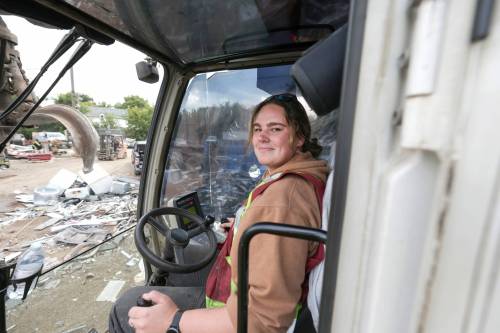
That brings us to Harmony Guspodarchuk, the first female crane operator in the 70-year history of Western Scrap Metals, a family-owned business at 18 Sutherland Ave.

Three years ago, Guspodarchuk literally stepped into the driver’s seat of a 27,500-kilogram, Liebherr C 924 Heavy Lift Litronic crane. The 29-year-old hasn’t looked back much since.

Read
Friday, Aug. 14, 2026

Proposed Transcona development — which could add 20,000 people — gets thumbs down from residents

Joyanne Pursaga 5 minute read Preview

Proposed Transcona development — which could add 20,000 people — gets thumbs down from residents

Joyanne Pursaga 5 minute read Friday, Aug. 14, 2026

Dozens of Winnipeggers fear plans to make way for up to 20,000 more people to live in south Transcona would dramatically alter their neighbourhood and tie hefty fees for new services to their property titles.

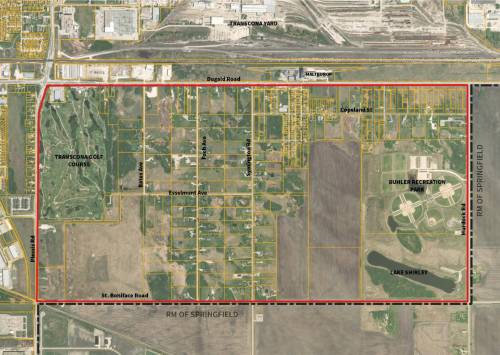
If city council adopts the proposed South Transcona secondary plan, all future development applications would need to conform to its goals. The affected area is located south of Dugald Road, north of St. Boniface Road, east of Plessis Road and west of Murdock Road.

Homeowner Virginia Page Jähne fears the plan could add a massive tab to the title of her 4.3-acre property to cover services required for the development.

“My main concern is that they are wanting to put $1.4 million onto my title to pay for this. Now, they say that I will not have to pay it unless I subdivide. But if a person comes by and wants to buy from me … and they see that $1.4 million … what’s the first thing (they’re) going to do?” said Page Jähne, in an interview.

Read
Friday, Aug. 14, 2026

Development turning long-vacant gas station in Selkirk into commercial hub

By Tiago Resko 2 minute read Preview

Development turning long-vacant gas station in Selkirk into commercial hub

By Tiago Resko 2 minute read Thursday, Aug. 13, 2026

A plot of land that has sat vacant in Selkirk for 30 years is being redeveloped to host new businesses in the heart of the city.

The former gas station site on Main Street — between Rosser and Pacific avenues — will be turned into a commercial hub that will be home to six local businesses, and will be a big stepping stone for economic growth in Selkirk, Mayor Larry Johannson said Thursday.

“For decades this site has been a reminder of what once was. Today, it represents what is possible when investors see the potential of our community and choose to be a part of its future,” he said in a news release announcing the project and Thursday’s groundbreaking.

“This development reflects confidence in Selkirk, our economy and the direction we are heading.”

Read
Thursday, Aug. 13, 2026