Improper battery disposal blamed for fire at Nova Scotia waste and recycling facility
Advertisement
Read this article for free:
or
Already have an account? Log in here »
To continue reading, please subscribe:

Digital Subscription
One year of digital access for only $205*
- Enjoy unlimited reading on winnipegfreepress.com
- Read the E-Edition, our digital replica newspaper
- Access News Break, our award-winning app
- Play interactive puzzles
*First annual payment billed as $205.00 + GST for one year. This annual subscription will automatically renew at $233.00 + GST every 52 weeks (10% off the regular annual price of $259.35). Offer available to new and qualified returning subscribers only. Cancel any time.
To continue reading, please subscribe:
Add Free Press access to your Brandon Sun subscription for only an additional
$1 for the first 4 weeks*
- Enjoy unlimited reading on winnipegfreepress.com
- Read the E-Edition, our digital replica newspaper
- Access News Break, our award-winning app
- Play interactive puzzles
*Your next Brandon Sun subscription payment will increase by $1.00 and you will be charged $17.95 plus GST for four weeks. After four weeks, your payment will increase to $24.95 plus GST every four weeks.
Read unlimited articles for free today:
or
Already have an account? Log in here »
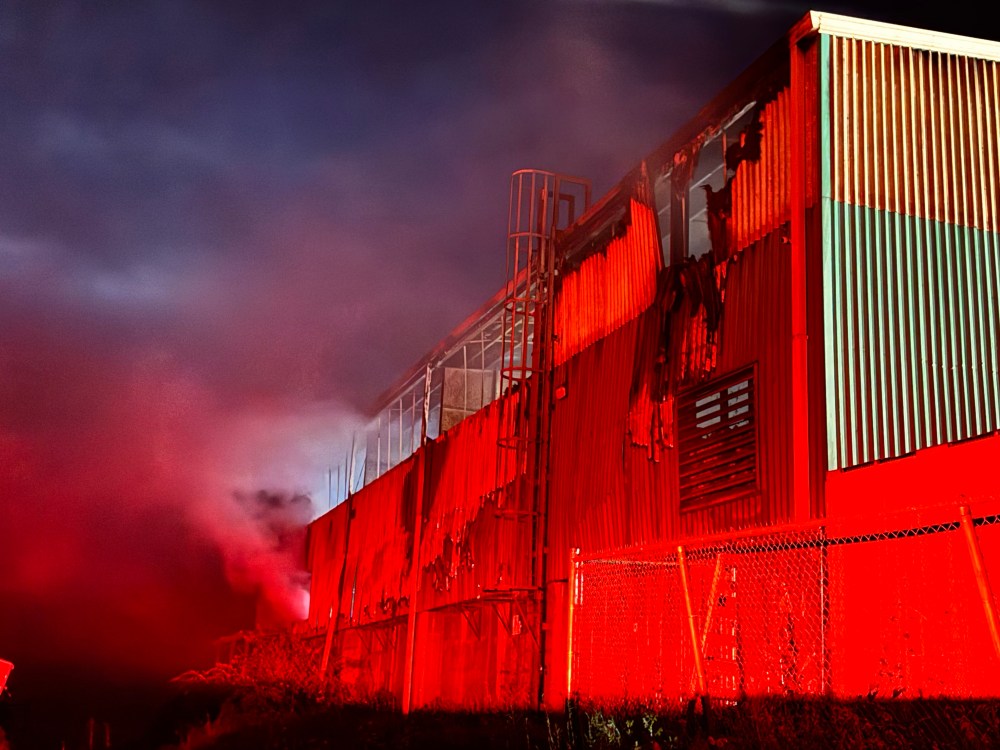
KENTVILLE – A fire that badly damaged a waste and recycling facility in Nova Scotia’s Annapolis Valley has prompted the organization’s manager to issue a blunt warning about the dangers of disposing lithium-ion batteries with regular garbage.
Andrew Garrett, general manager of Valley Waste Resource Management in Kentville, N.S., said that when these batteries are crushed or damaged, they can spark a fire — a problem that has become all too common in recent years.
Lithium-ion batteries, most of which are rechargeable, are typically found in cellphones, cordless tools and many other electronic devices.
“This is a problem everywhere,” Garrett said in an interview Friday. “The Solid Waste Association of North America set up a group just for this …. Once they’re at the end of their life, they are a hazard.”
Images from a security camera inside a transfer station in Clarence East, N.S., show the fire starting in a pile of regular curbside waste early on Thursday morning. Garrett said the fire, which smouldered at first, showed all the telltale signs of a lithium-ion fire.
“(There was) spontaneous combustion long after it was handled,” he said. “That’s typical of what we get. We’ve just had so many experiences in the industry about this …. Other facilities in Nova Scotia have been either damaged or destroyed.”
In the past three years, Valley Waste has dealt with eight other smaller fires caused by lithium-ion batteries, including a fire last year in Kentville that damaged a large trailer.
Garrett said too many people remain unaware that when these batteries are worn out, they must be packaged properly — with tape on their ends or individually wrapped in plastic — before they can be taken to a hazardous waste site or a drop-off location.
Those looking for more information should consult a website called Recycle Your Batteries Canada!
“If people have batteries of any kind, they should be taking them to a drop-off location that’s listed on the website,” Garrett said.

In January, a fire in an Edmonton highrise was caused by a lithium-ion battery on an electric bike stored on a sixth-floor balcony. Two people were sent to hospital and 80 others had to leave the building.
At the time, deputy fire Chief Justin Lallemand said this type was becoming increasingly common. He said that in the previous two years, there had been 24 battery-related fires at the city’s waste management facilities.
Lallemand said when a lithium-ion battery ignites, the resulting fire is often aggressive and explosive.
This report by The Canadian Press was first published July 31, 2026.
— By Michael MacDonald in Halifax