A Viral Hawaiian Monk Seal Changes The Conversation On Molokaʻi
Advertisement
Read this article for free:
or
Already have an account? Log in here »
To continue reading, please subscribe:

Digital Subscription
One year of digital access for only $205*
- Enjoy unlimited reading on winnipegfreepress.com
- Read the E-Edition, our digital replica newspaper
- Access News Break, our award-winning app
- Play interactive puzzles
*First annual payment billed as $205.00 + GST for one year. This annual subscription will automatically renew at $233.00 + GST every 52 weeks (10% off the regular annual price of $259.35). Offer available to new and qualified returning subscribers only. Cancel any time.
To continue reading, please subscribe:
Add Free Press access to your Brandon Sun subscription for only an additional
$1 for the first 4 weeks*
- Enjoy unlimited reading on winnipegfreepress.com
- Read the E-Edition, our digital replica newspaper
- Access News Break, our award-winning app
- Play interactive puzzles
*Your next Brandon Sun subscription payment will increase by $1.00 and you will be charged $17.95 plus GST for four weeks. After four weeks, your payment will increase to $24.95 plus GST every four weeks.
Read unlimited articles for free today:
or
Already have an account? Log in here »
At first, Hawaiiloa Mowat thought it was a cat.
The lifelong Molokaʻi resident rushed outside May 31 after hearing his dogs bark loudly in the front yard. Mowat had no reason to think a monk seal had hauled itself ashore in the moonlight.
The animals never show up in his beachfront Hawaiian homestead community of Kapaʻakea or the surrounding southern shore.
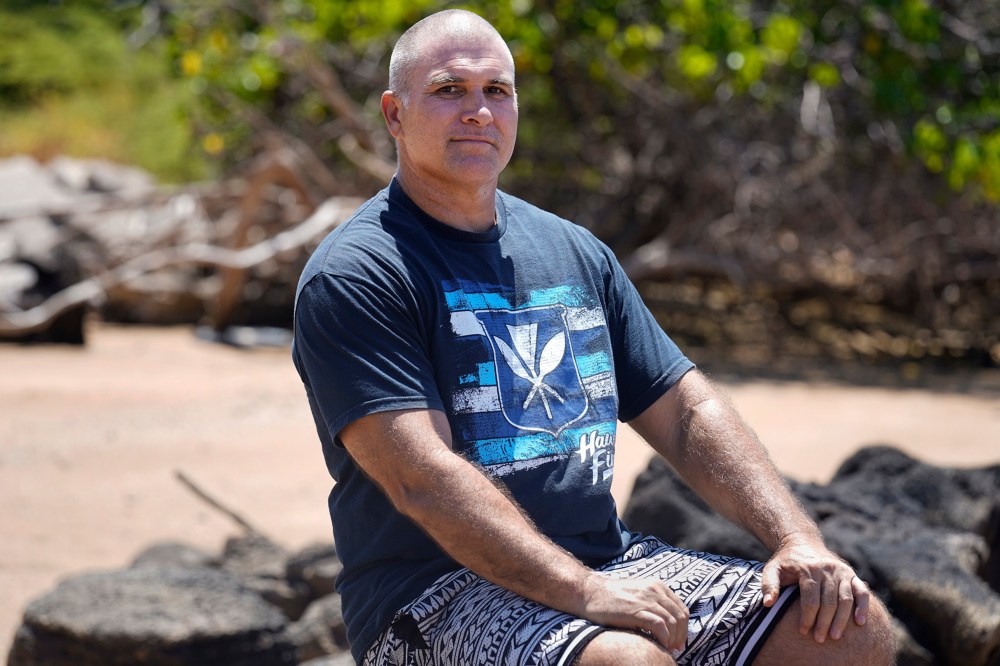
But when the year-old seal RU99 appeared that night in a grassy space between two of Mowat’s parked cars — and then kept coming back — he picked the home of one of Molokaʻi’s most popular social media presences.
Local seal advocates hope that remarkable, chance pairing will pay dividends on an island that still grapples with misinformation about the seals and sees occasional, deliberate killings by people. Mowat’s often endearing posts about RU99, whom he calls “Lino-boy” to his more than 14,000 followers, are already helping sway local opinion, they say.
“That guy can do more for this species than I could ever do,” said Liz Campbell, a volunteer who’s helped collect monk seal data on the island for the past seven years. “And what I’m finding when I go out is just how the conversation has changed with him.”
“If a seal could pick the best spot on Molokaʻi to haul ashore,” Campbell said, “it would be that guy’s house that you would go to.”
Such impact is critical to help the seals on Molokaʻi, Campbell and others say. Several months before RU99 came ashore at Kapaʻakea, the necropsy for a different seal revealed at least one bullet in the animal’s body. The seal was originally found alive but emaciated on Molokaʻi’s Moʻomomi Beach. It failed to recover and died in a rehabilitation center on Hawaiʻi island.
Federal investigators concluded the 7-year-old seal, RL80, didn’t actually die from the bullet. Instead, it perished because its jaw had broken after getting wrapped in stray fishing gear, leaving it unable to eat. The death follows a spate of monk seal killings on Molokaʻi in 2023 and around 10 suspicious deaths since then.
On Saturday, another seal carcass was found on Moʻomomi, National Oceanic and Atmospheric Administration officials confirmed. It was badly decomposed, they said, making it unlikely wildlife officials will be able to determine the seal’s cause of death.
‘Warrior Spirit’
Molokaʻi has had an especially complicated, fraught relationship with Hawaiian monk seals as the endangered marine mammals have gradually reappeared along the Main Hawaiian Islands in recent decades. There are only about 1,600 Hawaiian monk seals left in the wild, making them one of the world’s most endangered species. Roughly 400 of those seals live around the populated Main Hawaiian Islands while the rest live in the federally protected remote Northwestern Hawaiian Islands.
Many of Molokaʻi’s mostly Native Hawaiian residents depend on hunting and fishing for food. Some local fishers and outside groups erroneously assert the seals compete with them for fish and don’t belong on the island.
“You know Moloka‘i, we’re not 100% subsistence but largely we rely on the resources. And so, I think it’s just that warrior spirit to protect everything,” Mowat said.
“It’s more of a misconception of this creature,” he said, adding that the attacks on the seals likely come from people who believe they are protecting their fish resources.
For some residents, the attention the seals get from federal officials compared to the attention the community gets illustrates what they see as long-running inequalities and government neglect toward the locals, fueling further resentment of the seals. Roughly 7,300 people live on the 260-square-mile island, part of Maui Nui.
Like many on Molokaʻi, Mowat never saw monk seals there when he was young. They hadn’t yet returned to the main islands after nearly being hunted to extinction in the 19th century.
When RU99 first bounced up into Mowat’s yard, the 45-year-old homesteader and land steward had plenty of questions. Why did the seal go there, of all places? Typically, they appear on the island’s western and eastern shores. Was he OK? How should Mowat respond?
“Who do you call on a Sunday night on Molokaʻi for one of these in your yard?” he quipped before panning his camera phone to show RU99 in the Instagram video documenting their first encounter.
In a later interview, Mowat said he wound up staying up through the night to make sure his dogs wouldn’t harass or harm the resting seal. “Once I saw they were cool with it, it kind of took a lot of weight off my shoulders.”
The Hawaiian name for the monk seal is ʻīlioholoikauaua, which means the “dog that runs in rough water.”
‘An Opportunistic Creature’
When Todd Yamashita, Molokaʻi’s lead coordinator for the nonprofit Hawaiʻi Marine Animal Response, heard the juvenile seal had surprisingly hauled ashore in the Kapaʻakea homesteads and in Mowat’s yard of all places, he wasn’t sure what to think.
Mowat is passionate and outspoken on Molokaʻi issues. But where did he come down on the monk seal issue? Would he welcome RU99? Turns out, Yamashita didn’t have to worry.
“As soon as I made contact with him, it was 101 questions for me. What is this seal? Oh, you know about this seal? And I was like, ‘OK, here we go!,’” Yamashita recalled with a chuckle. “He knows where to keep the dogs so that there’s no ifs, ands, or buts about the seal being in danger.”
Mowat immersed himself in the seals’ history and place in Hawaiʻi. He learned of the animals’ decimation by fur traders in the 19th century. In an interview with Civil Beat, he cited by memory a notable verse in the Kumulipo, the Hawaiian creation chant: “he ‘iole ko uka, he ’iole ko kai,” or “a rat in the upland, a rat by the sea.”
“You can think about how our kūpuna saw these creatures,” Mowat said. “Kind of like an opportunistic creature, and so almost like a rat, you know?”
He wanted to name RU99 Hōkū for the phase of the moon the night he first came ashore, but he later learned the seal had already been named Namakaʻeleʻōlino, or Dark Shiny Eyes, after he was rescued as an abandoned 2-week-old pup from the shorebreak on Molokaʻi’s rugged east side. Thus, Mowat’s thousands of followers know RU99 simply as Lino-boy.
Yamashita, who’s dedicated years working with the seals, has a theory for why RU99 has taken to resting on Mowat and his neighbors’ homestead properties. The seal was raised on the concrete surfaces of Ke Kai Ola monk seal hospital in Kailua-Kona, where RL80 was being treated around the same time on Hawaiʻi island.
Hospital staff released RU99 back into the wild in April, when he was about 9 months old. Nearly two months later, he showed up at Mowat’s house.
“He’s at some random person’s carport, under the stairs. So guarantee the seal, he’s just looking for a slab to sleep on, you know what I mean?” Yamashita said. “So he’s hearing people and he’s coming toward the crowd, but it’s not because he wants to join the party. It’s because he knows where there’s people, there’s concrete. Simple as that.”
The young seal has continued to haul up at Kapaʻakea throughout the summer.
‘The New Flashpoint’
More Molokaʻi residents have come to accept or at least tolerate the seals in recent years, Campbell and Yamashita said. Still, deliberate killings and suspicious deaths occasionally occur.
When they do, it’s usually at Moʻomomi. The remote and hard-to-reach beach has long been the center of debate about how to best protect Molokaʻi’s marine resources.
After watching the fish stocks there dwindle, some community members proposed making Moʻomomi the state’s first Community Based Subsistence Fishing Area where its marine resources would be protected through traditional management practices.
The effort didn’t succeed on Molokaʻi but it has taken hold in other coastal communities on Kauaʻi and Hawaiʻi island.
Some of the same people who lobbied against creating the Moʻomomi CBFSA, Molokaʻi resident La‘a Poepoe said, have also spread misinformation about the monk seals competing for fishers’ catches.
The monk seal, Yamashita added, “is the new flashpoint” at Moʻomomi.
When Mowat was younger, another monk seal, KP2, would sometimes take fish off his line while swimming offshore at Kapaʻahea. The fish he usually took were invasive, so Mowat saw the act as helping the marine environment.

“I think that’s where the misunderstanding comes. A lot of people don’t realize that it has a mixed diet,” Mowat said. “They’re taking shellfish, he‘e (octopus), it’s taking different species and keeping our invasives in check.”
For now, he said, “it’s our job to make sure that we mālama these creatures.”
Campbell has come to see monk seals and Native Hawaiians as kindred spirits. “I may be biased or ultra positive but I do think this island will eventually be the best place for the seals because of the people,” he said. “I think that once they embrace something, that makes it safe. Hawaiiloa is showing us.”
___
This story was originally published by Honolulu Civil Beat and distributed through a partnership with The Associated Press.