Trump administration moves ahead to end roadless rule on national forests

Advertisement

Advertise with us

ALBUQUERQUE, N.M. (AP) — The Trump administration announced Tuesday it is moving ahead with plans to rescind a quarter-century-old rule that blocked logging, road building and other development on national forest lands, drawing the ire of environmentalists nationwide.

Read this article for free:


or

Already have an account? Log in here »

To continue reading, please subscribe:

Subscribe and receive a limited-edition Free Press branded hat or tote.

Digital Subscription

One year of digital access for only $205*

  • Enjoy unlimited reading on winnipegfreepress.com
  • Read the E-Edition, our digital replica newspaper
  • Access News Break, our award-winning app
  • Play interactive puzzles

*First annual payment billed as $205.00 + GST for one year. This annual subscription will automatically renew at $233.00 + GST every 52 weeks (10% off the regular annual price of $259.35). Offer available to new and qualified returning subscribers only. Cancel any time.

To continue reading, please subscribe:

Add Free Press access to your Brandon Sun subscription for only an additional

$1 for the first 4 weeks*

  • Enjoy unlimited reading on winnipegfreepress.com
  • Read the E-Edition, our digital replica newspaper
  • Access News Break, our award-winning app
  • Play interactive puzzles
Start now

*Your next Brandon Sun subscription payment will increase by $1.00 and you will be charged $17.95 plus GST for four weeks. After four weeks, your payment will increase to $24.95 plus GST every four weeks.

ALBUQUERQUE, N.M. (AP) — The Trump administration announced Tuesday it is moving ahead with plans to rescind a quarter-century-old rule that blocked logging, road building and other development on national forest lands, drawing the ire of environmentalists nationwide.

The U.S. Forest Service is filing a proposal that would scrap the so called roadless rule adopted in the last days of Bill Clinton’s presidency in 2001. The agency described the rule as a one-size-fits-all restriction that has frustrated land managers and served as a barrier to reducing wildfire risks in the nation’s forests.

“Our forests can’t afford another decade of inaction. Across the country, we’ve watched preventable conditions — overgrown stands, insect outbreaks and disease — turn healthy landscapes into tinderboxes,” U.S. Agriculture Secretary Brooke Rollins said in a statement.
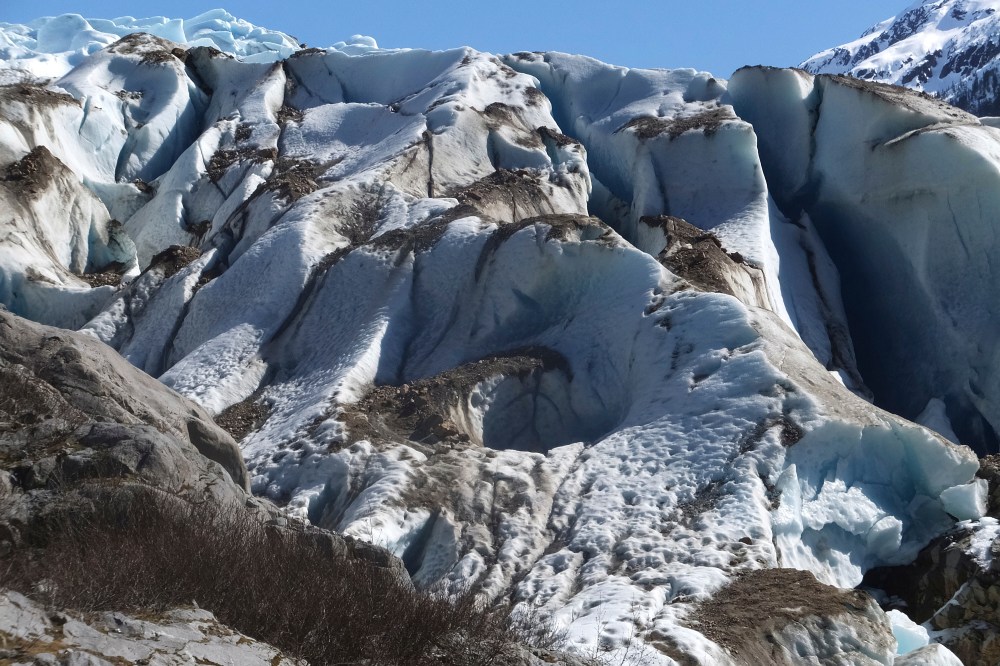
FILE - The Herbert Glacier is seen, April 23, 2017, near Juneau, Alaska, in the Tongass National Forest. (AP Photo/Becky Bohrer, File)

Scientists say that worsening wildfires are driven by a combination of climate change that warms and dries out forests, less logging and decades of fire suppression that has allowed fuels to build up.

Clinton had signed the rule to safeguard undeveloped national forest land from commercial logging and mineral leasing, with a goal of keeping ecosystems pristine and protecting water supplies.

Calling the roadless rule a failure, Rollins said the proposal calls for restoring authority to local forest managers and removing barriers that have kept them from improving forest health across millions of acres.

The roadless rule has affected 30% of national forest lands nationwide, or about 59 million acres (24 million hectares), according to the Department of Agriculture, the agency over the Forest Service.

The Forest Service will gather public comment on the proposal and on a draft of the environmental impact statement that was filed Tuesday in the Federal Register. While the rescission removes national designation of roadless areas, officials say it doesn’t mandate timber cutting or road construction.

The filing comes as no surprise as the Trump administration first announced its intention to get rid of the rule during a meeting last summer in New Mexico.

Environmentalists have been sounding the alarm since then and reiterated Tuesday that lifting protections would have detrimental effects for old growth forests, wildlife and water supplies.

“Americans across the political spectrum have made it crystal clear that they don’t want political appointees removing protections from public lands,” said Chris Krupp, an attorney with the group WildEarth Guardians. “It would be a gross misreading of public sentiment to take the roadless rule away from Americans and our wildlife, and politicians do so at their jeopardy.”

Numerous groups raised concerns about what a rescission could mean, especially for places such as Alaska’s Tongass National Forest, the nation’s largest national forest and a lightning rod for litigation. State political leaders there have supported an exemption to the roadless rule that they argue impedes economic opportunities.

During the latter part of Trump’s first term, the federal government lifted restrictions on logging and road-building in the Tongass, something the Biden administration later reversed.

Emma Powell, the Alaska Wilderness League’s government affairs manager, described the Tongass as a global treasure that serves as a home for salmon runs and abundant wildlife. She added that cultures and livelihoods are connected to the forest.

“From fisheries to tourism and outdoor recreation, these landscapes also support thousands of jobs and generate billions in economic activity each year,” Powell said.

Alex Craven, the Sierra Club’s forest campaign manager, disputed officials’ claims that getting rid of the rule would allow for more work to be done to reduce wildfire threats. Craven suggested more roads would lead to more fires and that it never prevented the Forest Service from doing targeted work to reduce wildfire fuels.

He vowed that the Sierra Club and other groups would fight the proposal at each step.

David Jenkins, president of the Virginia-based nonprofit Conservatives for Responsible Stewardship, criticized the proposal as fiscally irresponsible and pointed to an existing maintenance backlog that stretches into the billions of dollars.

“The agency doesn’t have the budget to take care of the 368,000 miles of roads already riddling our national forests,” he said.

The deadline for comments is Sept. 21.

Report Error Submit a Tip

More Stories

A 22-year-old man is dead and an 18-year-old is in hospital in critical condition after a two-vehicle crash on Highway 8 on Thursday evening.

A Gimli RCMP officer was driving north on the highway, near Riverton, when he witnessed the collision at about 6:45 p.m.

A vehicle headed north had passed the Mountie at a high speed before colliding with an SUV that was turning west onto Provincial Road 329 from Highway 8.

The driver of the first vehicle, an 18-year-old man from Arborg, was rushed to hospital by a helicopter ambulance with injuries RCMP describe as serious and life-threatening.

Blown lead spoils Jets opener

Mike McIntyre 7 minute read Preview

Blown lead spoils Jets opener

Mike McIntyre 7 minute read Yesterday at 11:09 PM CDT

Younger. Faster. Stronger.

They may still be a long ways from a finished product, but it’s safe to say the new-look Winnipeg Jets made a mostly favourable first impression on Friday night in front of a sold-out crowd at Canada Life Centre.

Sure, a 4-3 overtime loss to a hard-nosed Boston Bruins outfit is going to sting a little, especially since the home team was just 98 seconds away from a regulation victory.

But if the Jets can bottle up this kind of energy and effort, they should enjoy plenty of success over the course of the 84-game campaign.

Read
Yesterday at 11:09 PM CDT

Manitoba marks end of sending simple workplace problems to doctor’s office

Tory McNally 7 minute read Preview

Manitoba marks end of sending simple workplace problems to doctor’s office

Tory McNally 7 minute read 2:01 AM CDT

There are some changes in the workplace that make you think: “Well, it’s about time.”

This is one of them.

Starting Oct. 1, Manitoba changed the rules around sick notes. I think it is going to be a wonderful change — not just for doctors and patients, but for employers, employees and the way we think about accountability at work.

The change comes from Bill 11, the Employment Standards Code Amendment Act (Sick Notes for Employee Absences), which received royal assent on June 1 and came into force Thursday. Under the new rules, employers generally cannot require a sick note for an illness or injury unless the employee is away for more than one week or has been absent because of illness or injury for more than 10 scheduled workdays in the calendar year.

Read
2:01 AM CDT

A spiritual vision will help anchor a health civic outlook

John Longhurst 5 minute read 2:01 AM CDT

We have an election coming up. With that in mind, the Free Press asked some of their columnists to write about the challenges ahead and how the city can become better.

For Tom Brodbeck, the main challenge is finances — and how candidates will pay for their many promises for fixing roads, improving public safety and making transit better.

Rebecca Chambers said that the concerns of inner-city residents need to be taken seriously by those who aspire to work at city hall.

Niigaan Sinclair said the most pressing issue in Winnipeg isn’t construction projects, light-rail transit, public safety, taxes or social services. For him, it’s the city’s relationship with Indigenous people.

Creative powerhouse Perry Rosemond never lost Winnipeg roots

Ben Waldman 7 minute read Preview

Creative powerhouse Perry Rosemond never lost Winnipeg roots

Ben Waldman 7 minute read 6:00 AM CDT

He created King of Kensington, directed the troops in the Royal Canadian Air Farce, and his creative eye was behind the lens for television shows starring Johnny Cash, Tom Jones, Mr. Dress-Up and the Friendly Giant.

He also wrote and developed the Canadian version of Sesame Street during his time as the head of school and preschool programming for CBC in Toronto, and directed a televised special in 2002 for Winnipeg sketch comedy troupe Royal Liechtenstein Theatre Company.

But before his name featured in the credits of some of the most iconic and influential pieces of the Cancon canon, Perry Rosemond was an only child living in a crammed, multi-generational home in Winnipeg’s North End, racing each day to beat the morning bell next door at William Whyte School.

In memoirs that have yet to be published, the late television producer recalled his childhood. “(T)here were 14 of us in the house at 193 Andrews St., and it wasn’t that big of a house,” he writes.

Read
6:00 AM CDT

Clock ticks down on destruction of records documenting residential school abuses

Marsha McLeod 13 minute read Preview

Clock ticks down on destruction of records documenting residential school abuses

Marsha McLeod 13 minute read Yesterday at 12:49 PM CDT

In less than a year, a private company is set to destroy the largest cache of records detailing the widespread abuse of Indigenous children at residential schools in Canada.

The destruction, which was ordered by an Ontario court in 2014 and later upheld by the Supreme Court, is set to take place on Sept. 19, 2027.

This countdown is igniting emotional conversations that seek to balance the immense historical value of the records alongside the confidentiality survivors were promised as part of the process of providing detailed testimony about abuses they’d suffered.

The records were created as part of the Indian Residential Schools Settlement Agreement, a class-action settlement stemming from survivors who began suing the federal government in the late 1990s over the harm they’d been subjected to at residential schools.

Read
Yesterday at 12:49 PM CDT