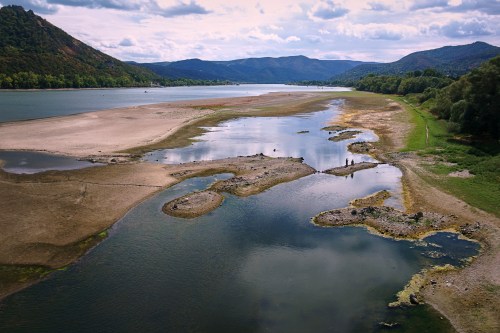
Hungary drained its waters for generations. Now drought is exposing the cost
Advertisement
Read this article for free:
or
Already have an account? Log in here »
To continue reading, please subscribe:
Digital Subscription
One year of digital access for only $1.44 a week*
- Enjoy unlimited reading on winnipegfreepress.com
- Read the E-Edition, our digital replica newspaper
- Access News Break, our award-winning app
- Play interactive puzzles
*Billed as $5.77 plus GST every four weeks. After 52 weeks, price increases to the regular rate of $19.95 plus GST every four weeks. Offer available to new and qualified returning subscribers only. Cancel any time.
To continue reading, please subscribe:
Add Free Press access to your Brandon Sun subscription for only an additional
$1 for the first 4 weeks*
- Enjoy unlimited reading on winnipegfreepress.com
- Read the E-Edition, our digital replica newspaper
- Access News Break, our award-winning app
- Play interactive puzzles
*Your next Brandon Sun subscription payment will increase by $1.00 and you will be charged $17.95 plus GST for four weeks. After four weeks, your payment will increase to $24.95 plus GST every four weeks.
Read unlimited articles for free today:
or
Already have an account? Log in here »
GÁRDONY, Hungary (AP) — A fisherman disembarked from his boat in a small harbor on Lake Velence in Hungary last week, trudging up the dock plank that had become extremely steep as the water receded to record lows.
Árpád Selmeci said navigating even a small fishing boat on Hungary’s third-largest lake is becoming increasingly difficult as the water level has ebbed to around 20 centimeters (8 inches), well below the 150 centimeters (5 feet) optimal for August. Swimming beaches across the lake, once popular with tourists, have been closed.
Lake Velence’s decline is part of a broader water crisis confronting Hungary as increasingly prolonged droughts and climate change-driven heat waves have pummeled Europe.
“I’ve lived on Lake Velence since I was a child, and I’ve never seen the water so low,” said Selmeci, 58. “It’s terrible. My heart aches every single moment.”
This summer, wildfires scorched the continent from the United Kingdom to Greece, while in Hungary, drought has damaged crop yields, led to drinking water shortages and threatened to shut down the country’s only nuclear power plant.
Yet the lack of rainfall linked to human-driven climate change is only part of Hungary’s water problem. Experts say the country’s long-standing practice of channeling water away from its landscape and draining natural wetlands has left it especially vulnerable as droughts become more frequent and severe.
A legacy of draining away water
Around 99% of Hungary’s lands are currently under severe or extreme drought conditions, according to the national meteorological service, and desertification, a process where vegetation recedes because of high heat and low rainfall, threatens much of the Great Hungarian Plain.
Yet more than a quarter of Hungary consists of low-lying land that naturally retains precipitation, and in past centuries its many rivers and streams made it rich in freshwater resources. However, a 2023 study published in the journal Nature estimated Hungary’s historical wetland loss at more than 80%.
Zsuzsanna Ujj, a biodiversity policy specialist and project coordinator with environmental group Friends of the Earth Hungary, said the country “has not been a good steward of its waters in the last 200 years.”
A major contributor is Hungary’s network of more than 40,000 kilometers (25,000 miles) of drainage canals — a length that exceeds the circumference of the Earth — which drain accumulated precipitation from fields, wetlands and the soil to make room for agriculture and other enterprises.
The priority on draining land rather than allowing natural flooding cycles to occur has contributed to a consistent drop in the water table and the drying out of wetlands and topsoil. With less water available to evaporate, the air dries out, further reducing the chances of localized precipitation.
Ujj said that Hungary — which is among the most drought-exposed countries in Europe and ranks 16th globally, according to a report by the Organization for Economic Cooperation and Development — “needs to realign its water management practices, shifting from a drainage-based approach to one focused on water retention.”
Disappearing lakes
The drying out of Hungary isn’t limited to streams and wetlands. Lake Garancsi, a small recreational lake around 20 kilometers (12 miles) northwest of Budapest, was once a popular destination for fishing, swimming and ice skating, and was the setting of the 2001 cult Hungarian comedy “Üvegtigris” (“Glass Tiger”).
But the lake, present since the Middle Ages, has shrunk so dramatically in recent years that none of the previous recreational activities are permitted, and most of the former lake bed is now exposed, cracked and dry.
What remains of the water is so shallow and warm that all of the fish and most of the other wildlife have disappeared, and authorities have predicted no water will be left by the end of summer.
Zoltán Mettner, who runs the Glass Tiger bar on the shores of the lake, said conditions have gotten worse every year. After spending years beside the lake, he said looking at it now is “terrible, there’s no other way to put it.”
“It’s sad enough that we’ve let things get this far, and that we couldn’t have taken gradual steps to prevent this lake from being completely destroyed,” he said.
Hungary’s government plans a change of course
Hungary’s new government has promised to begin taking those steps.
In late June, on the same day the country set a high temperature record of 42 Celsius (107.6 Fahrenheit), Prime Minister Péter Magyar told lawmakers that his government would put water management policies “on new footing,” and launch a comprehensive water conservation program to mitigate the effects of drought.
“Many have said year after year that water shortage will be one of Hungary’s problems and one of the most important strategic issues to be solved. They were right,” Magyar said.
In addition to poor water retention practices, Magyar said that aging water utility infrastructure causes 20-25% of the country’s drinking water to leak out through damaged pipes, costing some 17 billion forints ($54.4 million) annually.
“For years, even the existence of the problem was denied and relativized,” Magyar said. Now, he added, “water retention will be the basic principle of Hungarian water management.”
Danube River at historic lows
Yet implementing such sweeping changes will be time consuming and costly, while Hungary’s current water crisis threatens its ability to produce adequate energy.

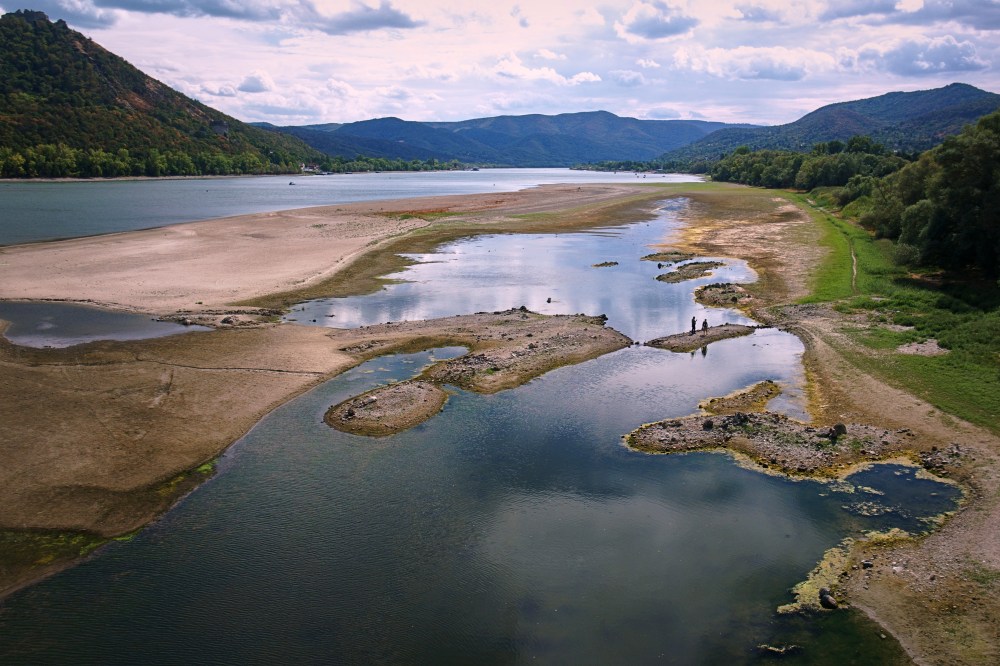
The Danube, the European Union’s longest river which runs through 10 countries from southwestern Germany to the Black Sea, has set successive records this summer for low water levels, threatening to shut down Hungary’s only nuclear power plant, which uses water from the river to cool its reactors, for the first time in its 44-year history.
Hungary’s government has taken emergency interventions to raise the water level at the Paks plant, including sinking two 80-meter (262-foot) barges just upriver and beginning to install a riverbed sill designed to divert more water toward the plant’s pumps.
In such drought conditions, wetlands near rivers like the Danube normally act as a “natural reservoir” for retaining water when weather gets dry, said Ujj, the biodiversity specialist.
The extremely low level of the Danube — as well as the increased chances for more frequent and intense floods — are effects of human-driven climate change that can be partially mitigated through appropriate land use and restoration of wetlands and other natural habitats, she added.
“We do indeed expect water levels to fluctuate more, and we also expect precipitation patterns to become more extreme with drier summers,” she said. “However, restoring wetlands and increasing evaporation in certain areas could help boost precipitation during the summer months.”