EPA seeks more public comments as it struggles to devise water rule that limits scope on wetlands

Advertisement

Advertise with us

WASHINGTON (AP) — The Environmental Protection Agency is seeking additional public comments as it tries to redefine the scope of the nation’s bedrock clean water law to significantly limit the wetlands it covers.

Read this article for free:


By clicking the button above, an account will be created and you will begin to receive some of our recommended newsletters. You may opt out of any newsletter by visiting your Email and Communication Preferences page or by clicking "unsubscribe" at the bottom of any email.

or

Already have an account? Log in here »

To continue reading, please subscribe:

Digital Subscription

One year of digital access for only $1.44 a week*

  • Enjoy unlimited reading on winnipegfreepress.com
  • Read the E-Edition, our digital replica newspaper
  • Access News Break, our award-winning app
  • Play interactive puzzles

*Billed as $5.77 plus GST every four weeks. After 52 weeks, price increases to the regular rate of $19.95 plus GST every four weeks. Offer available to new and qualified returning subscribers only. Cancel any time.

To continue reading, please subscribe:

Add Free Press access to your Brandon Sun subscription for only an additional

$1 for the first 4 weeks*

  • Enjoy unlimited reading on winnipegfreepress.com
  • Read the E-Edition, our digital replica newspaper
  • Access News Break, our award-winning app
  • Play interactive puzzles
Start now

*Your next Brandon Sun subscription payment will increase by $1.00 and you will be charged $17.95 plus GST for four weeks. After four weeks, your payment will increase to $24.95 plus GST every four weeks.

WASHINGTON (AP) — The Environmental Protection Agency is seeking additional public comments as it tries to redefine the scope of the nation’s bedrock clean water law to significantly limit the wetlands it covers.

The request, announced Friday, comes nearly a year after the agency proposed a rule defining “waters of the United States,” or WOTUS, based on a 2023 Supreme Court ruling that removed federal protections for vast areas. The plea for new information is highly unusual and reflects the complexity of the water rule, a contentious regulation that has been argued in the courts for decades and reached the Supreme Court twice since 2006.

The latest proposal is a “supplemental” rule that EPA said will help it and the U.S. Army Corps of Engineers evaluate a wider range of options as they work toward a final rule that fully implements the Supreme Court’s decision in a case known as Sackett v. EPA.
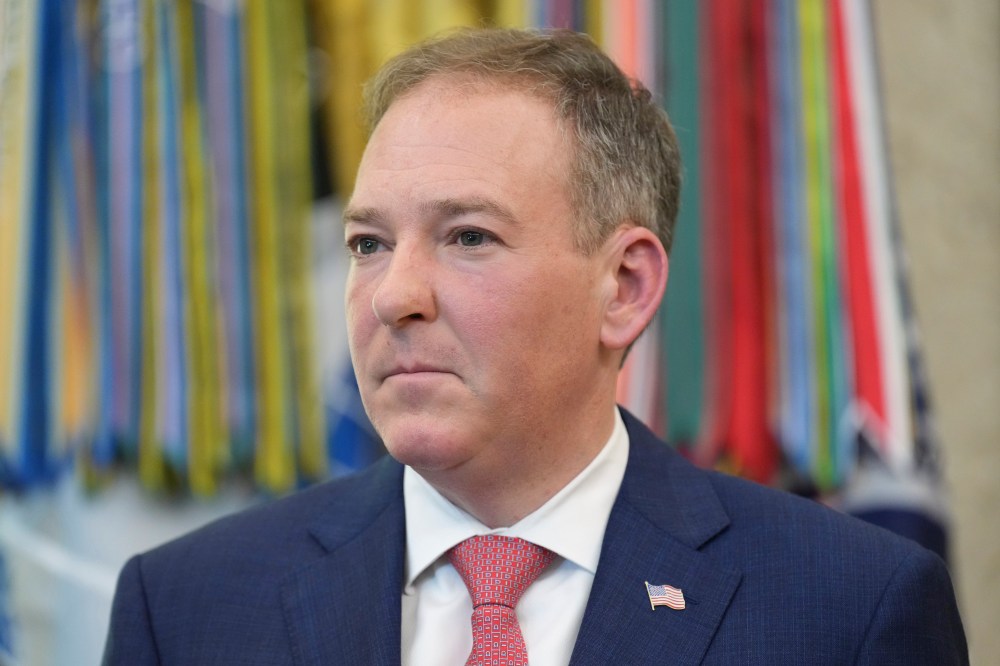
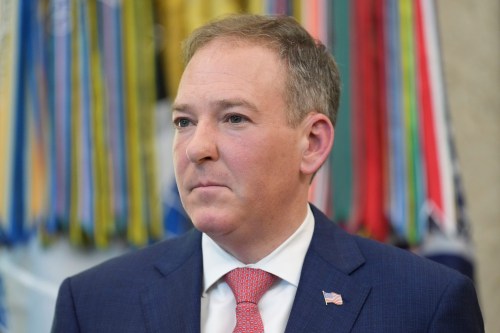
FILE - Environmental Protection Agency administrator Lee Zeldin listens as President Donald Trump speaks in the Oval Office of the White House, June 29, 2026, in Washington. (AP Photo/Jacquelyn Martin, File)

The 2023 ruling sharply limited the federal government’s authority to police water pollution in certain wetlands. It boosted property rights over concerns about clean water in a ruling in favor of Michael and Chantell Sackett, an Idaho couple who sought to build a house near a lake.

The new rule, once made final, will cut “bureaucratic red tape” and protect water quality while “recognizing that states and tribes are best positioned to manage their own water resources,” the EPA said.

The rule will provide greater predictability for landowners, farmers, ranchers, energy producers, the technology sector, developers and small businesses, the agency said. The measure will focus on relatively permanent, standing or continuously flowing bodies of water, such as streams, oceans, rivers and lakes, along with wetlands that are directly connected to such bodies of water.

“The EPA’s goal is a durable WOTUS definition that follows the law and ends burdensome regulatory uncertainty,” EPA Administrator Lee Zeldin said in a statement.

The request for additional comment “reflects our continued commitment to transparency and public input, ensuring we have fully considered a wide range of potential policy options,” he added. “We look forward to public feedback on this supplemental notice, which will help strengthen the real-world expertise behind the final rule.”

The November proposal to rewrite the water rule is among dozens of environmental regulations being rolled back by Republican President Donald Trump’s administration as part of what Zeldin calls a concerted effort to accelerate economic prosperity while putting “ a dagger through the heart of climate change religion.” Critics call the planned water rule a giveaway to ranchers and industrial polluters.

“The Trump EPA’s shortsighted push to encourage industries to plow over more wetlands and streams will destroy thousands of miles of waterways critical to wildlife across the United States,” J.W. Glass, a policy specialist at the Center for Biological Diversity, said when the plan was announced last year.

The proposed rule will most likely “wipe out life-sustaining waterways in every corner of the nation,” Glass said, and leave vast stretches of wetlands and other low-lying areas vulnerable to increasingly destructive storm surges driven by climate change.

The EPA’s proposal “declares open season” on the nation’s waterways, according to Jon Devine, director of freshwater ecosystems at the nonprofit Natural Resources Defense Council.

“The proposal would virtually eliminate protection for freshwater wetlands” and especially hurt the western United States, he said.

Zeldin disputes that argument, saying the agency’s proposal strikes a needed balance between federal and state authority. Any lands removed from federal jurisdiction will still face regulation from states and tribes, he said.

The EPA and Army Corps will accept public comments for 30 days once the supplemental plan is published in the Federal Register, expected in the next week. The agencies have held three public meetings on the proposed rule, which has generated more than 220,000 comments from a wide range of stakeholders.

Report Error Submit a Tip

More Stories

Mayoral candidates snipe over safety during radio debate

Joyanne Pursaga 6 minute read Preview

Mayoral candidates snipe over safety during radio debate

Joyanne Pursaga 6 minute read Updated: Yesterday at 5:31 PM CDT

Public safety took centre stage during a sometimes fiery mayoral debate Wednesday in which Kevin Klein revealed he would have to raise property taxes to fund his plan to make Winnipeg safer.

The CJOB debate also included candidates Scott Gillingham and Mike Vogiatzakis, who were selected as the top contenders in the race based on polling data.

Klein noted he has promised to strike a task force on public safety and to hire more police, if he’s elected Oct. 28.

“We are 100 police officers short of the very bare minimum of the per capita (number) right now. We have to replace those officers,” said Klein, a former city councillor and Tory cabinet minister.

Read
Updated: Yesterday at 5:31 PM CDT

Inappropriate late-night texts to students costs teachers their jobs

Maggie Macintosh 5 minute read Preview

Inappropriate late-night texts to students costs teachers their jobs

Maggie Macintosh 5 minute read Tuesday, Oct. 20, 2026

Manitoba’s independent teacher commissioner has cancelled two certificates this month because of inappropriate late-night messaging with minors.

Read
Tuesday, Oct. 20, 2026

EPA seeks more public comments as it struggles to devise water rule that limits scope on wetlands

Matthew Daly, The Associated Press 4 minute read Preview

EPA seeks more public comments as it struggles to devise water rule that limits scope on wetlands

Matthew Daly, The Associated Press 4 minute read Friday, Sep. 4, 2026

WASHINGTON (AP) — The Environmental Protection Agency is seeking additional public comments as it tries to redefine the scope of the nation’s bedrock clean water law to significantly limit the wetlands it covers.

The request, announced Friday, comes nearly a year after the agency proposed a rule defining "waters of the United States," or WOTUS, based on a 2023 Supreme Court ruling that removed federal protections for vast areas. The plea for new information is highly unusual and reflects the complexity of the water rule, a contentious regulation that has been argued in the courts for decades and reached the Supreme Court twice since 2006.

The latest proposal is a “supplemental” rule that EPA said will help it and the U.S. Army Corps of Engineers evaluate a wider range of options as they work toward a final rule that fully implements the Supreme Court’s decision in a case known as Sackett v. EPA.

The 2023 ruling sharply limited the federal government’s authority to police water pollution in certain wetlands. It boosted property rights over concerns about clean water in a ruling in favor of Michael and Chantell Sackett, an Idaho couple who sought to build a house near a lake.

Read
Friday, Sep. 4, 2026

Manitoba First Nation taking federal government, department to court over damage to sturgeon population

Morgan Modjeski 5 minute read Preview

Manitoba First Nation taking federal government, department to court over damage to sturgeon population

Morgan Modjeski 5 minute read Yesterday at 11:27 AM CDT

A remote Manitoba First Nation is taking the federal government to court over claims a Manitoba Hydro project is hurting the sturgeon population in the lower Churchill River.

In an Oct. 15 statement of claim filed in Manitoba’s Court of King’s Bench, Tataskweyak Cree Nation said the Churchill River diversion operated by Manitoba Hydro has had widespread ecological effects and damaged sturgeon populations in the area.

The lawsuit alleges Ottawa has breached its treaty obligations to protect the community’s right to harvest the fish.

The lawsuit names both His Majesty the King in Right of Canada, the minister of fisheries and Oceans Canada as defendants.

Read
Yesterday at 11:27 AM CDT

You’re facing double trouble with infatuation

Maureen Scurfield 4 minute read Yesterday at 2:00 AM CDT

DEAR MISS LONELYHEARTS: I started enjoying the company of women in my running group so much that I ran more and more, and dropped 35 pounds over the summer and early fall. And in the summer I became attracted to a bisexual woman in the group.

At first, we claimed we were “doing OK” with the men we married. But now, feelings of all kinds are accelerating between us.

I must say I’ve suspected my husband has had another woman in recent years, but now it doesn’t bother me the same way. I finally understand wanting two people at one time. I tell myself I’m not “cheating” on anybody — because I’m not cheating on my husband with another man. But that’s not even fooling me, anymore. I’m feeling a lot more emotion for my female love interest.

So now what? I don’t want to disrupt my whole family, so should I keep it a secret for everyone’s sake? I must say the female object of my affection isn’t thinking of leaving her husband and family. I could be wrong, but I suspect she’s just having a fun time experimenting.

Can’t have our cake and eat it, too

Mel Marginet 6 minute read Preview

Can’t have our cake and eat it, too

Mel Marginet 6 minute read 2:00 AM CDT

Last month, the City of Winnipeg said it would soon begin to study ways to improve pedestrian and cyclist safety along Osborne Street, which runs between two of the city’s densest neighbourhoods, where residents walk and bike for many of their daily activities. As someone who lives in South Osborne and who has frequented the shops and restaurants of the Village since my university days over 20 years ago, these changes can’t come soon enough.

Imagine my frustration when I read that this study of the street between Broadway and the St. Vital Bridge will take place “over the next year” to find “quick” solutions. We’ve all been through the COVID-19 pandemic, during which cities around the world found rapid solutions to improve safety and encourage more walking, biking and transit. Entire manuals have been published on easy things our city could try, literally this weekend, to improve the safety of Osborne Street.

Perhaps the reason this project is going to take a year can be found in this quote from David Patman, the city’s manager of transportation: “Osborne Street is currently serving multiple, competing functions … It exists in a dense, pedestrian-oriented development area that is close to rapid transit, which is at odds with the high flow of motor vehicles that travel daily along the corridor.”

Mr. Patman has correctly identified Osborne Street as a “stroad”. A stroad is a dangerous, inefficient combination of a street and a road. Stroads try to be the best of both worlds, and they fail at both. Charles Marohn, author of Strong Towns, offers the best analogy — a stroad is like a futon, which is both a terrible couch and an uncomfortable bed. You try to save money on two functions, but neither is right.

Read
2:00 AM CDT