Fuel prices at record Labor Day high in US thanks to Iran war and refinery issues
Advertisement
Read this article for free:
or
Already have an account? Log in here »
To continue reading, please subscribe:

Digital Subscription
One year of digital access for only $205*
- Enjoy unlimited reading on winnipegfreepress.com
- Read the E-Edition, our digital replica newspaper
- Access News Break, our award-winning app
- Play interactive puzzles
*First annual payment billed as $205.00 + GST for one year. This annual subscription will automatically renew at $233.00 + GST every 52 weeks (10% off the regular annual price of $259.35). Offer available to new and qualified returning subscribers only. Cancel any time.
To continue reading, please subscribe:
Add Free Press access to your Brandon Sun subscription for only an additional
$1 for the first 4 weeks*
- Enjoy unlimited reading on winnipegfreepress.com
- Read the E-Edition, our digital replica newspaper
- Access News Break, our award-winning app
- Play interactive puzzles
*Your next Brandon Sun subscription payment will increase by $1.00 and you will be charged $17.95 plus GST for four weeks. After four weeks, your payment will increase to $24.95 plus GST every four weeks.
Read unlimited articles for free today:
or
Already have an account? Log in here »
It’s never been more expensive in the U.S. to fill up the tank and take one last summer trip over the Labor Day weekend.
The average price of regular gas was $4.14 a gallon heading into the holiday, nearly a dollar higher than last year and well above the Labor Day weekend record of $3.82 from 2012, according to AAA motor club.
Nicole Collins planned to head from Philadelphia to South Carolina to visit friends, but she said her family has spent most of the summer close to home and not taking their typical weekend trips because driving has gotten so expensive.
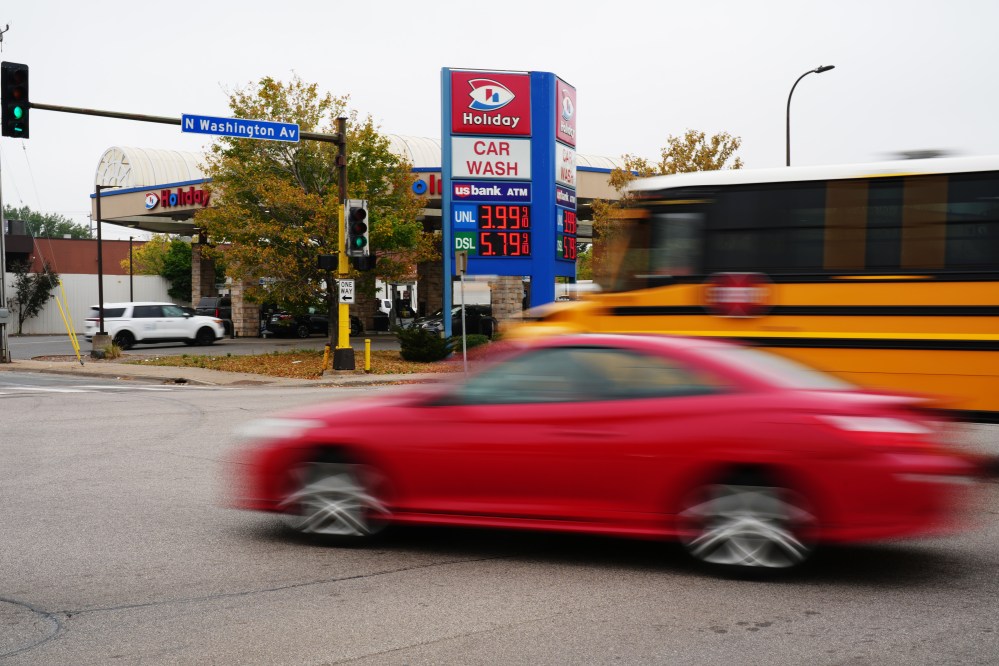
“Gas is pretty high right now. It doesn’t help that we also have a baby, so we also have to pay for that,” Collins said outside a gas station in Claymont, Delaware, where regular gas was $4.199 a gallon.
Prices shot up after the U.S. and Israel attacked Iran in February and have not settled down since. Crude oil traffic through the key Strait of Hormuz has plunged, and Iran has refused to reopen the waterway.
“Everything points to the Iran war and the Strait of Hormuz,” said Tom Seng, a professor of energy finance at Texas Christian University.
Energy Secretary Chris Wright offered few specifics on when the nation’s drivers might see relief at the gas pump, acknowledging that prices are higher now than Labor Day 2025.
“Yes, they’re higher today, but we’re doing everything we can to push them down,” Wright said Sunday on ABC’s “This Week.”
The national average for regular gas prices is still well below the record of $5.02 a gallon set in June 2022.
But diesel is a different story: It hit a national average of $5.85 a gallon Friday, a record.
Trucks and other freight delivery systems use a lot of diesel, and that increased transportation cost is being passed on to consumers, whether at the grocery store or through package delivery services.
“It doesn’t really seem like there’s an end to it,” Collins said.
Gas prices typically drop as the summer driving season ends and refineries turn to making a cheaper winter blend.
But Seng said there are other factors this year even beyond the volatile situation in the Middle East that make future prices unpredictable. U.S. refineries are working at 98% capacity, many in the unusually harsh Texas heat. If there are problems there or a hurricane knocks some systems offline, prices will struggle to drop.
And it’s not just a Middle East problem. Ukrainian drone attacks on Russian refineries are squeezing diesel supplies. Chinese refiners are seeing declining outputs as well, said Matthew Metzgar, a clinical professor of economics at UNC Charlotte.
“There’s just less gasoline coming out of those refineries,” Metzgar said.
Wright, the energy secretary, said the Trump administration was taking steps to increase production and that the markets forecast lower prices in the coming months.

“If you look at the futures prices, if you wanted to buy today in bulk gasoline for two months out in November, it’s about $0.35 cheaper than it is today. So the marketplace thinks gasoline prices are going to move meaningfully lower,” he said.
Geopolitically, though, there is little a driver can do to knock down gas prices.
But using price apps can help save a little money, especially on long trips where gas by the interstate could be 10 to 15 cents per gallon more expensive than at stations a short drive down the road, Metzgar said.
___
Associated Press videojournalist Mingson Lau and reporter Gary Fields contributed.