Radio Silence Amid Lowell Reveals Critical Gap In Emergency Plan
Advertisement
Read this article for free:
or
Already have an account? Log in here »
To continue reading, please subscribe:

Digital Subscription
One year of digital access for only $205*
- Enjoy unlimited reading on winnipegfreepress.com
- Read the E-Edition, our digital replica newspaper
- Access News Break, our award-winning app
- Play interactive puzzles
*First annual payment billed as $205.00 + GST for one year. This annual subscription will automatically renew at $233.00 + GST every 52 weeks (10% off the regular annual price of $259.35). Offer available to new and qualified returning subscribers only. Cancel any time.
To continue reading, please subscribe:
Add Free Press access to your Brandon Sun subscription for only an additional
$1 for the first 4 weeks*
- Enjoy unlimited reading on winnipegfreepress.com
- Read the E-Edition, our digital replica newspaper
- Access News Break, our award-winning app
- Play interactive puzzles
*Your next Brandon Sun subscription payment will increase by $1.00 and you will be charged $17.95 plus GST for four weeks. After four weeks, your payment will increase to $24.95 plus GST every four weeks.
Read unlimited articles for free today:
or
Already have an account? Log in here »
For years it has been a mantra of emergency preparedness: Officials across the state urge Hawaiʻi residents to keep portable radios and extra batteries on hand whenever storms or other hazards pose a threat. The idea is those radios will convey urgent government warnings and updates when other systems fail.
But when Hurricane Lowell battered Kauaʻi this week, electricity went out and radio communications to the public failed across much of the island. That left residents starved for information, such as which roads were safe for travel, where they could access food and aid and whether hospitals or other public facilities were open. Many were literally in the dark.
“I felt really isolated for about 24 hours, but there was no electricity, no internet,” said Gary Hooser, a former state senator and county councilman. “So even if the county was putting out notices, I wouldn’t have gotten them. So the only way would have been to drive around. I was trying to get in my car, turned the radio on, and nothing.”
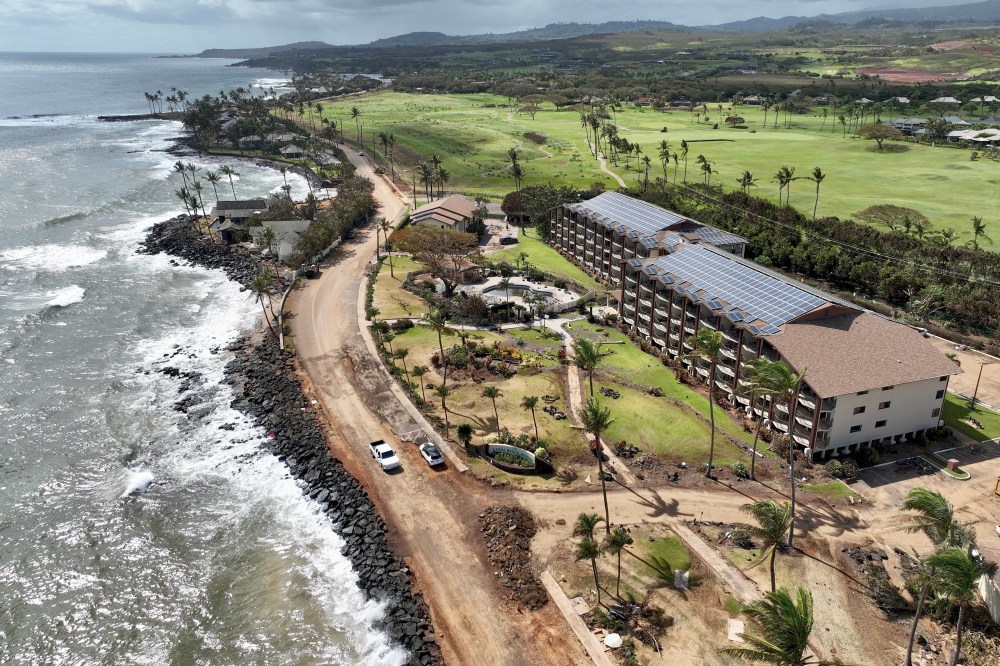
Kauaʻi’s two designated emergency stations, KONG FM 93.5 and Kauaʻi Community Radio station — KKCR — both confronted power problems because of the storm, which limited or eliminated their reach. As of Thursday morning KKCR was using its low-powered station, 90.9, which only reaches from Kauaʻi’s North Shore to Kapa‘a.
KONG went down entirely for a time, but was broadcasting again by late morning Thursday.
KKCR is an independent, non-commercial, listener-supported community station that was formed after Hurricane Iniki to provide reliable information during emergencies, said Anni Caporuscio, executive director of KKCR. The station’s 90.9 broadcasts were powered by a diesel generator, but other transmitters serving other KKCR frequencies were not.
Such stations “should have the infrastructure to have a backup generator or a battery at all our transmitter sites,” Caporuscio said in an interview Wednesday. “However, my radio station is underfunded in every way.”
On Thursday, KKCR got a boost when it regained internet connectivity because of a Starlink donated to it by the Lahui Foundation.
“So stoked,” said Caporuscio in a text.
The Contrasts Between Lowell And ʻIniki
The situation in Kauaʻi contrasts with what happened on the island in 1992 during Hurricane ʻIniki, a far more damaging storm than Lowell. That year, local radio personality Ron Wiley stayed on the air at Kauaʻi’s KONG-FM. While the station was temporarily knocked out by the brunt of the hurricane, the station’s staff managed to return to the air the next day using generator power.
On Thursday, three days after Lowell, Chuck Bergson, longtime president and CEO of Pacific Media Group Inc., could not be reached for comment. KONG is part of Pacific Media Group.
Radio transmissions also went down on Maui during the Kona lows in March, further underscoring the fragility of the state’s emergency communication.
Darryl Oliveira, acting administrator for Hawaiʻi County Civil Defense, said radio broadcasts to the public are the backbone of government communication with Hawaiʻi communities during emergencies. “It’s included in all of our messages today — please monitor your local broadcasts for official advisories in your area.”
“Everybody who has a car, more or less, owns a radio,” he said. “It tends to be less vulnerable to these weather impacts as compared to, let’s say, social media or email because those things all have multiple failure points with both power and broadband connectivity.”
Some on Thursday called for a comprehensive assessment of the state’s radio infrastructure.
Chris Leonard, president and general manager of New West Broadcasting Corp. on the Big Island, said radio is the most reliable communication during storms and other disasters, a fact the state has long recognized.
The Kīholo earthquake in West Hawaiʻi in 2006, he noted, sparked serious discussion about generators for radio transmitters and studios after the temblor caused blackouts on both the Big Island and in Honolulu.
Back then, Gov. Linda Lingle’s administration convened a communications review committee that identified several problems, Leonard said, including a shortage of reliable backup power for radio and a lack of systems to reliably transmit messages directly from government to broadcasters for distribution.
Big Island stations and others then received significant support that allowed them to acquire generators, but “the reality of it is a lot of stations don’t have backup power,” Leonard said. The generators are very costly to both purchase and maintain, he said.
Leonard, who is also president of the Hawaiʻi Association of Broadcasters, said, “It’s definitely something I’ve been talking about in advance of these events, saying we have serious communications infrastructure deficiencies across the state, and these are things that need to be addressed.”
Kona Lows Also Knocked Out Radio
On Maui, Zane Lacaden, general manager at Akamai Broadcasting, said that high winds from the Kona lows moved the antenna on the broadcaster’s tower at the summit of Haleakalā. That cut off transmissions to the station’s four FM frequencies, he said. Because of heavy rainfall and rockslides on the mountain, crews couldn’t reach the summit for three weeks to do repairs. The station continued streaming online and broadcasting over AM frequencies.
The station also needs a new backup generator for its studio offices in Kahului, he said. Right now, the studio has a battery backup that will kick in if the office loses power, which happened briefly during Hurricane Lala last month, but it’s just a temporary fix. Lacaden said the radio station is working with the Maui Emergency Management Agency to get a new gas-powered generator.
He encouraged residents seeking information during emergencies to try different methods for accessing the radio. If your FM frequency isn’t working, try toggling to AM, he said. If you have internet or cell service, try streaming the radio station online or through the Akamai Daily News mobile app.
Oliveira said he thinks policymakers will be paying more attention to the public communication issue in the future, and said he has advocated in recent meetings with members of the congressional delegation and others that government “support and continue to build upon the resilience of our public radio system.”
The generators that were installed on the Big Island 20 years ago after the Kīholo earthquake are probably approaching the end of their useful life, Oliveira said, and may need to be replaced.
Possibilities for improving the systems include replacing existing generators with equipment that is more fuel-efficient, he added. Other options include incorporating solar panels and batteries as a backup source of power, and hardening facilities that serve radio broadcasters, Oliveira said.
Leonard said he believes Hawaiʻi County has done a good job of preparing for disasters, but sees “potential deficiencies” in communications systems statewide if the islands were slammed by storms more powerful than Hurricanes Lala or Lowell.
“These are questions that absolutely need to be answered,” he said. “These are things that need to be addressed. We need to do more work to be prepared for a significant event.”
The status of radio stations during emergencies is a national issue. In Hawaiʻi and elsewhere, independent and public radio stations have long faced financial challenges in ensuring adequate backup power. They have also had to contend with cuts in federal funding aimed at improving radio communications during storms, earthquakes and other disasters.
KKCR notified its supporters during a recent fundraising drive that “with the rescission of funds from and closure of the Corporation for Public Broadcasting, Kauaʻi Community Radio has a yearly budget deficit of $83,000.”
Between 2022 and 2024, Congress appropriated $136 million to FEMA for the Next Generation Warning System grant program, according to National Public Radio.
The Corporation for Public Broadcasting was handling those appropriations and had been distributing money from FEMA directly to public radio and television stations to help them buy backup generators, new transmitters and other equipment. But that arrangement was disrupted in July last year when Republicans in Congress voted to close the CPB, stripping its federal funding.
Since then, the dispersal of funds intended for emergency communications can no longer go to radio and TV stations, but to states, territories and tribal nations. Republicans have declared it a victory against fraud. Detractors say it has added layers of bureaucracy to purchasing equipment needed during a disaster.
___
Civil Beat reporter Madeleine Valera contributed to this report.
___
This story was originally published by Honolulu Civil Beat and distributed through a partnership with The Associated Press.