Climate disasters are growing. So are cuts to programs that prepare for them
Advertisement
Read this article for free:
or
Already have an account? Log in here »
To continue reading, please subscribe:

Digital Subscription
One year of digital access for only $205*
- Enjoy unlimited reading on winnipegfreepress.com
- Read the E-Edition, our digital replica newspaper
- Access News Break, our award-winning app
- Play interactive puzzles
*First annual payment billed as $205.00 + GST for one year. This annual subscription will automatically renew at $233.00 + GST every 52 weeks (10% off the regular annual price of $259.35). Offer available to new and qualified returning subscribers only. Cancel any time.
To continue reading, please subscribe:
Add Free Press access to your Brandon Sun subscription for only an additional
$1 for the first 4 weeks*
- Enjoy unlimited reading on winnipegfreepress.com
- Read the E-Edition, our digital replica newspaper
- Access News Break, our award-winning app
- Play interactive puzzles
*Your next Brandon Sun subscription payment will increase by $1.00 and you will be charged $17.95 plus GST for four weeks. After four weeks, your payment will increase to $24.95 plus GST every four weeks.
Read unlimited articles for free today:
or
Already have an account? Log in here »
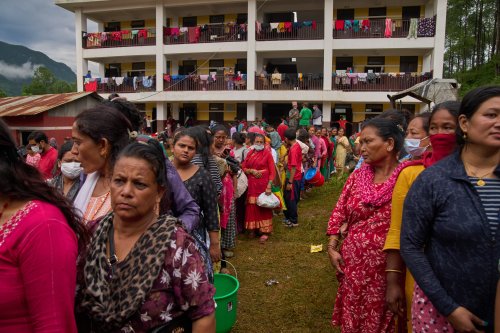
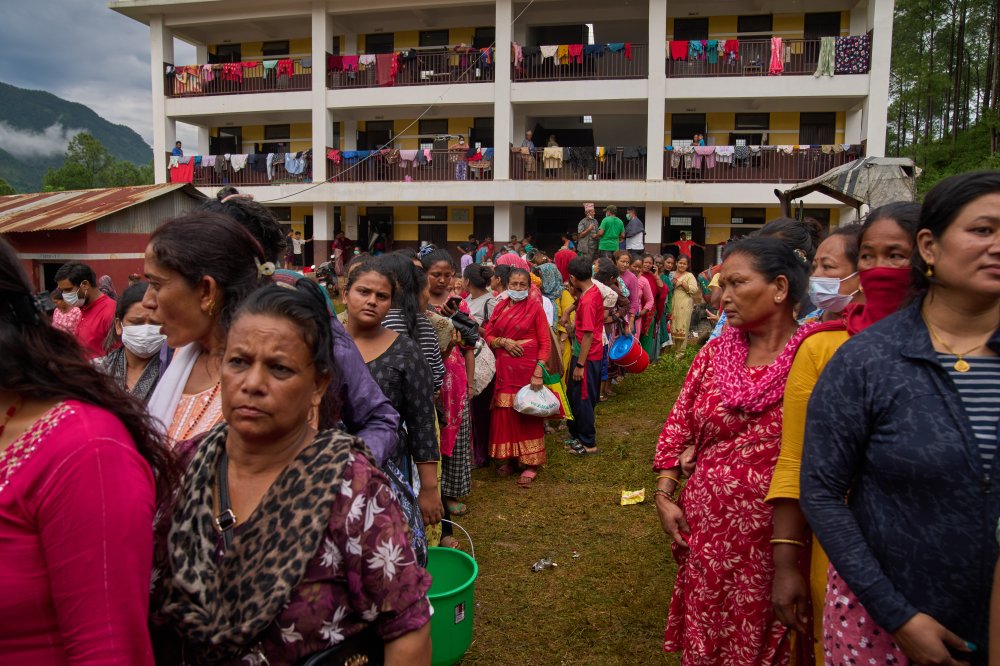
KATHMANDU, Nepal (AP) — Sitting on the floor of a makeshift shelter for survivors of Nepal’s deadly recent floods, Tenzin Dolma Ghale said she had nothing left but the clothes she was wearing. Her entire village and members of her family were washed away by the surge of water and debris that killed over 1,450 people and left more than 6,000 missing.
After speaking, she waved a hand and looked at the ground. “It’s all finished,” she said.
Ghale is among millions of people living with the deadly consequences of climate-related disasters. As such disasters intensify, international climate adaptation and disaster preparedness aid programs have been slashed, leaving countries facing billions of dollars in avoidable damage and dwindling recovery funds.
“The reality is that we need trillions of dollars every year, but developed countries have not met their obligation,” said Harjeet Singh, founding director of New Delhi-based Satat Sampada Climate Foundation.
Aid cuts weaken disaster monitoring in the Himalayas
The Trump administration’s abrupt cuts to U.S. foreign aid in 2025 eliminated or sharply curtailed programs serving millions of people worldwide, with devastating consequences for many communities. Reductions by other major donor countries deepened the funding crisis.
Among the programs shut was SERVIR-Hindu Kush Himalaya, a joint initiative of the U.S. Agency for International Development, NASA and the Kathmandu-based International Centre for Integrated Mountain Development, or ICIMOD.
Covering Afghanistan, Bangladesh, Myanmar, Nepal and Pakistan, the program used satellites and geospatial analysis for disaster risk reduction, water resources and land cover. It facilitated flood risk services, collaboration with the Nepal Red Cross Society on risk communication and more than 170 public data sets on glaciers, disasters and vulnerability.
Glacial and disaster preparedness experts praised the organization for its extensive research, cross-border coordination and support of local disaster reduction measures.
Before losing its funding due to USAID cuts, the program addressed mounting risks in a region where climate change has caused rapid glacier melt, shifting monsoons and increasingly frequent floods, landslides and glacial lake outburst floods, or GLOFs. Those changes endangered food, water and energy security for nearly 2 billion people living in or downstream of the region, according to ICIMOD.
Himalayan glaciers are losing mass 65% faster than they were a decade ago, according to a new report by global consultancy Systemiq, produced with ICIMOD. Yet only around 0.1% of the Himalaya’s estimated 40,000 glaciers are currently monitored in detail and on a sustained basis, the report said.
When funding for SERVIR-HKH ended, so did programs that monitored landslide forecasting, daily flooding, training programs and regional collaboration between countries.
With the program’s loss, millions now face a heightened risk of GLOFs, which can release millions of cubic meters of water and debris in just a few hours.
In northern Pakistan, melting glaciers have created 3,044 glacial lakes, with over 30 identified as likely to result in such floods in areas where over 7 million people live, according to the United Nations Development Program.
Afghanistan also faces an increased threat of GLOFs, according to research published by the University of Lausanne in Switzerland.
In India — which was not part of the SERVIR-HKH program but borders all of the countries that were and is also home to over half the Himalayas — over 130 high-altitude lakes are at risk of flooding.
South Asia is already experiencing deadly climate-related disasters. The 2022 Pakistan floods killed more than 1,700 people and caused an estimated $40 billion in damage. Flooding in Nepal in 2025 killed nine people and caused millions of dollars in damage. Cloudbursts, landslides, flash floods and extreme rainfall have wreaked havoc in the Indian Himalayas, resulting in the death of over 12,000 people and damage exceeding billions of dollars in the last 15 years.
The region suffered economic losses of at least $7 billion in 2025 due to climate-driven extreme weather, according to the Emergency Events Database maintained by the University of Louvain, Belgium. This database itself is at risk of being shut down as a result of USAID funding cuts.
In a statement to The Associated Press, the U.S. State Department said that the U.S. supports Nepal’s flood warning capacity through programs with the World Meteorological Organization and National Oceanic and Atmospheric Administration. The department noted that SERVIR-HKH ended in January 2025 but that its tools remain active through ICIMOD.
The impact extends beyond communities hit directly. The Himalayan region is vital to national economies, with agriculture, industry, tourism and domestic use all dependent upon it.
Cuts to programs like SERVIR-HKH will have cascading effects for years, said Neha Rai, a climate finance expert at ICIMOD.
Rai likened the cuts to climate programs to abruptly halting funds for cancer research, which needs years of sustained research for success.
“Climate risk is also a generational challenge,” said Rai. “You need long-term observations, expertise, you need institutions that cannot simply be switched off and on as short-term priorities.”
Rai said cuts to cross-border programs have also impacted information sharing between governments, scientists and organizations across the region — a critical function in a region where what happens upstream directly affects countries downstream.
Climate finance shrinks as vulnerable countries face rising debt
These cuts are part of a larger trend. According to the Organization for Economic Cooperation and Development, official development assistance from its Development Assistance Committee members, which includes the U.S., fell 23% in 2025 — the largest annual contraction on record. Traditionally large donors such as the United Kingdom, Germany, France, Japan and Canada have also announced massive reductions, reallocating funds to defense and other domestic priorities.
Global South countries spend approximately 225 times more in debt repayments than what they receive in grant-based climate finance, according to a recent report by the advocacy group, ActionAid International.
“There is a toxic relationship, in fact, between the climate crisis and the debt crisis,” said Teresa Andersen of ActionAid International.
She said countries take loans to recover from climate impacts but then cut investments in clean energy and preparations for future climate-related extreme weather to repay the loans.
The money being provided isn’t nearly enough, and climate often isn’t prioritized, said Richard Sherman, a board member of the Fund for Responding to Loss and Damage, an international climate finance mechanism to assist developing countries vulnerable to the adverse effects of climate change.
“There’s plenty of money if it goes to certain priorities, but for climate change right now, we’re witnessing a severe depreciation of the importance to act and make systems more resilient,” he said.
While disaster recovery funds still exist, they’re also losing funding and aren’t equipped to handle the expected increase in disasters, he said.

“We’re not expecting developed countries to act as an ATM,” said Sherman. “But supporting vulnerable countries, helping them adapt and become more resilient means they’re less likely to suffer the kind of impacts we have right now.”
___
Arasu reported from Bengaluru, India.
___
The Associated Press’ climate and environmental coverage receives financial support from multiple private foundations. AP is solely responsible for all content. Find AP’s standards for working with philanthropies, a list of supporters and funded coverage areas at AP.org.