Alberta elk ranchers want province to OK hunt farms despite disease, ethical concerns
Advertisement
Read this article for free:
or
Already have an account? Log in here »
To continue reading, please subscribe:

Digital Subscription
One year of digital access for only $205*
- Enjoy unlimited reading on winnipegfreepress.com
- Read the E-Edition, our digital replica newspaper
- Access News Break, our award-winning app
- Play interactive puzzles
*First annual payment billed as $205.00 + GST for one year. This annual subscription will automatically renew at $233.00 + GST every 52 weeks (10% off the regular annual price of $259.35). Offer available to new and qualified returning subscribers only. Cancel any time.
To continue reading, please subscribe:
Add Free Press access to your Brandon Sun subscription for only an additional
$1 for the first 4 weeks*
- Enjoy unlimited reading on winnipegfreepress.com
- Read the E-Edition, our digital replica newspaper
- Access News Break, our award-winning app
- Play interactive puzzles
*Your next Brandon Sun subscription payment will increase by $1.00 and you will be charged $17.95 plus GST for four weeks. After four weeks, your payment will increase to $24.95 plus GST every four weeks.
Read unlimited articles for free today:
or
Already have an account? Log in here »
Hey there, time traveller!
This article was published 03/10/2021 (1831 days ago), so information in it may no longer be current.
Alberta game ranchers are lobbying governments in the province in a renewed attempt to legalize hunt farms.
They say it’s an industry that could bring millions of dollars to rural communities, but the farms are strongly opposed by wildlife scientists and fish and game groups.
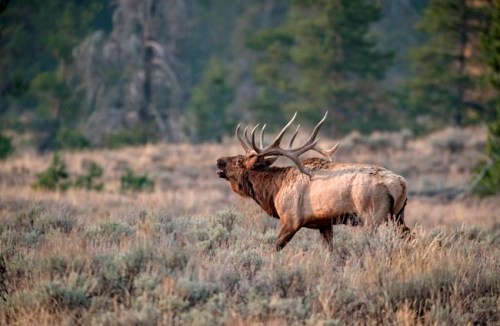
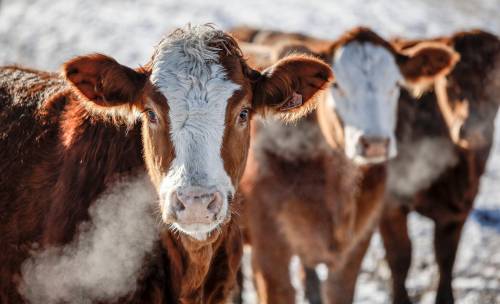
The Alberta Elk Commission has been lobbying the province and rural municipalities since at least the spring of 2020 for legislative changes that would allow what it calls “cervid harvesting preserves.” Those are fenced areas for raising animals such as elk, deer or bison where paying guests can hunt and shoot the animals.
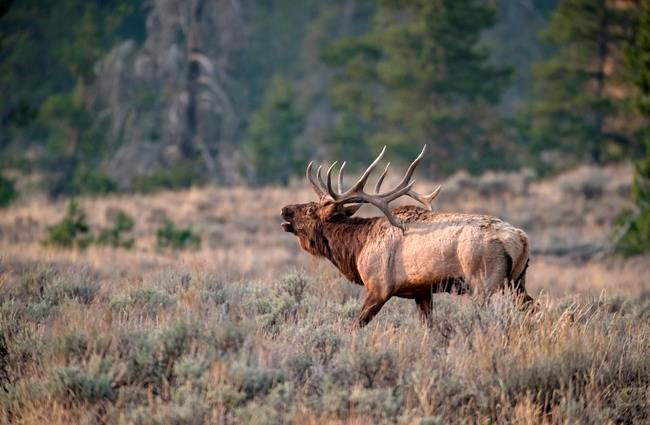
Alberta’s lobbyist registry shows the commission is communicating with three ministries to seek changes that would permit games farms to allow hunting and the selling of meat, allowing hunters to take their kills home.
It’s further seeking support from rural municipalities. The County of Lacombe discussed the proposal at its Sept. 9 meeting.
The proposal comes as Alberta’s United Conservative government begins a wide-ranging review of wildlife legislation that promises, say government documents, to “explore options for innovative tools to provide improved recreational hunting opportunities on public and private lands.”
Alberta game farms already export animals to places where so-called “canned hunts” are legal.
Commission president John Cameron, who represents more than 50 elk ranches in Alberta, said it would make sense to keep that revenue.
“Harvest preserves would give producers the opportunity to harvest animals that are currently exported to other jurisdictions, offering an economic development opportunity in Alberta,” he wrote in an email.
Cameron said hunt farms would double industry revenues to about $500 million and create more than 300 jobs.
“The Alberta Elk Commission is asking for this now in order to sustain and grow our industry to be able to pass on our operations to the next generations of our largely family-owned farms and ranches,” he said.
Saskatchewan has about 35 game farms that offer up to 100 hunts a year, according to provincial government figures.
The relevant legislation comes under Alberta Agriculture and Forestry. Asked how minister Devin Dreeshen views the commission’s requests, spokesman Mackenzie Blyth responded in an email.
“Alberta’s government is committed to supporting Alberta entrepreneurs and working with communities and organizations to drive growth and job creation, especially in our province’s rural areas,” he said.
The response worries Delinda Ryerson of the Alberta Fish and Game Association. She said her group wrote Dreeshen in January to express concerns about hunt farms and has yet to receive a reply.
“There’s a whole suite of ecological and economic and heritage reasons that we are adamantly opposed,” she said.
Hunt farms — and game farms — damage native wildlife through hybridization and the spread of disease, she said. She fears they also encourage a pay-to-hunt mentality that will eventually choke off a pastime enjoyed by thousands of Albertans.
“It’s not exactly fair chase,” said Ryerson. “It’s hard enough nowadays to be a hunter. Something like canned hunts are only going to make that worse.”
The Boone and Crockett Club, which lists North American trophy hunt records, opposes such hunts and won’t record their kills. So do local environmental organizations including the Alberta Wilderness Association.
Cameron disputes Ryerson’s claim that hunt farms would spread disease to wild stocks.
“There is no concern with disease spread from animals harvested on harvest preserves to the wild population,” he wrote. “(All) of the animals harvested on harvest preserves are tested … so there are no concerns on disease spread.”
But it’s tough to keep wild and penned animals separate, said Ryan Brook, a University of Saskatchewan wildlife biologist.
“Contact of wild elk and domestic elk through the fence has been documented and we’ve seen photos of it going around,” he wrote in an email. “It’s an important potential route for disease transmission.”
Mark Boyce, a University of Alberta biologist and a hunter, said chronic wasting disease, a fatal wildlife condition spreading rapidly through the Prairies, probably came to Canada through a game farm.
Legalizing hunt farms, he said, “is absurd. It’s absolutely nuts.”
Alberta does allow hunt farms for wild boar, a non-native species. Boyce said the results of that experiment should be a warning.
“We have hundreds of wild boar at large in Alberta because of a dozen or so hunt farms. They get out.”
In its materials to Lacombe County, the elk commission said chronic wasting disease is one reason the industry wants hunt farms.
“Spread of chronic wasting disease in the wild is limiting export market(s) … threatening industry viability,” says its presentation.
The Alberta government says it’s planning public consultations on wildlife management and recreational hunting rules.
But the province has been here before.
In 2002, its Progressive Conservative government considered hunt farms and turned them down. Then-premier Ralph Klein was unequivocal.
“To go to a hunt farm and shoot a penned-up animal, an animal that doesn’t have a chance, I think it’s abhorrent,” he said. “People simply do not like the idea and neither do I.”
This report by The Canadian Press was first published Oct. 3, 2021.
— Follow Bob Weber on Twitter at @row1960