Flood costs in Canada could nearly triple by 2030 with no mitigation

Advertisement

Advertise with us

OTTAWA - The yearly bills from overflowing rivers and rising seas in Canada could nearly triple by 2030 if Canada doesn't do more to improve flood protection, a new analysis suggested Thursday.

Read this article for free:


or

Already have an account? Log in here »

To continue reading, please subscribe:

Subscribe and receive a limited-edition Free Press branded hat or tote.

Digital Subscription

One year of digital access for only $205*

  • Enjoy unlimited reading on winnipegfreepress.com
  • Read the E-Edition, our digital replica newspaper
  • Access News Break, our award-winning app
  • Play interactive puzzles

*First annual payment billed as $205.00 + GST for one year. This annual subscription will automatically renew at $233.00 + GST every 52 weeks (10% off the regular annual price of $259.35). Offer available to new and qualified returning subscribers only. Cancel any time.

To continue reading, please subscribe:

Add Free Press access to your Brandon Sun subscription for only an additional

$1 for the first 4 weeks*

  • Enjoy unlimited reading on winnipegfreepress.com
  • Read the E-Edition, our digital replica newspaper
  • Access News Break, our award-winning app
  • Play interactive puzzles
Start now

*Your next Brandon Sun subscription payment will increase by $1.00 and you will be charged $17.95 plus GST for four weeks. After four weeks, your payment will increase to $24.95 plus GST every four weeks.

Hey there, time traveller!
This article was published 23/04/2020 (2313 days ago), so information in it may no longer be current.

OTTAWA – The yearly bills from overflowing rivers and rising seas in Canada could nearly triple by 2030 if Canada doesn’t do more to improve flood protection, a new analysis suggested Thursday.

The Aqueduct Floods project of the Washington-based global think tank World Resources Institute found the number of people around the world affected by floods each year will more than double from about 65 million in 2010, to more than 132 million in 2030. The total annual damage to urban assets, including homes, businesses and public infrastructure, will exceed more than US$700 billion.

Comparatively, flooding has cost the world a little more than US$1 trillion over the last three decades, the report said, meaning with no action, it will soon cost the world in less than two years what it cost over the last 30.
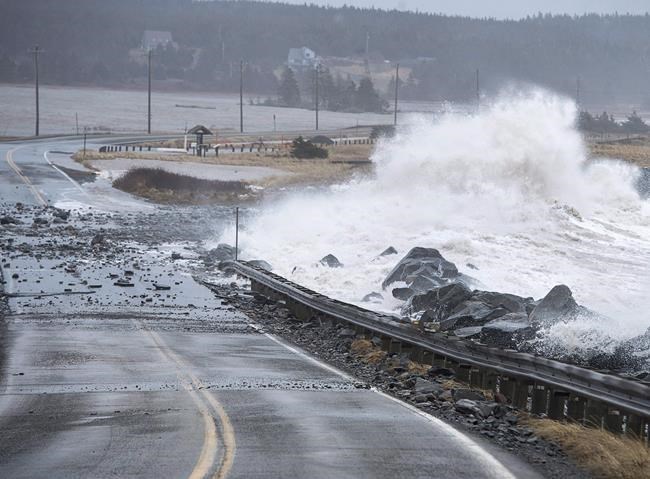
Waves pound the shore on a closed section of Highway 207 in Lawrencetown, N.S. on Friday, Jan. 5, 2018. A new analysis of flood risk suggests the yearly bills from overflowing rivers and rising seas could nearly triple by 2030, if Canada doesn't do more to improve flood protection. THE CANADIAN PRESS/Andrew Vaughan

While the report raises the most serious concerns for countries in Southeast Asia, including India, Pakistan and Indonesia, Canada will not be spared. The institute found in 2010, flood damage to urban areas, including homes, businesses and public infrastructure, totalled around US$2.4 billion. By 2030, if nothing more is done to prevent or mitigate flood damage, that price tag will be closer to US$6.6 billion.

At the same time the number of Canadians directly impacted will grow from about 200,000 in 2010, to more than 350,000 in 2030. By 2050, the annual cost could exceed US$14 billion and affect 431,000 people.

Coastal flooding in particular is going to get much worse. In 2010, fewer than 1,400 people were affected in Canada, and the urban cost was about US$122 million. By 2030, with current mitigation measures in place, that cost will be 13 times as big, exceeded US$1.65 billion, and the number of people affected will grow to nearly 17,000.

Samantha Kuzma, one of the authors of the flooding project report, said climate change will be responsible for about one-third of the increased flood risks, but most can be blamed on population and economic growth that will see more people and businesses set up in areas becoming more prone to flooding. About one-quarter of the increased risk of coastal flooding can be blamed on subsidence, or the gradual sinking of land.

Kuzma said the costs could change dramatically if countries make flood mitigation a priority, with an estimate that Canadians can prevent more than $2 in damage costs for every $1 spent on things like dikes, berms and drainage.

“I hope this inspires us to invest in preparedness,” said Kuzma. “It’s worthy of our attention.”

Blair Feltmate, head of the Intact Centre on Climate Adaptation at the University of Waterloo, said the World Resources Institute report adds the weight of a very credible organization to research that is warning the world that floods are going to be bigger, happen more often and cost us more money and lives, if we don’t start acting.

Feltmate said Canadians are mostly lucky that this spring has thus far not turned out to be a major flood problem so far. He asked how people would manage COVID-19 lockdowns and physical distancing if they needed to be sandbagging properties or evacuating to local community centres.

“It’s just pure dumb luck,” he said. “Luck is not the policy you want to depend on.”

Feltmate said the report’s figures would be even higher if it added urban flooding from major rainstorms. He said in Canada, the impact of basement flooding is a major part of the problem.

This report by The Canadian Press was first published April 23, 2020.

Report Error Submit a Tip

More Stories

Free Press literary editor picks noteworthy Canadian fiction and non-fiction titles to watch for this fall

Ben Sigurdson 8 minute read Preview

Free Press literary editor picks noteworthy Canadian fiction and non-fiction titles to watch for this fall

Ben Sigurdson 8 minute read Yesterday at 6:00 AM CDT

For many book lovers, summer means relaxing at the beach, in the backyard or at the cottage with fun, warm-weather page-turners — easy-going romance novels, gripping thrillers or even a dishy biography.

And some may long for the summer months to slow down, fall books season always offers up some of the most compelling reads for bookworms.

Here are 10 works of fiction and 10 non-fiction titles from Canadian authors slated to be published in the coming months — from Olympians to separatists, draft dodgers, plutocrats, prime ministers, bird-men and beyond, the characters in these forthcoming titles run the gamut.

FICTIONEliza Sunshine

Read
Yesterday at 6:00 AM CDT

Five Things: PM Carney explains why Canada left the U.S. negotiating table

David Baxter, The Canadian Press 5 minute read Preview

Five Things: PM Carney explains why Canada left the U.S. negotiating table

David Baxter, The Canadian Press 5 minute read Updated: Yesterday at 1:58 PM CDT

OTTAWA - Canada is preparing to hit the U.S. with dollar-for-dollar tariffs in response to new 50 per cent duties on $28 billion worth of Canadian products that took effect when talks between the two nations collapsed as negotiations neared the finish line. 

Prime Minister Mark Carney was quiet publicly during the final days of negotiations, but now has now explained his rationale for telling the Canadian negotiating team, led by Canada-U.S. Trade Minister Dominic LeBlanc and chief negotiator Janice Charette, to leave the table.

Restrictions on further trade deals

"The U.S. Introduced at the last hours, in the last hours, efforts to restrict our ability to have other trade deals. You heard me say a moment ago, what we've accomplished in the past year, 20 new deals, economic and security partnerships, the prospect of doubling our market access because we believe in free trade. We're the partner of choice in many respects for countries around the world and the Americans wanted to restrict that. They had language that what they wanted to restrict that, unacceptable," Carney said during a press conference on Parliament Hill.

Read
Updated: Yesterday at 1:58 PM CDT

ER wait times have hit all-time highs in Winnipeg and are impacting nearly all aspects of hospital operations

Tom Brodbeck 17 minute read Preview

ER wait times have hit all-time highs in Winnipeg and are impacting nearly all aspects of hospital operations

Tom Brodbeck 17 minute read Friday, Aug. 21, 2026

On most days at Health Sciences Centre’s adult emergency department, all 58 treatment beds are filled with sick patients. Another dozen or so brought in by ambulance line the hallways on stretchers, with only one nurse to look after them.

Out in the waiting room, about 30 or 40 people — sometimes more — are slouched in chairs in pain or discomfort, waiting hours to see a doctor. Most have been assessed by a triage nurse, but many will have to wait 10 to 20 hours to be examined by a physician because there’s no room for them in the treatment area.

Some patients leave because they can no longer tolerate the excruciating wait, only to return days later, sicker than they were before.

Welcome to the emergency department at Manitoba’s largest hospital, where some of the highest-acuity patients seek medical care but now face delays that were unimaginable a few years ago.

Read
Friday, Aug. 21, 2026

The good, bad and record setting performance in Bombers loss to Elks

Joshua Frey-Sam 7 minute read Preview

The good, bad and record setting performance in Bombers loss to Elks

Joshua Frey-Sam 7 minute read Yesterday at 6:50 PM CDT

The Winnipeg Blue Bombers’ 22-19 defeat at the hands of the Edmonton Elks at Commonwealth Stadium in Alberta on Friday was fitting for all the wrong reasons.

The Bombers looked reinvigorated as they jumped out to a 16-point lead in the first half. Then some bad habits reared their ugly head, as the Elks roared back with 19 straight points before kicker Vincent Blanchard walked it off with a 40-yard field goal.

A night that began with so much promise left many fans to wonder what the ceiling actually is for this team in 2026.

On offence, Zach Collaros completed 19 of 30 passes for 219 yards, one touchdown and an interception; Brady Oliveira amassed 118 yards on 16 carries and added a pair of catches for 11 yards; and Nic Demski secured five grabs for 80 yards.

Read
Yesterday at 6:50 PM CDT

‘Strong sense of unity’

By Melissa Martin 6 minute read Preview

‘Strong sense of unity’

By Melissa Martin 6 minute read Yesterday at 5:14 PM CDT

Manitoba government and business leaders are rallying behind Prime Minister Mark Carney’s plan to fight back, after a sudden collapse of trade talks between the U.S. and Canada sparked a new salvo of U.S. tariffs on some Canadian goods.

On Saturday, after Carney vowed to respond with retaliatory tariffs, Manitoba premier Wab Kinew said his government stood “100 per cent” behind the prime minister’s plan to respond to what Kinew called U.S. president Donald Trump’s “unjustified and immoral” tariffs.

“History will not be kind to Donald Trump, so we should never appease him,” Kinew said. “We should fight back, which is what Canada is doing today.”

Kinew met reporters for a brief news conference at the legislature on Saturday afternoon, about an hour after finishing a call with Carney and the other premiers. There was a “really strong sense of unity” on that call, Kinew said, and emphasized that he backs the federal decision to “walk away from what would have been a bad deal.”

Read
Yesterday at 5:14 PM CDT

Puzzles Palace

1 minute read Monday, Jul. 27, 2026

To solve our puzzles, please subscribe with this special offer: |