Worst of B.C. weather over; massive cleanup, rebuild ahead, says government
Advertisement
Read this article for free:
or
Already have an account? Log in here »
To continue reading, please subscribe:

Digital Subscription
One year of digital access for only $205*
- Enjoy unlimited reading on winnipegfreepress.com
- Read the E-Edition, our digital replica newspaper
- Access News Break, our award-winning app
- Play interactive puzzles
*First annual payment billed as $205.00 + GST for one year. This annual subscription will automatically renew at $233.00 + GST every 52 weeks (10% off the regular annual price of $259.35). Offer available to new and qualified returning subscribers only. Cancel any time.
To continue reading, please subscribe:
Add Free Press access to your Brandon Sun subscription for only an additional
$1 for the first 4 weeks*
- Enjoy unlimited reading on winnipegfreepress.com
- Read the E-Edition, our digital replica newspaper
- Access News Break, our award-winning app
- Play interactive puzzles
*Your next Brandon Sun subscription payment will increase by $1.00 and you will be charged $17.95 plus GST for four weeks. After four weeks, your payment will increase to $24.95 plus GST every four weeks.
Read unlimited articles for free today:
or
Already have an account? Log in here »
Hey there, time traveller!
This article was published 02/12/2021 (1742 days ago), so information in it may no longer be current.
VICTORIA – The successive storms that brutalized southern British Columbia with floods and slides caused by record amounts of rainfall were declared over Thursday, but now the cleanup and costly rebuild lie ahead, says the public safety minister.
The work will involve repairing vital transportation routes crippled by floods and slides, restoring agricultural operations deluged by high water and getting thousands of evacuated people back to their homes and communities, Mike Farnworth said.
“We are now on the other end of this series of intense storms and the latest events were, thankfully, not as severe as forecast,” he said. “The worst weather now appears to be behind us. The process of recovering and rebuilding is already underway, and while it will take time, I’m confident we will get there.”
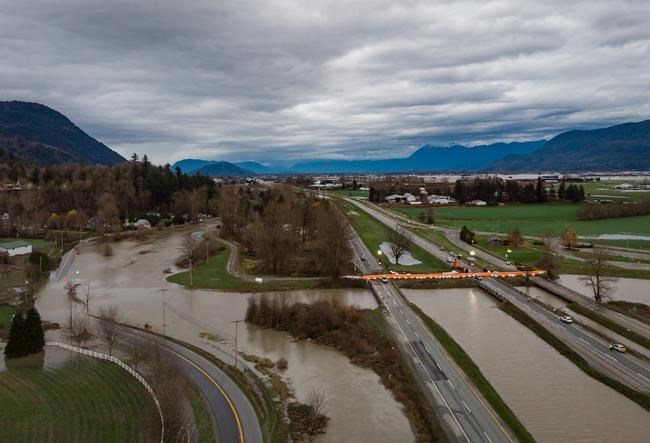
The government has yet to provide a cost estimate for the damage caused weeks of rain that swamped the province in a string of “atmospheric rivers” other than say it will be hugely expensive.
Environment Canada lifted weather alerts for B.C. on Thursday as storm conditions eased, floodwaters started to recede and some transportation corridors reopened.
November saw unprecedented rainfall in places like Abbotsford, which shattered previous monthly records by about 99 millimetres.
Farnworth said more than 14,800 people were evacuated since the first storm hit in mid-November, including the entire community of Merritt in B.C.’s southern Interior.
On Thursday, 4,308 properties remained on evacuation order and 7,400 people have been told they need to prepare to leave quickly, he said.
The River Forecast Centre lifted all flood watches on Vancouver Island and the central coast, where it said rivers reached peak levels and are now receding.
But flood warnings remain in areas around the Coquihalla, Chilliwack, Tulameen, Similkameen, Coldwater and Lower Nicola rivers, the Lower Fraser tributaries and Spius Creek, the forecast centre said.
Transportation Minister Rob Fleming said a major traffic corridor along the Trans-Canada Highway from Vancouver to Hope was reopened after areas between Abbotsford and Chilliwack and near Bridal Falls were prevented from flooding, largely due to efforts of volunteers and Canadian Forces members.
But the Coquihalla Highway, a key route between the Lower Mainland and Interior, remains closed and the earliest it could open to commercial traffic is late January after the storms washed out five bridges and damaged up to 130 kilometres of highway, he said.
Highway 3, currently the only access to B.C.’s Interior from the Lower Mainland, is open but it is slow going, said Fleming, adding the normal five-hour drive from Surrey to Keremeos takes 10 hours.
Much of the Fraser Canyon route along Highway 1 remains closed due to slide and flood damage and Highway 8 between Spences Bridge and Merritt was heavily damaged and remains closed indefinitely, he said.
Highway 99 from Pemberton to Lillooet remained closed Thursday due to another slide, said Fleming.
It was the same route where four people died and one remains missing after the first storm Nov. 14.
“If your travel is not necessary, please don’t be out there just yet,” Fleming said.
Agriculture Minister Lana Popham said she has been visiting farms in the Fraser Valley where people are dealing with dead animals and drowned crops.
She said there are currently 819 farms under evacuation orders.
Popham said the death toll among animals is “heartbreaking” and includes 628,000 chickens, 420 dairy cows, 12,000 hogs and 120 beehives.
A blueberry farmer told her his plants were under more than two metres of water, but he wouldn’t know until spring if they survived the flood, she said.
“He feels quite hopeful because he said that a lot of his plants are underwater on and off every winter, so he feels that they are quite strong,” Popham said. “So, we’re keeping our fingers crossed.”
Abbotsford Mayor Henry Braun said he expects evacuation orders to be lifted in the Sumas Prairie area of his community and his key concern is safe access for residents to their properties.
Emergency Red Cross and government funding of $2,000 is helping families pushed out of their homes by the floods, he said.
“I know that’s just the tip of the iceberg for those farmers because many of them have hundreds of thousands of dollars (in damage), but it’s a start,” said Braun.
Farnworth said he hoped the worst was over for the province.
“We have seen communities pummelled in a way nobody should be,” he said.
This report by The Canadian Press was first published Dec. 2, 2021.