Guardians of the lake
Foundation fights for policy changes to protect cottage country

Advertisement
Read this article for free:
or
Already have an account? Log in here »
To continue reading, please subscribe:

Digital Subscription
One year of digital access for only $205*
- Enjoy unlimited reading on winnipegfreepress.com
- Read the E-Edition, our digital replica newspaper
- Access News Break, our award-winning app
- Play interactive puzzles
*First annual payment billed as $205.00 + GST for one year. This annual subscription will automatically renew at $233.00 + GST every 52 weeks (10% off the regular annual price of $259.35). Offer available to new and qualified returning subscribers only. Cancel any time.
To continue reading, please subscribe:
Add Free Press access to your Brandon Sun subscription for only an additional
$1 for the first 4 weeks*
- Enjoy unlimited reading on winnipegfreepress.com
- Read the E-Edition, our digital replica newspaper
- Access News Break, our award-winning app
- Play interactive puzzles
*Your next Brandon Sun subscription payment will increase by $1.00 and you will be charged $17.95 plus GST for four weeks. After four weeks, your payment will increase to $24.95 plus GST every four weeks.
Read unlimited articles for free today:
or
Already have an account? Log in here »
Hey there, time traveller!
This article was published 19/09/2020 (2206 days ago), so information in it may no longer be current.
Alexis Kanu has fond memories of going to her family’s cottage in Whiteshell Provincial Park while she was growing up.
“It was a special place that was really formative for me, and I think that’s an experience a lot of Manitobans have,” Kanu says. “We may be talking about different lakes when we say we’re ‘going to the lake,’ but I think we have a lot of common experiences once we get there.”
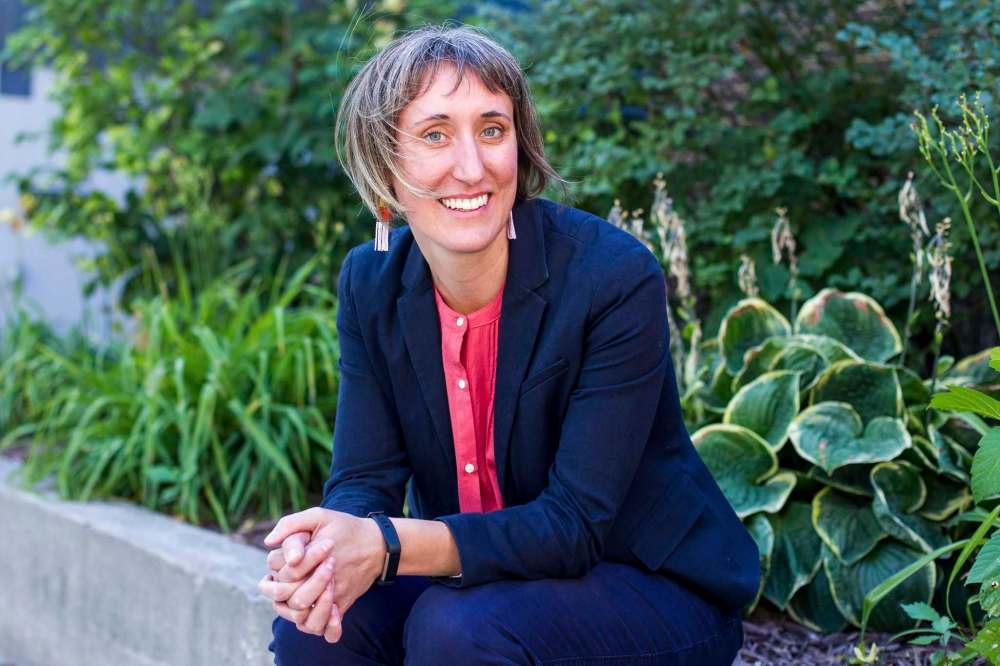
Those formative experiences at the cottage are part of what inspires Kanu’s work as executive director of the Lake Winnipeg Foundation, an non-governmental organization that advocates for policy changes and co-ordinates action to improve the health of Lake Winnipeg.
Kanu’s work allows her to combine her background as a scientist — she has a PhD in environmental science from the University of Manitoba — with her passion for the non-profit sector.
“It’s a really interesting place to work in that we’re able to bring the expertise of people who have spent their careers studying our lakes, together with the passion of the people who have spent their lives on the shores of the lakes,” she says.
The foundation was founded in 2005 by volunteers who were concerned about the increasing size and frequency of algae blooms on the lake, which are caused by phosphorus entering the lake from fertilizer, human effluent and livestock manure.
When Kanu was hired in 2012, she was the foundation’s first paid employee.
“It was really the passion of the folks who founded it, and who joined in the early years, who were volunteers that set us up for what we’ve been able to do since then,” she says.
Today, the organization includes eight full-time and one part-time staff members, as well as a science advisory council — a group of freshwater experts whose research guides the foundation’s work.
The foundation focuses on adopting and promoting programs that reduce the amount of phosphorus that gets into Manitoba’s waterways. They pay particular attention to sewage treatment in Winnipeg as well as to reducing phosphorus loads from agricultural practices.
When asked about the highlights of her work, Kanu points to the foundation’s work lobbying for change at Winnipeg’s north end sewage treatment plant. The plant is considered to be the largest, single-point contributor of phosphorus to Lake Winnipeg.
“Sewage isn’t sexy,” Kanu says. “It’s not something that gets a lot of play in the news. There are always more exciting infrastructure projects out there, but last year we were really able to rally folks around a sewage solution.”
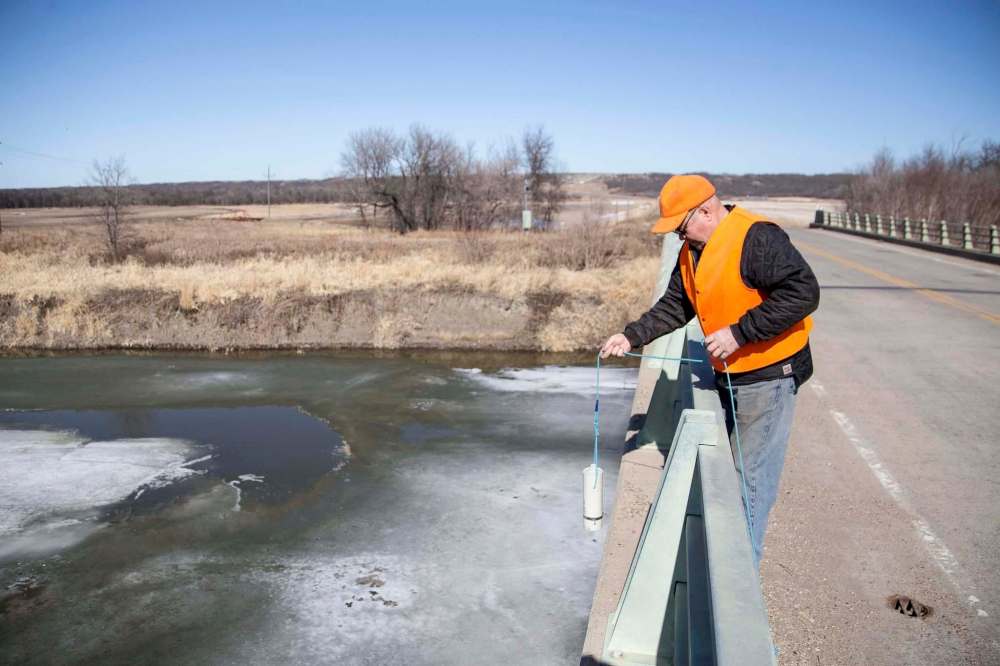
Kanu is excited about the work of the Lake Winnipeg Community-Based Monitoring Network, a program in which citizen volunteers and watershed professionals collect samples across Manitoba that are analyzed in a lab to measure phosphorus concentration and calculate the amount of phosphorus being exported from land into watersheds.
When COVID-19 reached Manitoba, the foundation thought the pandemic would thwart the monitoring network’s fifth field season.
That was not the case. Staff worked on COVID-19 protocols that ensured the work could continue safely, and the foundation heard from numerous volunteers who were eager to collect samples.
“I think that speaks to the passion of our members,” Kanu says.
The pandemic has affected the foundation in other ways. Its summer events had to be cancelled or significantly altered so they could take place online.

The pandemic didn’t stop the foundation from trying something new this summer, though.
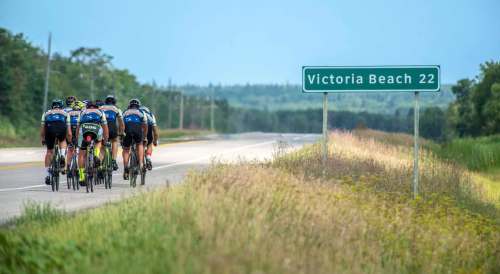
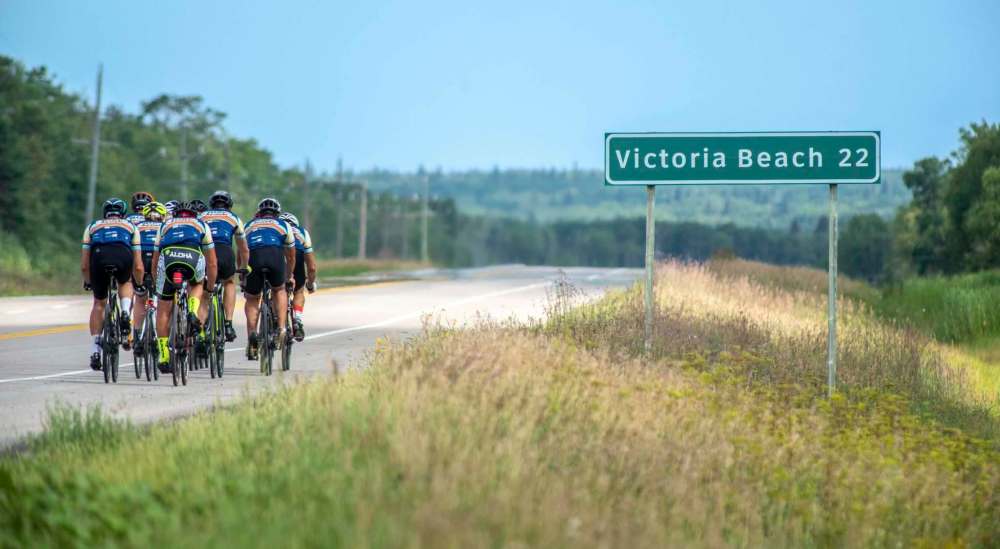
Its inaugural Bike to the Beach event drew more than 40 cyclists, who rode from Winnipeg to Victoria Beach. It raised $57,000, making it the single-largest fundraising event in the foundation’s history.
“It kind of worked out on every level,” says Scott McDonald, the foundation volunteer who organized the fundraiser. “We were extremely happy with how everything turned out.”
McDonald grew up with a family cottage, at Victoria Beach. His parents, Bill and Deanne, who have been involved with the foundation for almost a decade, inspired him to get involved.
“The lake is big and beautiful,” Deanne says. “It’s really a resource not only for Manitoba to be proud of, but all of Canada. It serves a lot of people in a lot of ways, including recreationally. For a big body of water to lose its health is horrible. It makes you want to cry. That’s, I think, why we’re involved.”

Although summer is coming to an end, the foundation’s work continues year-round and there are opportunities for people to get involved.
Anyone interested can visit lakewinnipegfoundation.org for details.
The passion of its supporters is one of the things that drew Kanu to the foundation eight years ago.
“It was inspiring and exciting to join a non-profit that had such a strong connection to the community,” she says.
aaron.epp@gmail.com
Aaron Epp reports on business for the Free Press. After freelancing for the paper for a decade, he joined the staff full-time in 2024. Read more about Aaron.
Every piece of reporting Aaron produces is reviewed by an editing team before it is posted online or published in print — part of the Free Press‘s tradition, since 1872, of producing reliable independent journalism. Read more about Free Press’s history and mandate, and learn how our newsroom operates.
Our newsroom depends on a growing audience of readers to power our journalism. If you are not a paid reader, please consider becoming a subscriber.
Our newsroom depends on its audience of readers to power our journalism. Thank you for your support.
Aaron Epp reports on business for the Free Press. After freelancing for the paper for a decade, he joined the staff full-time in 2024. Read more about Aaron.
Every piece of reporting Aaron produces is reviewed by an editing team before it is posted online or published in print — part of the Free Press‘s tradition, since 1872, of producing reliable independent journalism. Read more about Free Press’s history and mandate, and learn how our newsroom operates.
Our newsroom depends on a growing audience of readers to power our journalism. If you are not a paid reader, please consider becoming a subscriber.
Our newsroom depends on its audience of readers to power our journalism. Thank you for your support.
Advertisement Advertise With Us
Advertisement Advertise With Us