Supreme Court considers the constitutionality of the Liberal government’s carbon tax
Advertisement
Read this article for free:
or
Already have an account? Log in here »
To continue reading, please subscribe:
Digital Subscription
One year of digital access for only $1.44 a week*
- Enjoy unlimited reading on winnipegfreepress.com
- Read the E-Edition, our digital replica newspaper
- Access News Break, our award-winning app
- Play interactive puzzles
*Billed as $5.77 plus GST every four weeks. After 52 weeks, price increases to the regular rate of $19.95 plus GST every four weeks. Offer available to new and qualified returning subscribers only. Cancel any time.
To continue reading, please subscribe:
Add Free Press access to your Brandon Sun subscription for only an additional
$1 for the first 4 weeks*
- Enjoy unlimited reading on winnipegfreepress.com
- Read the E-Edition, our digital replica newspaper
- Access News Break, our award-winning app
- Play interactive puzzles
*Your next Brandon Sun subscription payment will increase by $1.00 and you will be charged $17.95 plus GST for four weeks. After four weeks, your payment will increase to $24.95 plus GST every four weeks.
Read unlimited articles for free today:
or
Already have an account? Log in here »
Hey there, time traveller!
This article was published 22/09/2020 (2219 days ago), so information in it may no longer be current.
OTTAWA – Supreme Court justices pushed lawyers from Saskatchewan and Ontario hard Tuesday, demanding to know how Canada can help stop climate change if any single province chooses not to help.
But several of the justices also raised concerns that the federal government’s carbon tax legislation might give Ottawa too much discretion.
The issues were raised during the first of two days of hearings this week on whether the federal government’s Greenhouse Gas Pollution Pricing Act is constitutional.
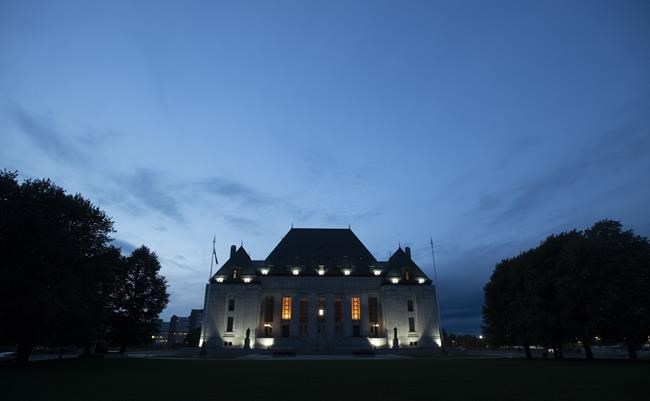
The act was implemented in 2019, imposing a carbon price in any province without an equivalent system of its own. The appeals courts in Saskatchewan and Ontario ruled the law was constitutional in 2019, but in February of this year the Alberta Court of Appeal said it was not.
Many of the nine justices seemed seized with the notion that provinces may have the authority currently to put in place measures to curb the greenhouse gas emissions that cause to climate change but that doesn’t mean they have to do it.
That, combined with the crisis climate change poses to Canada and the world, and the fact one province not acting could stymie Canada’s overall efforts to combat climate change, could make it an issue of national concern, the judges mused.
“We’re into a situation now where everybody as I understand it agrees that climate change is a serious threat to life on Earth as we know it,” said Justice Michael Moldaver.
He added the “overriding critical concern” to him is that there is no guarantee provinces will all act on it.
“If one province decides not to do it, if one province decides to go rogue, this will have an impact potentially on the whole of Canada, and other provinces that are trying their best.”
Justice Rosalie Abella echoed those sentiments, pointing out that emissions from one province can impact another.
“They can collectively choose to deal with those issues but they don’t have Plexiglas at their borders and the effect of not choosing to engage in strategies that are ultimately helpful to the rest of the country has enormous implications,” she said. “That’s why we have the national concern test.”
Meanwhile, lawyers for Saskatchewan, Ontario and Alberta argued Tuesday that the power to regulate emissions does lie with the provinces and Ottawa should not be allowed to grab that power for itself.
Josh Hunter, the deputy director of the constitutional law branch in the office of Ontario’s attorney general, said the law treats provinces like subordinates.
“The way they’ve done it, it’s even worse because it’s not just they say they’re going to regulate it,” he told the court. “They say, ‘You regulate it the way we like it or we will regulate it.'”
Guy Pratte, a lawyer presenting arguments for the federal government, said when it comes to issues over which Ottawa should have discretion, climate change seems like a clear one.
“If this is not a matter of national concern, what is,” he asked.
He also said Ottawa had gone to great lengths to give provinces room to design their own systems, as long as they met the tests for national standards on pricing and sources of emissions.
Several justices expressed concern that the federal government was, with at least one part of the legislation, “picking winners and losers” among industries because the national standards they set differed by industry.
There were also queries about whether the government was taking too much power to change the standards at any time, with regulatory powers to increase the price or what certain industries can emit before paying it.
“I am concerned about the broad discretion in the act,” said Justice Suzanne Côté.

This was the first in-person hearing at the Supreme Court since the COVID-19 pandemic began. The justices were separated into two rows instead of the usual one, and had transparent barriers between each other’s seats.
The court is also closed to the public, staff in the room were limited and had to wear masks, and the judges and lawyers presenting wore masks until they got to their seats. The lectern where lawyers presented was cleaned between each individual.
The hearing is also being webcast, although the top court has been livestreaming proceedings since before the pandemic.
Wednesday, the hearings will continue with arguments from other provinces, including Quebec, Manitoba and New Brunswick. Also on the schedule for Wednesday are several First Nations and Indigenous governing bodies, as well as more than a dozen special interest groups.
.
Related Articles
Manitoba chiefs weigh in on carbon tax, reconciliation
Advertisement Advertise With Us
Advertisement Advertise With Us