Groups believe not having children is a way to cut a person’s carbon footprint

Advertisement

Advertise with us

VANCOUVER - When Roy Sasano told his parents he was getting sterilized a few years ago to reduce his carbon footprint, he remembers they weren't surprised.

Read this article for free:


or

Already have an account? Log in here »

To continue reading, please subscribe:

Subscribe and receive a limited-edition Free Press branded hat or tote.

Digital Subscription

One year of digital access for only $205*

  • Enjoy unlimited reading on winnipegfreepress.com
  • Read the E-Edition, our digital replica newspaper
  • Access News Break, our award-winning app
  • Play interactive puzzles

*First annual payment billed as $205.00 + GST for one year. This annual subscription will automatically renew at $233.00 + GST every 52 weeks (10% off the regular annual price of $259.35). Offer available to new and qualified returning subscribers only. Cancel any time.

To continue reading, please subscribe:

Add Free Press access to your Brandon Sun subscription for only an additional

$1 for the first 4 weeks*

  • Enjoy unlimited reading on winnipegfreepress.com
  • Read the E-Edition, our digital replica newspaper
  • Access News Break, our award-winning app
  • Play interactive puzzles
Start now

*Your next Brandon Sun subscription payment will increase by $1.00 and you will be charged $17.95 plus GST for four weeks. After four weeks, your payment will increase to $24.95 plus GST every four weeks.

Hey there, time traveller!
This article was published 09/04/2019 (2696 days ago), so information in it may no longer be current.

VANCOUVER – When Roy Sasano told his parents he was getting sterilized a few years ago to reduce his carbon footprint, he remembers they weren’t surprised.

After all, he had already taken other steps to fight climate change by becoming a vegan, “virtually” eliminating single-use plastic and reducing his consumption as much as is practicable.

“I think there was a brief moment of disappointment, but they just laughed it off,” said Sasano, 39, who lives in Vancouver.
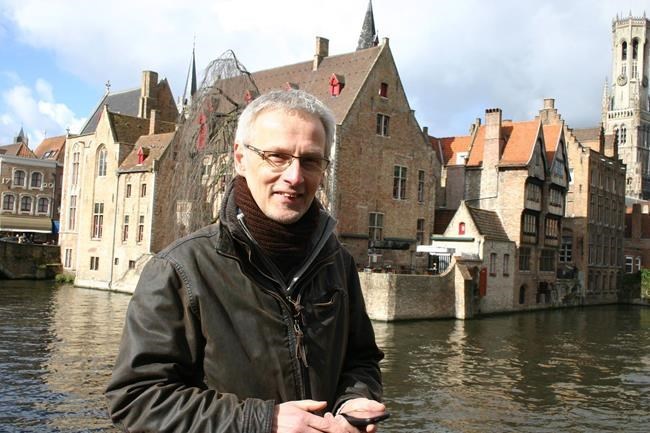
Alistair Currie is seen in this undated handout photo. Currie, head of campaigns and communications at the U.K.-based charity Population Matters, said choosing to have fewer or no children is essential to ensuring people have a
Alistair Currie is seen in this undated handout photo. Currie, head of campaigns and communications at the U.K.-based charity Population Matters, said choosing to have fewer or no children is essential to ensuring people have a "decent living" on the planet in 50 years' time. THE CANADIAN PRESS/HO, Alistair Currie *MANDATORY CREDIT*

“I know quite a few people, especially men, who have chosen to get sterilized and I know women who’ve done the same.”

Sasano is part of the Voluntary Human Extinction Movement or Vhemt (pronounced vehement) that believes in “refraining” from reproduction.

“Why should we be creating more people to create more suffering for ourselves and the rest of the planet?” Sasano said in a recent interview.

There are other examples that show the argument against human reproduction isn’t happening on the fringes of the climate change debate anymore.

“There’s scientific consensus that the lives of children are going to be very difficult. And it does lead young people to have a legitimate question: Is it OK to still have children?” Rep. Alexandria Ocasio-Cortez of the U.S. Congress recently asked in an Instagram video.

Katharine Hayhoe, an atmospheric scientist and professor of political science at Texas Tech University, said individual decisions matter in the fight against climate change as much as collective action on things like carbon pricing and the Paris agreement.

But while each additional child adds more carbon, she said children are also tied to a sense of hope.

“Personally, I can’t advocate for people not to have children in order to fix climate change because why am I fixing climate change? I’m doing it because of my child and because of everybody else’s children,” she said. “So that’s what gives us hope. Again, I’m not having 12 children. I have one child.”

Hayhoe said the behaviour of people in developed countries like Canada is also a factor in climate change, noting that per capita, Canadians add much more carbon than Zambians.

“If the entire world were like Zambia we would not really have much of a problem,” she said. “If the entire world was filled with people with the carbon footprint of the average Canadian though, we would have a huge problem.”

Hayhoe said she knows people who’ve decided not to have children because of the environment.

“It’s very hard to bring a child into this world but if we decide not to then there’s no hope in the world,” she said. “It’s not black and white. It’s a very, very grey issue.”

Alistair Currie, head of campaigns and communications at the U.K.-based charity Population Matters, said choosing to have fewer or no children is essential to ensuring people have a “decent living” on the planet in 50 years’ time.

It’s hard to estimate how many people are choosing not to have children mainly because they feel judged, Currie said, although the perception is slowly changing.

“Particularly women,” explained Currie, whose organization campaigns to achieve a sustainable human population. “We get this all the time, women feeling judged somehow as being inadequate or selfish.”

The United Nations projects the world population will increase by more than one billion people within the next 15 years, reaching 8.5 billion in 2030, then increasing to 9.7 billion in 2050 and 11.2 billion by 2100.

Sixty per cent of the global population lives in Asia, 16 per cent in Africa, 10 per cent in Europe, nine per cent in Latin America and the Caribbean, and the remaining five per cent in Northern America and Oceania.

“We can keep feeding people in their billions for a long time,” said Currie, who has one son. “But we cannot do it without the planet staying healthy and sustaining its soils … water and our forests.”

Currie said there are other factors that have an impact on climate, adding that an American produces about 160 times the amount of carbon as someone living in Niger. People in countries like India and China are also generating more carbon as they become more affluent.

“That sounds like a more concerning situation when you are looking at both sides … each person producing more carbon and there being more people.”

Report Error Submit a Tip

More Stories

AI literacy course mandatory at U of W Collegiate

Maggie Macintosh 5 minute read Preview

AI literacy course mandatory at U of W Collegiate

Maggie Macintosh 5 minute read Updated: Yesterday at 9:25 AM CDT

The University of Winnipeg Collegiate is requiring new students to complete artificial intelligence 101 lessons and offering a first-of-its-kind elective for those who want to perfect their chatbot prompts.

The private high school is piloting two projects this year in a bid to improve digital literacy on the downtown campus.

Every Grade 9 and 10 student will have to pass an approximately two-hour long online course about “AI essentials.”

Dean Osaed Khan likened the mandatory e-learning sessions to requiring students to complete a safety course before they can participate in a science lab.

Read
Updated: Yesterday at 9:25 AM CDT

A bad trade deal in virtually all ways

Editorial 4 minute read Preview

A bad trade deal in virtually all ways

Editorial 4 minute read Yesterday at 2:01 AM CDT

You can’t fix stupid. And you can’t sign a contract — or a trade deal — with a proven liar, cheat and blackmailer. And sometimes, you end up having to fight.

Read
Yesterday at 2:01 AM CDT

Reject roadie role, stick to your own tune

Maureen Scurfield 5 minute read 2:00 AM CDT

DEAR MISS LONELYHEARTS: My girlfriend is a great singer and guitar player, but now she’s gotten in with some male musicians to form a band for playing bars. I’m a drummer, but a terrible one. They found themselves a great one a couple weeks ago, so I’ve been pushed out.

My girl could see I was feeling jealous of her continued band action, so she told me I should still come out to help schlep the equipment to and from the gig. That’s just not happening — I won’t be their lowly roadie to boss around!

So, now what happens to her and I? Let me guess — we break up, and what do you know? The singer guy sees his chance and makes a big play for her. She is a beautiful, talented woman. Help!

— Feeling Anxious, Osborne Village

Thirteen accused in gun, drug trafficking network in rural Manitoba

Erik Pindera 4 minute read Preview

Thirteen accused in gun, drug trafficking network in rural Manitoba

Erik Pindera 4 minute read Updated: Yesterday at 3:59 PM CDT

RCMP and Winkler police have arrested more than a dozen people allegedly connected to a drug-and-gun trafficking network that operated in rural Manitoba.

The joint investigation began in December 2024, when officers from the Winkler Police Service asked the Mounties for help after learning kilograms of cocaine were being imported to a Winkler-area truck repair business, said RCMP Supt. Jeff Asmundson, who oversees the force’s Manitoba integrated law enforcement team.

Mounties and Winkler police gathered evidence for 19 months and expanded the probe, dubbed Project Dolor, as investigators learned other types of illicit substances and firearms were being trafficked by the network in a number of southern Manitoba communities, said Asmundson, whose team investigates serious and organized crime.

“It started as a cocaine trafficking investigation, and obviously, as we move along in a project or a file, evidence is gathered and an opportunity arose and we wanted to ensure public safety,” he told reporters Tuesday. “We were able to secure some firearms.”

Read
Updated: Yesterday at 3:59 PM CDT

13-year-old girl riding scooter hit by car

1 minute read Updated: Yesterday at 8:12 PM CDT

A 13-year-old girl was taken to hospital on Tuesday evening after she was hit by a car crossing Jefferson Avenue on a scooter.

Family members on scene told the Free Press the child was travelling north on a multi-use trail and was hit by a car travelling westbound on Jefferson Avenue at a crosswalk. They said while one car stopped at the crossing, a second car in the next lane did not, striking the child as a result.

The family member, who did not want their name published to protect the identity of the child, said they were waiting for an update on the girl’s condition, saying she was tossed roughly 10-feet when she was hit.

On scene police were keeping an eye on a badly-damaged scooter and a car with a smashed windshield.

Aren’t there other power options?

Jules Legal 4 minute read 2:00 AM CDT

It seems like only yesterday that Manitoba Hydro was basking in the glory of what to do with all the surplus energy being generated by the newly constructed hydro generating stations along the Nelson River. And so it built a multibillion-dollar, high-voltage hydro line to export this surplus energy to the U.S. Bipole III, they called it.

Now, managers at Manitoba Hydro are telling us Manitobans could be facing a power shortage as early as 2029 and that a natural gas turbine generating station is urgently required.

Part of this looming shortfall can be attributed to our growing population and we must not ignore the fact our consumptive lifestyle keeps demanding ever more megawatts.

So what happened to cause such a dramatic turnaround?