Happy Beer Day! Iceland marks 30th anniversary of end of ban

Advertisement

Advertise with us

REYKJAVIK, Iceland - Thirty years ago, a sobering dry spell in Iceland's history came to an end.

Read this article for free:


or

Already have an account? Log in here »

To continue reading, please subscribe:

Subscribe and receive a limited-edition Free Press branded hat or tote.

Digital Subscription

One year of digital access for only $205*

  • Enjoy unlimited reading on winnipegfreepress.com
  • Read the E-Edition, our digital replica newspaper
  • Access News Break, our award-winning app
  • Play interactive puzzles

*First annual payment billed as $205.00 + GST for one year. This annual subscription will automatically renew at $233.00 + GST every 52 weeks (10% off the regular annual price of $259.35). Offer available to new and qualified returning subscribers only. Cancel any time.

To continue reading, please subscribe:

Add Free Press access to your Brandon Sun subscription for only an additional

$1 for the first 4 weeks*

  • Enjoy unlimited reading on winnipegfreepress.com
  • Read the E-Edition, our digital replica newspaper
  • Access News Break, our award-winning app
  • Play interactive puzzles
Start now

*Your next Brandon Sun subscription payment will increase by $1.00 and you will be charged $17.95 plus GST for four weeks. After four weeks, your payment will increase to $24.95 plus GST every four weeks.

Hey there, time traveller!
This article was published 01/03/2019 (2746 days ago), so information in it may no longer be current.

REYKJAVIK, Iceland – Thirty years ago, a sobering dry spell in Iceland’s history came to an end.

On Friday, the country celebrates the anniversary of the lifting of a decades-long ban on beer with — what else? — a nationwide Beer Day.

The drink was outlawed in Iceland for 74 years, while all other booze was completely legal. The alcoholic anomaly finally ended on March 1, 1989.
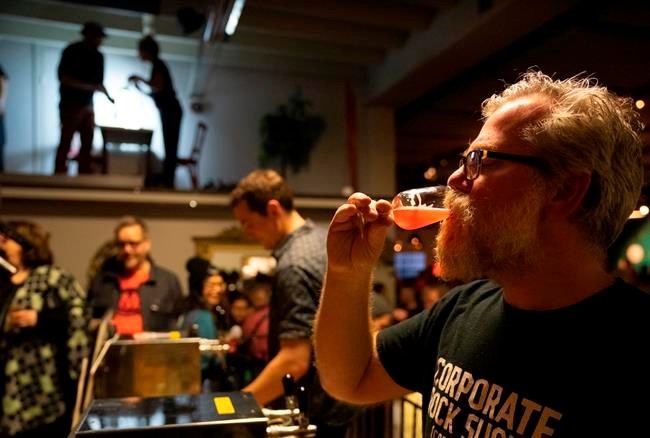
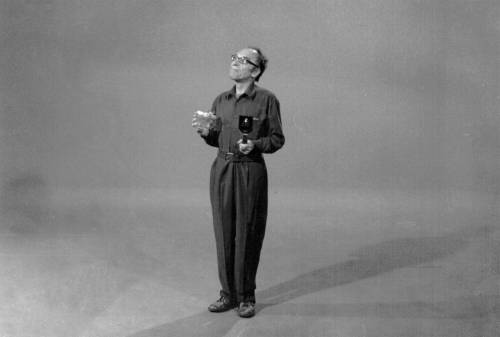
In this photo taken on Saturday, Feb. 23, 2019, brewer Sigurdur Snorrason drinks a craft beer at a festival in Reykjavik. Icelanders are celebrating the end, three decades ago, of a sobering dry spell in their country’s history. On Friday, March 1 the country toasts the anniversary of the lifting of a decades-long ban on beer with _ what else? _ a nationwide Beer Day. (AP Photo/Egill Bjarnason)

The beer ban was a leftover from the country’s prohibition era, which started in 1915 when the population voted in a referendum to outlaw all alcoholic drinks.

The ban was partially lifted seven years later out of economic necessity — Spain refused to buy Iceland’s main export, fish, unless Iceland bought Spanish wines.

Prohibition was repealed in another national referendum in 1933. But the majority vote was tight and to appease a powerful temperance movement Iceland’s parliament decided beer would remain illegal.

Historian Stefan Palsson, moonlighting as a teacher at a brewery-based “School of Beer,” said that at the time Icelanders didn’t miss it.

“They drank in order to become drunk and beer wasn’t really efficient for that,” he said.

Alcohol abuse remains an issue. One in 10 Icelandic males over the age of 15 have been to rehab at least once in their lifetime, according to SAA, the country’s leading addiction treatment centre.

With alcoholism still widespread, most Icelanders favour strict government restrictions on alcohol sales. Apart from the country’s bars, alcohol — beer included — is only sold at government-run monopoly stores, with limited opening hours and high taxes.

A pint of beer costs about 1,100 krona ($9) in bars, while a bottle of Smirnoff vodka costs the equivalent of $67 in the stores that sell it.

A thirst for change began in the 1970s when Icelanders increasingly started vacationing in sunny European beach resorts and developed a taste for a cooling beer.

Back home, local bartenders responded by inventing the “bjorliki” cocktail, a pseudo-beer made by blending non-alcoholic pilsner with aquavit — in very variable ratios.

Yet a large part of the population still opposed lifting the beer ban when parliament debated the issue for the last time in 1988.

Steingrimur Sigfusson, who is parliamentary speaker today, at the time painted a gloomy picture of the chaos that would result as “hundreds of taverns” opened up to crowds with no experience of the beverage. He voted against the proposition.

He still defends the country’s restrictive alcohol policy that aims to limit binge and teen drinking.

“The worst-case predictions never came true but underage drinking did increase,” Sigfusson said.

The ban finally ended on a Wednesday. All four bars in Reykjavik were jam packed with drinkers toasting their new-found freedom while the country’s population of 260,000 celebrated by buying more than 340,000 cans of beer at overcrowded Vinbudin monopoly stores.

“I wasn’t sure what to make of this day — we knew so little about beer,” said Sigurdur Snorrason, founder of the RVK brewing company, at a craft beer festival in the capital Reykjavik celebrating the milestone anniversary.

Hreindis Ylva was born the day the ban was lifted. She is celebrating her 30th birthday Friday with friends in a wooden house in Reykjavik’s open air museum. She won’t be sipping any suds, though.

“I think beer looks delicious served in a glass, but the taste is not for me,” she said. “This cool birthday is completely wasted on me.”
Report Error Submit a Tip

More Stories

Agriculture sector wary of ‘strong headwind’ from south

Laura Rance-Unger 4 minute read Yesterday at 2:01 AM CDT

Industry analysts talked in circles on a recent webinar as they discussed the implications for agriculture of Canada’s deteriorating relationship with its largest trading partner.

On one hand, panellists for the hastily convened Canadian AgriFood Policy Institute event acknowledged the futility of negotiating on quicksand: a deal made today with the United States might be sucked into the muck tomorrow.

But on the other, webinar panellists speculated with varying degrees of optimism over what it will take to get negotiators back to bargaining.

This disconnect isn’t unique to this cluster of analysts. However, it underscores the difficulty of coming to terms with the seismic shift in America’s attitudes towards Canada.

$8.7-million detox centre called ‘high-priced drunk tank’

Carol Sanders 4 minute read Preview

$8.7-million detox centre called ‘high-priced drunk tank’

Carol Sanders 4 minute read Friday, Sep. 4, 2026

The new facility to detain people in a drug psychosis for up to 72 hours is operating the way it should, the government said Friday, even though just 26 people have been held for that purpose since it opened.

“The (protective care centre) is doing what it’s meant to do: support people, meet them where they’re at, provide a caring environment,” Addictions Minister Bernadette Smith said after updated data were posted online.

The vast majority of those detained at the 20-room facility at 190 Disraeli Fwy. were recovering from alcohol intoxication, the update shows.

In total, 4,425 people were detained from the time the site opened on Dec. 2, 2025, until June 30, for an average of less than five hours.

Read
Friday, Sep. 4, 2026

A life's story: translator, poet, radio host, actor loved life to the fullest

Tiago Resko 7 minute read Preview

A life's story: translator, poet, radio host, actor loved life to the fullest

Tiago Resko 7 minute read Yesterday at 3:00 AM CDT

Born with an innate sense of curiosity, Charles Leblanc always wanted to understand the world around him. To him, words and theatre weren’t just pastimes. They were means of understanding the human experience and helping others see different perspectives.

The poet, translator, actor and radio host dedicated his life to this practice, founding the Winnipeg International Writers’ Festival, establishing French community radio station Envol — where he hosted a show for 25 years — and acting as a core member of the Association of Translators, Terminologists and Interpreters of Manitoba.

Leblanc’s contributions and dedication to Manitoba’s arts and literary scenes made an impact that continues to be felt by the community.

He died June 26 at the age of 75.

Read
Yesterday at 3:00 AM CDT

Back to school means increased costs for parents, post-secondary students

Joel Schlesinger 6 minute read Preview

Back to school means increased costs for parents, post-secondary students

Joel Schlesinger 6 minute read Yesterday at 2:01 AM CDT

In the words of advice for students from Thornton Melon: “It’s rough out there. Move back in with your parents.”

As comedian Rodney Dangerfield’s character alluded to in the 1986 comedy Back to School, it is indeed a tough financial environment as students head back to the classroom in 2026.

A Capital One Canada survey found families are struggling with costs, with nearly six in 10 parents surveyed stating back-to-school expenses are higher than expected.

It’s not just tuition, new clothes and supplies. Extracurricular activities — like hockey, figure skating, ringette, soccer, dance, etc. — also ramp up, involving tuition-sized payments.

Read
Yesterday at 2:01 AM CDT

‘Quite a journey’: dozens move into transitional housing downtown

Carol Sanders 4 minute read Preview

‘Quite a journey’: dozens move into transitional housing downtown

Carol Sanders 4 minute read Friday, Sep. 4, 2026

Dozens of residents have moved into transitional housing units in a former university building in downtown Winnipeg.

Housing, Addictions and Homelessness Minister Bernadette Smith said 42 residents have moved into suites on the third and fourth floors of a seven-storey building previously owned by Providence University College and Theological Seminary. There will be space for as many as 118 people who were in encampments or otherwise homeless.

The remaining units under renovation are expected to be ready and occupied in the coming weeks, Smith said.

“This has been two years in the making,” the minister said at a media event with residents, staff, neighbours and supporters. The building cost the province $24.4 million to purchase and renovate.

Read
Friday, Sep. 4, 2026

Letters, Sept. 5

7 minute read Yesterday at 2:01 AM CDT

Clearing the airRe: QDoc patients in middle of billing dispute (Sept. 4)

QDoc has been fortunate to have a genuine partner in the Manitoba government over the past several years. Premier Wab Kinew and Health Minister Uzoma Asagwara have been consistently clear that no Manitoban should go without care because of where they live, and that commitment is exactly why virtual care exists as a permanent, publicly available option today. We built MediNav, the province’s online appointment booking system, together with Manitoba Health, and that same collaborative spirit has helped make more than 350,000 patient visits possible through our platform — many of them evenings, overnights and weekends, reaching rural and underserviced communities that need it most.

We want to be direct with the people who rely on us: QDoc is not going anywhere. We continue to see patients today, and we will keep doing so tomorrow. The issue reported this week is a technical billing matter, not a service disruption, and we are actively working with the province to resolve it quickly, so we can keep growing our capacity to serve Manitobans rather than limiting it.

We also want to take responsibility for our part in the recent confusion. Our Aug. 24 message to a small subset of our patients was meant to keep our community informed, but its tone left some people more worried than they needed to be, and for that we apologize. That was never our intention.