Harris’ bill seeks to address racial bias in maternal care

Advertisement

Advertise with us

WASHINGTON - U.S. Sen. Kamala Harris is offering a new bill to address racial disparities in maternal health care, one of several plans by 2020 Democratic presidential candidates on the issue.

Read this article for free:


or

Already have an account? Log in here »

To continue reading, please subscribe:

Subscribe and receive a limited-edition Free Press branded hat or tote.

Digital Subscription

One year of digital access for only $205*

  • Enjoy unlimited reading on winnipegfreepress.com
  • Read the E-Edition, our digital replica newspaper
  • Access News Break, our award-winning app
  • Play interactive puzzles

*First annual payment billed as $205.00 + GST for one year. This annual subscription will automatically renew at $233.00 + GST every 52 weeks (10% off the regular annual price of $259.35). Offer available to new and qualified returning subscribers only. Cancel any time.

To continue reading, please subscribe:

Add Free Press access to your Brandon Sun subscription for only an additional

$1 for the first 4 weeks*

  • Enjoy unlimited reading on winnipegfreepress.com
  • Read the E-Edition, our digital replica newspaper
  • Access News Break, our award-winning app
  • Play interactive puzzles
Start now

*Your next Brandon Sun subscription payment will increase by $1.00 and you will be charged $17.95 plus GST for four weeks. After four weeks, your payment will increase to $24.95 plus GST every four weeks.

Hey there, time traveller!
This article was published 22/05/2019 (2643 days ago), so information in it may no longer be current.

WASHINGTON – U.S. Sen. Kamala Harris is offering a new bill to address racial disparities in maternal health care, one of several plans by 2020 Democratic presidential candidates on the issue.

Harris’ bill, first introduced in 2018, would create some $150 million in grant programs to medical schools and states to fight implicit racial bias in health care for women. The legislation, co-sponsored in the House by Rep. Alma Adams, D-N.C., is aimed at improving medical care for groups of women who, research suggests, might be denied first rate care because of their race.

The government confirmed this month that black women who bear children die at a rate that is three times higher than that of white women. Native American and Alaskan women die at a rate that is 2 1/2 times higher than that of white women. The Centers for Disease Control and Prevention says about 700 women in the U.S. die from pregnancy-related complications annually.
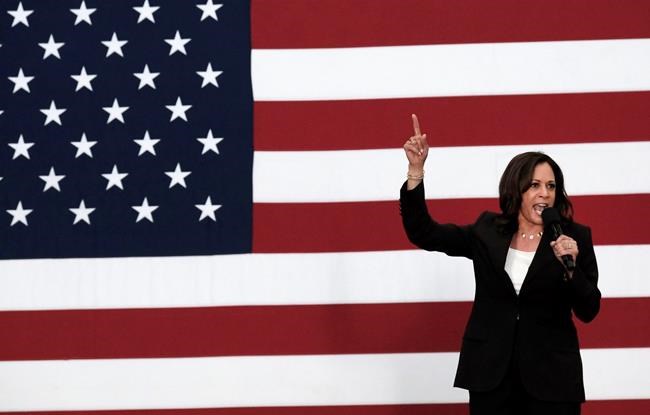
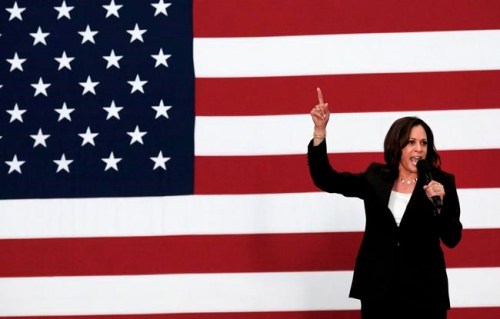
Democratic presidential candidate Sen. Kamala Harris, D-Calif., talks during her first campaign organizing event at Los Angeles Southwest College in Los Angeles, Sunday, May 19, 2019. ((AP Photo/Richard Vogel)

Tennis star Serena Williams raised the profile on the issue last year, saying the birth of her daughter via C-section was harrowing, in part because medical professionals second-guessed her when she complained of a shortness of breath. In a Vogue magazine interview in 2018, Williams discussed developing several small blood clots in her lungs while in the hospital after Alexis Olympia Ohanian Jr. was born in September 2017. In the interview, Williams said she requested a CT scan, only to be given an ultrasound of her legs. The episode was seen by some as evidence that even an elite athlete who is black can have trouble getting the care that she needs.

Other Democratic presidential candidates including Sens. Cory Booker of New Jersey, Kirsten Gillibrand of New York and Elizabeth Warren of Massachusetts have proposed bills aimed at improving maternal care. Last month, Warren published an op-ed further detailing her maternal mortality plan in Essence, the country’s only magazine for black women with a circulation of more than 1 million. Warren’s plan would incentivize health systems for successful outcomes of “episodes” of care, the cost of which would be set at one price.

Harris launched her presidential campaign in January.
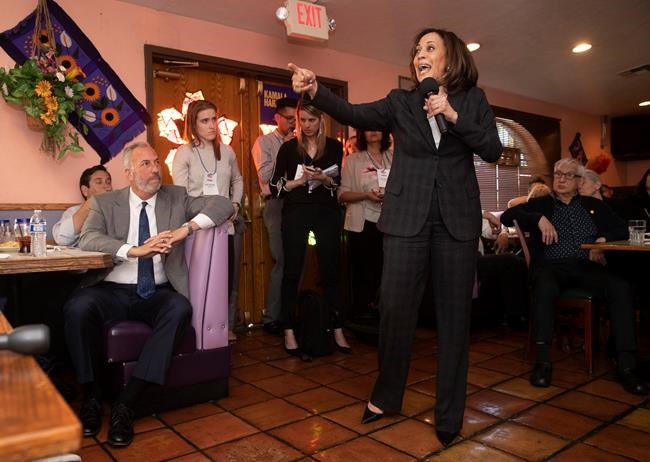
Democratic presidential candidate Sen. Kamala Harris, D-Calif., responds to a question during a Hispanics in Politics event at the Dona Maria Tamales restaurant in Las Vegas, Thursday, May 16, 2019. (Steve Marcus/Las Vegas Sun via AP)
Report Error Submit a Tip

More Stories

Harris' bill seeks to address racial bias in maternal care

The Associated Press 3 minute read Preview

Harris' bill seeks to address racial bias in maternal care

The Associated Press 3 minute read Wednesday, May. 22, 2019

WASHINGTON - U.S. Sen. Kamala Harris is offering a new bill to address racial disparities in maternal health care, one of several plans by 2020 Democratic presidential candidates on the issue.

Harris' bill, first introduced in 2018, would create some $150 million in grant programs to medical schools and states to fight implicit racial bias in health care for women. The legislation, co-sponsored in the House by Rep. Alma Adams, D-N.C., is aimed at improving medical care for groups of women who, research suggests, might be denied first rate care because of their race.

The government confirmed this month that black women who bear children die at a rate that is three times higher than that of white women. Native American and Alaskan women die at a rate that is 2 1/2 times higher than that of white women. The Centers for Disease Control and Prevention says about 700 women in the U.S. die from pregnancy-related complications annually.

Tennis star Serena Williams raised the profile on the issue last year, saying the birth of her daughter via C-section was harrowing, in part because medical professionals second-guessed her when she complained of a shortness of breath. In a Vogue magazine interview in 2018, Williams discussed developing several small blood clots in her lungs while in the hospital after Alexis Olympia Ohanian Jr. was born in September 2017. In the interview, Williams said she requested a CT scan, only to be given an ultrasound of her legs. The episode was seen by some as evidence that even an elite athlete who is black can have trouble getting the care that she needs.

Read
Wednesday, May. 22, 2019

Could renewed interest in strategically critical rare earth elements finally make sub-sector profitable?

Joel Schlesinger 6 minute read Preview

Could renewed interest in strategically critical rare earth elements finally make sub-sector profitable?

Joel Schlesinger 6 minute read Yesterday at 3:00 AM CDT

Rare earth elements are among the most critical of mined resources for modern economies.

They’re essential in manufacturing specialized magnets used in a host of technologies from wind turbines and electric vehicles to hard drives, smartphones, television screens, and fibre optics. Most notably, however, rare earth minerals are increasingly vital to the defence industry.

These 17 elements — closely related chemically and usually found all together in mineral deposits — have indeed been growing in geopolitical importance as the United States, Canada and other Western nations recognize their dependence on production from China.

It is the world’s largest producer and processor of rare earths, including the most in-demand elements neodymium and praseodymium used to manufacture very light and powerful magnets for an array of technologies, including the most advanced weapons of modern warfare.

Read
Yesterday at 3:00 AM CDT

West Kildonan Industrial residents call for speed bumps after child hit by truck

Morgan Modjeski 3 minute read Preview

West Kildonan Industrial residents call for speed bumps after child hit by truck

Morgan Modjeski 3 minute read Updated: Yesterday at 3:09 PM CDT

Residents in the West Kildonan Industrial neighbourhood are calling on the city to install speed bumps in their area after a child was hit and dragged by a vehicle Thursday.

Katelyn Bemister lives near the area where the child — who was hospitalized as a result of the incident and has been upgraded to stable condition — was struck. She says people frequently speed in the area.

“They’re going really fast, and they’re not really paying attention at all to the pedestrians in the area,” says Bemister.

In video supplied to the Free Press by a resident, the child can be seen riding a bike down a sidewalk along the 500 block of North Point Boulevard.

Read
Updated: Yesterday at 3:09 PM CDT

Rise of social media reflects rise of self-promotion — to the detriment of genuine storytelling

Reviewed by Matt Henderson 5 minute read Preview

Rise of social media reflects rise of self-promotion — to the detriment of genuine storytelling

Reviewed by Matt Henderson 5 minute read Yesterday at 3:00 AM CDT

A conversation is overheard between two people; one congratulates the other on their success, evident through countless posts on LinkedIn, but the other confesses the prolific aggrandizement is due to slumping success.

A young man on an airplane spends three hours poring over selfies taken on a vacation, zooming in on his biceps and using AI to retouch photos before posting on Instagram.

Anonymous and cowardly trolls on Reddit attempt to end another person’s career.

All this “storytelling” was observed in one day by this reviewer.

Read
Yesterday at 3:00 AM CDT

Impaired driving victim honoured

Morgan Modjeski 5 minute read Preview

Impaired driving victim honoured

Morgan Modjeski 5 minute read Yesterday at 6:16 PM CDT

Ten years after he was killed in a collision involving an impaired driver in 2016, Robbie Anderson’s name has been added to MADD Canada’s Manitoba Memorial honouring those killed in drunk and drug-impaired-related crashes.

His older brother Chris Anderson, was one of two dozen people who gathered at the Glen Eden Funeral Home and Cemetery in West St. Paul Saturday to remember their loved ones, 86 victims whose names are etched into the granite monument near the heart of the graveyard.

“It’s heavy,” said Anderson when asked what it was like to be part of the ceremony and see his brother’s name added. “It’s been something I’ve been thinking about for a while.”

Grateful for MADD’s work and its efforts to honour Robbie, who was 27 when he died, Anderson said his brother, represented the “absolute best of us.”

Read
Yesterday at 6:16 PM CDT

Proposed Transcona development — which could add 20,000 people — gets thumbs down from residents

Joyanne Pursaga 5 minute read Preview

Proposed Transcona development — which could add 20,000 people — gets thumbs down from residents

Joyanne Pursaga 5 minute read Friday, Aug. 14, 2026

Dozens of Winnipeggers fear plans to make way for up to 20,000 more people to live in south Transcona would dramatically alter their neighbourhood and tie hefty fees for new services to their property titles.

If city council adopts the proposed South Transcona secondary plan, all future development applications would need to conform to its goals. The affected area is located south of Dugald Road, north of St. Boniface Road, east of Plessis Road and west of Murdock Road.

Homeowner Virginia Page Jähne fears the plan could add a massive tab to the title of her 4.3-acre property to cover services required for the development.

“My main concern is that they are wanting to put $1.4 million onto my title to pay for this. Now, they say that I will not have to pay it unless I subdivide. But if a person comes by and wants to buy from me … and they see that $1.4 million … what’s the first thing (they’re) going to do?” said Page Jähne, in an interview.

Read
Friday, Aug. 14, 2026